
Glore Psychiatric Museum – Haunted Museum in St. Joseph, Missouri
Home > Haunted Places > State >
> Glore Psychiatric Museum – Haunted Museum in St. Joseph, Missouri
City:
State:
Full Address: 3406 Frederick Avenue, St. Joseph, MO 64506
Check In Google Map
Have you visited this place? Rate Your Experience!
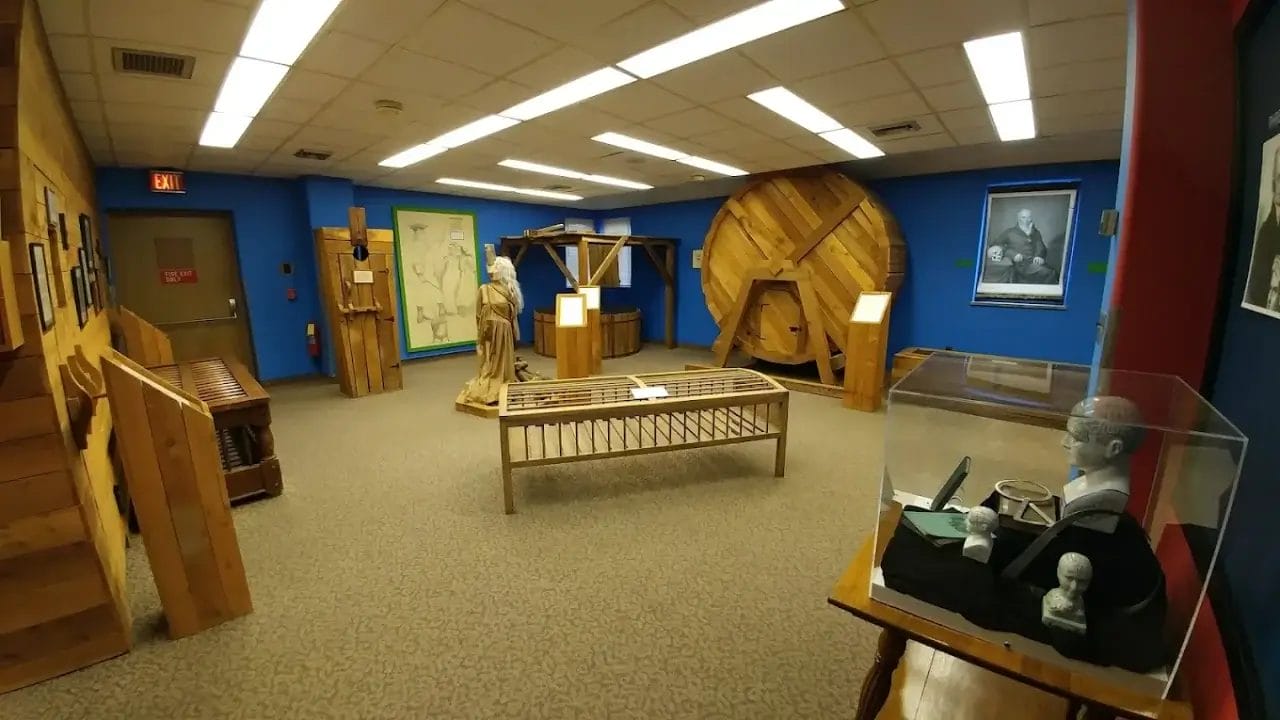
The Glore Psychiatric Museum stands as one of Missouri’s most unsettling destinations. This former asylum turned museum houses disturbing relics of psychiatric treatment history spanning centuries.
Located within the grounds of what was once State Lunatic Asylum Number 2, the building echoes with tormented souls. Visitors report overwhelming feelings of sadness and the sensation of being watched throughout the exhibits.
The museum opened in 1968 under the direction of George Glore, a hospital employee. He spent decades collecting artifacts and creating exhibits documenting the evolution of mental health treatment.
The building itself operated as part of the functioning psychiatric hospital until 2002. During those years, staff members reported strange occurrences in areas now open to the public.
Today, the museum attracts both history enthusiasts and paranormal investigators from across the country. The combination of tragic history and disturbing artifacts creates an atmosphere thick with unexplained energy.
Historical Background
State Lunatic Asylum Number 2 opened its doors in November 1874 to serve Missouri’s mentally ill. The sprawling complex housed thousands of patients over its 130 years of operation.
At its peak in the 1950s, the facility held over 2,800 patients within its walls. Many patients never left, dying within the institution from illness, neglect, or tragic circumstances.
The asylum grounds included a dedicated cemetery where over 1,200 patients were buried. Most graves were marked only with numbered metal stakes, their identities lost to history.
The hospital employed experimental and often brutal treatment methods throughout its operational years. These included hydrotherapy, lobotomies, electroshock therapy, and prolonged physical restraint.
George Glore began working at the hospital in 1946 as a supply clerk. His fascination with psychiatric treatment history led him to collect discarded medical equipment and documents.
The museum officially opened within Ward B of the still-operational hospital in 1968. Glore’s collection included antique restraint devices, surgical instruments, and patient artwork.
The hospital officially closed in 2002, but the museum continued operating under new management. The building where the museum resides witnessed countless patient deaths and medical tragedies.
Historical records document several patient suicides within the specific wing housing the current museum. These deaths occurred between 1890 and 1940, during the asylum’s darkest period.
Paranormal Activity Summary
Visitors consistently report feeling sudden temperature drops while viewing specific exhibits in the museum. The cold spots appear without explanation and often move throughout the rooms.
Disembodied voices rank among the most common paranormal experiences reported at the Glore Museum. Witnesses describe hearing whispers, moans, and occasional screams when few people are present.
Shadow figures appear frequently in the museum’s hallways and exhibition rooms. These dark shapes move independently of any light source and vanish when approached.
Electronic devices malfunction regularly within the museum walls, particularly near the restraint device displays. Cameras drain suddenly, and cell phones lose power despite full batteries.
Staff members report objects moving on their own after closing hours. Exhibits found disturbed in the morning were secured properly the night before.
The sensation of being touched by invisible hands troubles many visitors. People report feeling tugs on clothing, taps on shoulders, and pressure on their backs.
Several ghostly figures have been identified through repeated sightings over the years. A woman in white appears near the tranquilizer chair exhibit most frequently.
A male entity wearing outdated hospital clothing haunts the electroshock therapy section. Witnesses describe his expression as confused and frightened, never making direct eye contact.
By the way, have you visited this haunted place in Missouri State? Lemp Mansion – Haunted Mansion in St. Louis, Missouri
Ghost Stories & Reports
The ghost of a young woman named Margaret haunts the museum’s main exhibition hall. Historical records indicate Margaret died in 1923 following a botched lobotomy procedure.
Visitors describe seeing her pale figure standing near the surgical implements display case. She appears translucent, wearing a hospital gown from the early twentieth century.
A former security guard named Donald Patterson reported a terrifying encounter in 2005. While conducting his midnight rounds, he heard a woman sobbing in the restraint exhibit room.
Patterson investigated and saw a full-bodied apparition of a young woman strapped to the spinning chair. The figure vanished instantly when he called out to her.
Children’s laughter echoes through the museum despite the disturbing nature of the exhibits. This phenomenon particularly puzzles staff because the museum rarely attracts young visitors.
The laughter reportedly comes from spirits of children who died in the asylum’s pediatric ward. Historical documents confirm at least forty-seven children died while institutionalized between 1880 and 1950.
A spirit known as “The Doctor” appears in the museum wearing a white coat and stethoscope. Witnesses report this entity seems unaware of the living, walking through his rounds eternally.
Local folklore suggests The Doctor is Dr. James Atherton, who worked at the asylum from 1902 until his death in 1945. Atherton died of a heart attack while treating a patient in the building.
Museum curator Sarah Chen documented her experience in 2012 while organizing new exhibits. She felt someone grab her wrist forcefully while handling antique restraints.
Chen described the grip as ice-cold and unnaturally strong. When she looked down, she saw bruises forming in the pattern of fingerprints.
A cleaning crew refused to return after experiencing activity in the hydrotherapy section. They reported seeing water dripping from empty tubs and hearing splashing sounds.
One crew member claimed to see a man’s face beneath the surface of a dry treatment tub. The face appeared bloated and pale, mouth open in a silent scream.
Planning to Investigate This Location?
Make sure you have the right ghost hunting equipment
View Equipment Guide →Speaking of haunted places, don’t forget to also check this place in Missouri State? Belvoir Winery – Haunted Winery in Liberty, Missouri
Most Haunted Spot
The tranquilizer chair exhibit holds the distinction of being the museum’s most paranormally active location. This nineteenth-century restraint device once held patients for extended periods to “calm” them.
Visitors standing near this exhibit report overwhelming feelings of panic and claustrophobia. Many people have fled the museum after experiencing these sensations.
Photographs taken near the tranquilizer chair frequently show strange anomalies and orbs. Several images clearly show a misty figure seated in the chair itself.
Staff members avoid working alone in this section after one employee suffered a panic attack. She described feeling invisible hands pushing her toward the chair with considerable force.
The electroshock therapy room runs a close second for paranormal activity. Equipment in this exhibit has turned on by itself despite having no power source.
The paranormal doesn’t stop here—this haunted place might also interest you in Missouri State? Pythian Castle – Haunted Castle in Springfield, Missouri
Can You Visit?
The Glore Psychiatric Museum welcomes visitors throughout the year during regular operating hours. The museum operates Tuesday through Saturday from ten in the morning until four in the afternoon.
General admission costs eight dollars for adults and five dollars for children under twelve. Senior citizens receive a discounted rate of six dollars with proper identification.
Self-guided tours allow visitors to explore the exhibits at their own pace. Audio guides are available for rent at three dollars, providing historical context for displays.
The museum occasionally offers special evening tours during October for paranormal enthusiasts. These tours must be booked in advance and cost twenty-five dollars per person.
Photography is permitted throughout the museum for personal use. Flash photography is discouraged near certain delicate artifacts but allowed in most areas.
The museum closes on Sundays, Mondays, and major holidays throughout the year. Special group tours can be arranged by contacting the museum office in advance.
Best Time to Visit
Paranormal activity intensifies during the late afternoon hours, particularly between three and four. Staff members report the highest number of unexplained occurrences during this closing time.
October brings increased supernatural activity, possibly due to the thinning veil between worlds. The special Halloween tours often yield the most dramatic experiences for visitors.
Weekday visits typically provide more opportunities for paranormal encounters than busy weekends. The quieter atmosphere allows better chances of hearing disembodied voices and footsteps.
Winter months, particularly January and February, see heightened spiritual activity throughout the museum. Some researchers theorize the cold weather amplifies existing energetic patterns.
First-Hand Accounts & Eyewitness Reports
Paranormal investigator Marcus Webb conducted a thorough investigation in October 2015. His team captured multiple EVP recordings of voices saying “help me” and “get out.”
Webb’s thermal imaging camera recorded cold spots moving independently through the exhibition rooms. The temperature dropped by fifteen degrees in specific areas without any environmental explanation.
Local historian Jennifer Morrison documented her experience while researching the asylum’s history in 2008. She reported seeing a full-bodied apparition of a nurse in the former ward hallway.
Morrison described the nurse as solid-looking, not transparent or ghostly in appearance. The figure turned to look at her before walking through a solid wall.
Tourist Rachel Brennan posted her experience on social media after visiting in 2018. She photographed what appears to be a face in the window of the tranquilizer chair.
Brennan’s photograph went viral, with paranormal experts analyzing the image extensively. No definitive explanation for the face has been determined.
Former museum director Robert Klein recorded his experiences during twenty years of employment. He maintained detailed logs of paranormal occurrences, documenting over three hundred unexplained events.
Klein’s records include reports from visitors, staff members, and maintenance workers. The consistency of reports across different witnesses lends credibility to the haunting claims.
Paranormal Investigations & Findings
The Missouri Paranormal Research Society conducted multiple investigations at the museum between 2010 and 2016. Their findings included electromagnetic field anomalies throughout the building.
The team recorded numerous unexplained sounds on their audio equipment during overnight investigations. Voice analysis revealed phrases spoken in cadence consistent with early twentieth-century speech patterns.
Ghost Adventures expressed interest in filming at the location but negotiations never finalized. Several smaller paranormal television programs have featured the museum in their episodes.
Local ghost hunting group Haunted Missouri captured video footage of objects moving independently. Their 2014 investigation recorded a restraint device swinging without any physical contact.
Investigators consistently report equipment malfunctions when attempting to document certain areas. Cameras and recording devices fail near the lobotomy surgical display with unusual frequency.
Psychic medium Catherine Wells visited the museum in 2013 as part of a documentary. She reported sensing “overwhelming despair” and made contact with multiple spirits.
Safety Warnings & Legal Restrictions
The museum building is structurally sound and regularly inspected for visitor safety. However, the emotional toll of the exhibits can affect sensitive individuals.
Museum staff recommend that visitors with anxiety disorders or claustrophobia exercise caution. The subject matter and confined spaces can trigger psychological distress.
Children under twelve must be accompanied by adults at all times. Some exhibits contain graphic depictions of historical medical procedures unsuitable for young audiences.
The museum strictly prohibits touching any artifacts or attempting to provoke paranormal responses. Visitors caught damaging exhibits or behaving disrespectfully face immediate removal.
The surrounding hospital grounds remain private property despite the facility’s closure. Trespassing outside the designated museum areas is illegal and prosecuted.
Cursed or Haunted Objects
The tranquilizer chair itself is considered the museum’s most haunted object. Multiple psychics have identified the chair as holding residual energy from patients who suffered.
A surgical saw displayed in the medical instruments section reportedly causes nightmares. Several visitors reported disturbing dreams after viewing this particular artifact.
An antique straitjacket from the 1890s allegedly causes physical sensations when approached. People report feeling constricted and unable to breathe when standing near this exhibit.
A patient-created painting depicting a dark figure has been moved to storage multiple times. Staff members reported feeling watched whenever they passed the artwork.
The painting mysteriously reappeared on display walls despite being locked in storage. Museum directors eventually relocated it to a less prominent position.
A collection of patient journals contains writings describing visions and supernatural encounters. Reading these journals aloud reportedly triggers paranormal activity in the immediate area.
These artifacts collectively contribute to the museum’s oppressive atmosphere and supernatural reputation. The combination of tragic history and physical objects creates a perfect environment for hauntings.
Book Ghost Tours & Haunted Experiences
Explore paranormal adventures with expert guides. Secure booking through Viator.
Nearby Haunted Places

Visitor Reports (0)
No experiences shared yet. Be the first!
Community Experiences
Share your paranormal encounters, photos, and rate this location
Login to Share Your Experience
Sign in to upload photos, write comments, and rate this location