
📍 Map of Haunted Places in Oklahoma
Explore all 10 haunted locations across Oklahoma. Click any pin to view details.
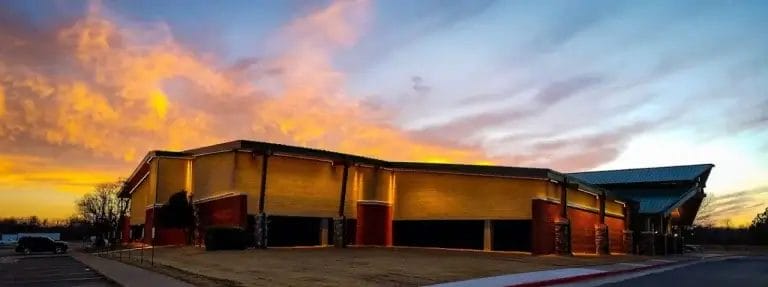
Government Building
Cherokee National Capitol – Haunted Government Building in Tahlequah, Oklahoma
Tahlequah (Oklahoma), Oklahoma
The Cherokee National Capitol stands as a proud symbol of resilience in downtown Tahlequah, Oklahoma....
Explore This Location →
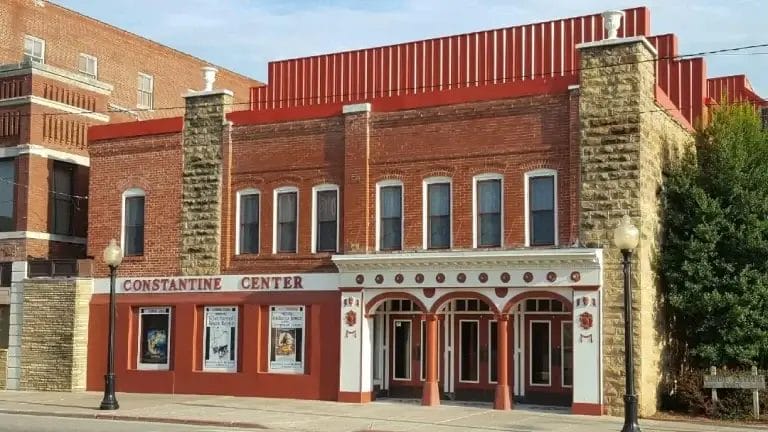
Theater
Constantine Theater – Haunted Theater in Pawhuska, Oklahoma
Pawhuska (Oklahoma), Oklahoma
The Constantine Theater stands as a grand testament to small-town America’s golden age of entertainment....
Explore This Location →
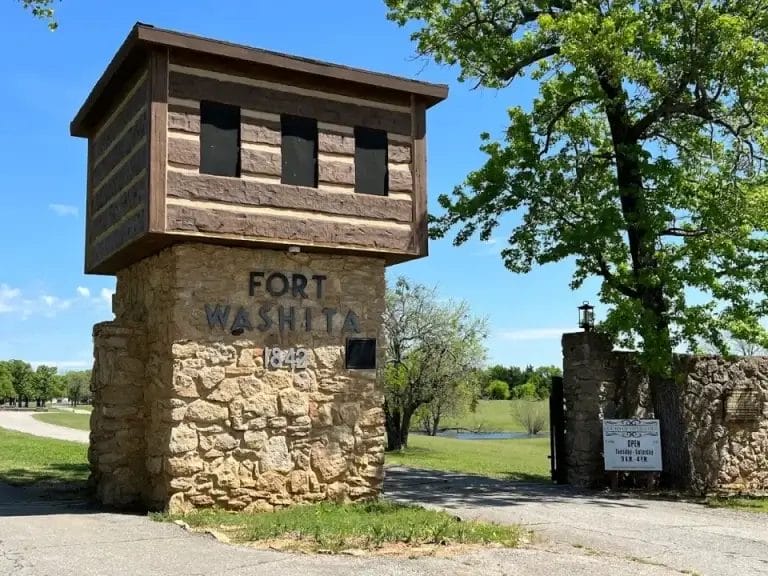
Fort
Fort Washita – Haunted Fort in Durant, Oklahoma
Durant (Oklahoma), Oklahoma
Fort Washita stands as one of Oklahoma’s most haunted historical sites. This pre-Civil War military...
Explore This Location →
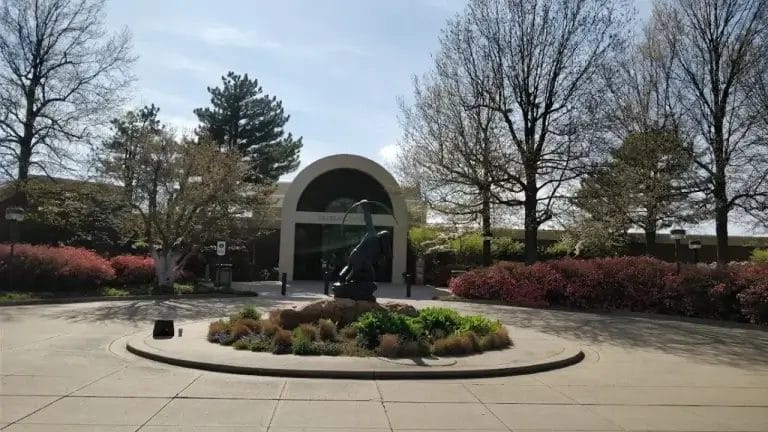
Museum
Gilcrease Museum – Haunted Museum in Tulsa, Oklahoma
Tulsa (Oklahoma), Oklahoma
The Gilcrease Museum stands as one of Tulsa’s most prestigious cultural institutions. But beneath its...
Explore This Location →
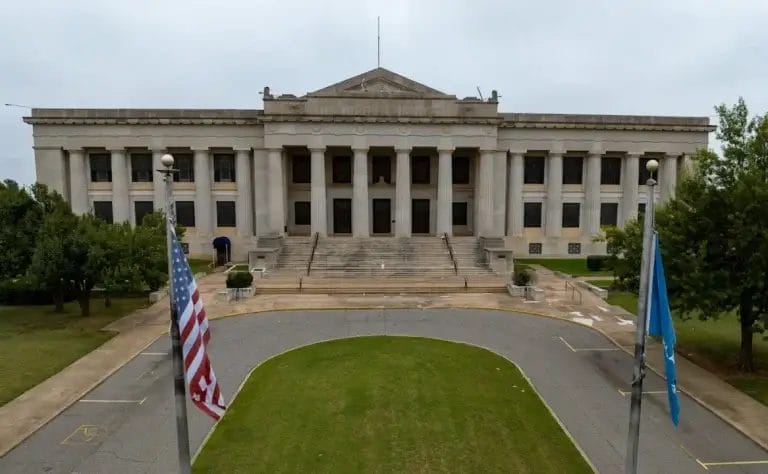
Temple
Guthrie Scottish Rite Temple – Haunted Masonic Temple in Guthrie, Oklahoma
Guthrie (Oklahoma), Oklahoma
The Guthrie Scottish Rite Temple stands as an imposing architectural masterpiece in downtown Guthrie. This...
Explore This Location →
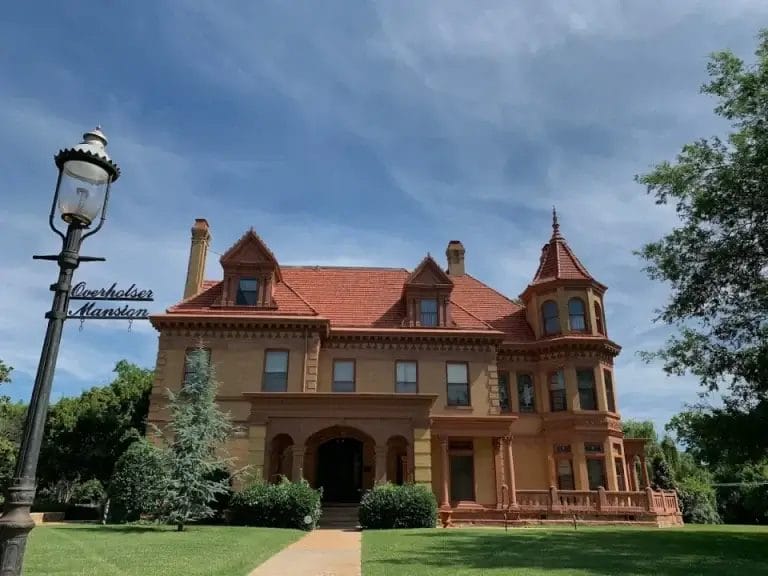
Mansion
Overholser Mansion – Haunted Mansion in Oklahoma City, Oklahoma
Oklahoma City (Oklahoma), Oklahoma
The Overholser Mansion stands as a testament to Oklahoma City’s gilded age and architectural grandeur....
Explore This Location →

Restaurant
Paradise Supper Club – Haunted Nightclub in Locust Grove, Oklahoma
Locust Grove (Oklahoma), Oklahoma
The Paradise Supper Club stands as one of Oklahoma’s most enigmatic haunted locations. This former...
Explore This Location →
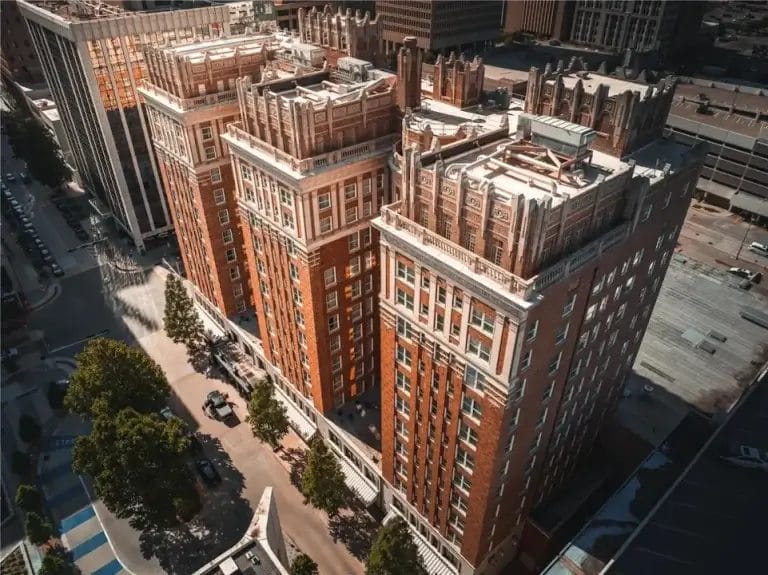
Hotel
Skirvin Hotel – Haunted Hotel in Oklahoma City, Oklahoma
Oklahoma City (Oklahoma), Oklahoma
The Skirvin Hotel stands as a towering monument to Oklahoma City’s gilded past. This elegant...
Explore This Location →
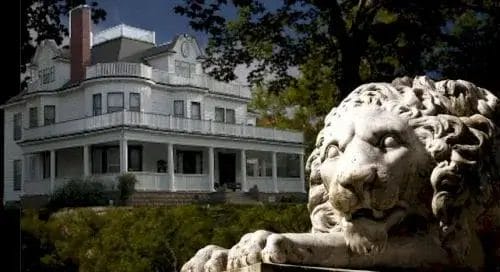
Hotel
Stone Lion Inn – Haunted Bed & Breakfast in Guthrie, Oklahoma
Guthrie (Oklahoma), Oklahoma
The Stone Lion Inn stands as one of Oklahoma’s most celebrated haunted locations. This Victorian...
Explore This Location →

Mansion
The Hex House – Haunted Mansion in Tulsa, Oklahoma
Tulsa (Oklahoma), Oklahoma
The Hex House stands as one of Tulsa’s most disturbing haunted locations. This ordinary-looking home...
Explore This Location →
Oklahoma may be known for its sweeping prairies, oil derricks, and friendly small-town charm, but beneath the surface of the Sooner State lies a darker history — one steeped in frontier violence, Native American displacement, Civil War bloodshed, and unsolved murders that have left an indelible spiritual mark on the land. From headless ghosts patrolling abandoned forts to a hotel specter so persistent she’s been blamed for NBA losses, Oklahoma is a paranormal powerhouse that rivals any haunted destination in the country.
This comprehensive guide explores every haunted corner of Oklahoma — the ghost stories, the history behind them, and the locations where the veil between the living and the dead seems impossibly thin.
Why Oklahoma Is So Haunted
Oklahoma’s paranormal intensity is no accident. The state’s history reads like a blueprint for supernatural activity, layered with the kind of tragedy, violence, and upheaval that ghost hunters believe creates lasting spiritual residue.
The Trail of Tears
Oklahoma was the forced destination for tens of thousands of Native Americans during the Indian Removal of the 1830s and 1840s. The Cherokee, Chickasaw, Choctaw, Creek, and Seminole nations — known as the Five Civilized Tribes — were marched along the Trail of Tears, a journey that killed thousands from exposure, disease, and starvation. The suffering embedded itself into the Oklahoma landscape, and many believe the spirits of those who perished along the way still wander the state. Oklahoma is home to 38 major Native American reservations, and the spiritual traditions of these nations — which include deeply held beliefs about the afterlife, ancestor spirits, and sacred ground — add profound spiritual depth to the state’s haunted reputation.
The Land Run and Frontier Lawlessness
Oklahoma’s famous Land Runs of 1889 and beyond brought waves of settlers into territory that was already spiritually charged. The chaos of the frontier era — with its outlaws, gunfights, saloon murders, and vigilante justice — left behind countless restless spirits. Towns that sprang up overnight became graveyards just as quickly, and many of Oklahoma’s most haunted locations trace their origins to this turbulent period.
The Civil War in Indian Territory
Oklahoma (then Indian Territory) was a major theater of the Civil War, with brutal engagements fought across the state. Military forts changed hands between Union and Confederate forces, and the violence of the conflict left spiritual scars that persist at places like Fort Washita and Fort Reno. Soldiers, prisoners of war, and civilians died in large numbers, and their spirits are regularly reported at former military installations.
Oil Boom Excess and Tragedy
The Oklahoma oil boom of the early 20th century created enormous wealth — and with it, corruption, murder, and tragedy. The mansions of oil barons, the hotels where power brokers schemed, and the communities built on the backs of exploited workers all carry their own collections of ghost stories.
The Oklahoma City Bombing
The 1995 bombing of the Alfred P. Murrah Federal Building killed 168 people and injured hundreds more. The site, now the Oklahoma City National Memorial, carries an emotional weight that visitors describe as overwhelming. Perhaps most chillingly, parents who bring young children (aged three to five) to the memorial report that their kids become terrified — claiming they can see dead people walking around the site.
The Most Haunted Locations in Oklahoma City
Oklahoma City is a paranormal hotbed, with haunted hotels, asylums, mansions, and even grocery stores contributing to the capital’s spectral reputation.
The Skirvin Hilton Hotel
The Skirvin Hilton is not just Oklahoma’s most famous haunted location — it’s one of the most well-documented haunted hotels in the United States. This historic 13-story hotel opened in 1911, built by businessman William Balser “Bill” Skirvin, and it has been the epicenter of paranormal activity in Oklahoma City for over a century.
The legend centers on a ghost known as “Effie.” According to the story, W.B. Skirvin had an affair with a hotel maid who became pregnant. To prevent a scandal, he allegedly locked her in a room on the 10th floor. The isolated woman grew increasingly despondent, and even after giving birth, she was never released. Driven to despair, she reportedly grabbed her infant and leaped from the window to her death.
Whether the Effie story is historical fact or legend is debated — historians note that Skirvin was indeed a notorious womanizer, and the 10th floor was known for various incidents of vice, but no definitive records confirm the specific tragedy. What is undeniable, however, is the volume and consistency of paranormal reports from the hotel.
The reported activity at the Skirvin includes crying babies heard in empty hallways, a female voice propositioning male guests when they’re alone in their rooms, objects moving by themselves, doors slamming shut without explanation, and the apparition of a naked woman appearing to guests in the shower. One male guest even reported a sexual assault by an invisible entity. Room 1015 is considered the most actively haunted room — believed to be where Effie was imprisoned.
The Skirvin’s haunted reputation gained national attention through the NBA. In 2010, the New York Knicks blamed their loss to the Oklahoma City Thunder on their haunted hotel rooms. The Chicago Bulls reported doors slamming and strange sounds during their stay. The story resurfaced during the 2012 NBA Finals when the Miami Heat stayed at the Skirvin, and again in 2013 when the Baylor Lady Bears suffered one of the biggest upsets in NCAA tournament history after staying there. Multiple NBA teams have since requested alternative accommodations when visiting Oklahoma City.
Paranormal investigators have captured Electronic Voice Phenomena (EVPs) of whispering voices and distant crying, recorded thermal imaging anomalies showing human-shaped heat signatures in vacant rooms, and documented magnetic field fluctuations with no logical source. In January 2019, Brooklyn Nets star Kyrie Irving announced he was producing a feature film about the hotel’s paranormal activity.
The Skirvin Hotel is at 1 Park Avenue in Oklahoma City and remains fully operational as a luxury Hilton property. Brave guests can request Room 1015 for the full experience.
Overholser Mansion
Built in 1903, the Overholser Mansion is a stunning 20-room Victorian home that was once the residence of Henry Overholser, one of Oklahoma City’s founding fathers, and his wife, Anna Ione Overholser. Known as the “queen of Oklahoma City society,” Anna hosted lavish events in the home, including a notable reception for President and Mrs. William McKinley. Her deep connection to the mansion is believed to be why her spirit has never left.
Anna’s ghost is described as a petite woman in a white gown with a Gibson Girl hairstyle — matching her photograph that still hangs in the home, depicting her in the pearl-adorned gown she wore to the McKinley reception. She has been seen gliding through rooms, peeking from the turret windows on the second and third floors as if watching for Henry to return, and her presence is often accompanied by the scent of fresh roses — her favorite flower.
Henry Overholser’s spirit is associated with the smell of tobacco and the sound of whistling. Girlish pranks and a small footprint that mysteriously appeared in the dust one winter are attributed to the spirit of their daughter. Paranormal investigators have documented dozens of distinct entities in the home, ranging from small children to full-grown adults — likely the many guests the Overholsers entertained during their lifetimes.
One particularly striking account comes from Kathy Dickson, former director of museums and historic sites for the Oklahoma Historical Society. Dickson dreamed about a young girl walking through the mansion in a Victorian ball gown — and was startled when she later saw a photograph of the Overholser daughter wearing the exact same dress, which she had never seen before. Years later, a visitor to the mansion said “Anna wants her Bible put back on the table.” Dickson had no knowledge of any Bible, but a search revealed that Anna’s Bible had been stored away in a closet.
The staff have had their own playful encounters. Preservation Oklahoma Executive Director Chantry Banks recalled being lazy one evening and saying aloud across an empty room, “It sure would be great if someone would turn these lights off for me.” The lamp immediately switched off.
Saint Vincent’s Mental Asylum
Saint Vincent’s Mental Asylum is considered one of the most terrifying haunted locations in all of Oklahoma. Founded in 1945 by a religious order called the Brothers of Mercy, the asylum’s history is stained with tragedy and violence.
In 1962, a nurse suffocated two patients to death, leading to the asylum’s closure. The building was later converted into a rehabilitation center for recovering alcoholics called The Main Artery by Reverend Richard Frank Dolan. In 1988, Father Dolan was found beaten to death in his apartment. The building subsequently changed hands multiple times, with each occupant reportedly experiencing disturbing phenomena.
The property is now private, but several paranormal investigation groups have been granted access and captured compelling evidence. Some investigators believe the asylum harbors a demonic force that predates the hospital itself — one so powerful it may have driven both staff and patients insane, potentially explaining the spate of violence. The Travel Channel’s “Ghost Asylum” featured Saint Vincent’s and dubbed it one of the most haunted places in Oklahoma.
The Oklahoma City National Memorial
The site of the April 19, 1995 bombing that killed 168 people carries an extraordinary emotional and spiritual weight. While adults visiting the memorial report feelings of overwhelming sadness and heaviness, the most disturbing accounts come from parents who bring young children. Kids aged three to five reportedly become extremely upset and frightened, telling their parents they can see dead people wandering around the memorial grounds. The consistency of these reports from unrelated families has made the memorial one of the most haunting — in every sense of the word — sites in the state.
The Governor’s Mansion
Oklahoma’s Governor’s Mansion, built on former oil well land, has its own collection of ghost stories. Phantom knocking in the dead of night is reportedly drowned out only by the sound of cabinet doors being slammed shut by unseen hands. The spiritual activity is attributed to the nefarious history of the oil barons who once controlled the land.
Langston’s Western Wear
This former dance hall and bar, built in 1919, is now a western wear store — but two spectral residents haven’t moved on. Sisters Rose and Patty were “taxi dancers” in the old dance hall, meaning customers paid them to be dance partners. The story goes that Patty was shot and killed by her boyfriend, leaving Rose so distraught that she hanged herself in an upstairs room. Since their deaths, unexplained events have plagued the property, and both sisters are believed to still haunt the building.
Puckett’s Body Shop
An unlikely haunted location, this body shop on SW 29th Street gained fame when surveillance camera footage captured what appeared to be spirits moving through the shop. The owner suggested the entity might be Tracy Martin, a woman killed in a car accident just hours before her vehicle was towed to the shop. The footage went viral, making it one of Oklahoma City’s most talked-about paranormal events.
The Oklahoma City Zoo
Ranked among the top 10 zoos in the United States and the oldest in the Southwest, the Oklahoma City Zoo has a resident ghost. Staff and visitors have reported encounters with an unexplained presence, adding a supernatural dimension to an otherwise family-friendly attraction.
The Civil Center Music Hall
This massive entertainment complex was reportedly the site of a large-scale Satanic ritual that required an exorcism by the church. Despite the cleansing efforts, whatever was awakened inside the building apparently remains. Staff report encountering “the Grayman,” a mysterious spirit first spotted in the new millennium, whose silhouette fills empty sound booths and whose presence causes objects to move on their own in the dead of night.
Guthrie — Oklahoma’s Most Haunted City
Oklahoma’s former territorial capital is, by many accounts, the single most haunted city in the state. Multiple locations within this small town generate consistent paranormal reports, creating a density of supernatural activity that is remarkable even by Oklahoma standards.
The Stone Lion Inn
The Stone Lion Inn is Oklahoma’s first and oldest bed and breakfast, and it is among the most famous haunted houses in the entire state. This 8,000-square-foot Victorian mansion was built in 1907 by F.E. Houghton for approximately $11,000 — making it the most expensive home in Guthrie at the time. Houghton lived there with his wife and twelve children, but tragedy struck when their eight-year-old daughter Augusta fell ill with whooping cough. A nurse gave the child the wrong amount of cough medicine — which at that time contained opium — and Augusta died from the overdose.
After the Houghton family moved out, the home served as a boarding house and then, significantly, as a funeral home (an embalming table can still be seen in the front entryway). It eventually became a private residence before opening as a bed and breakfast in 1986.
The haunting was discovered when multiple guests independently reported the same experience: a little girl had awakened them during the night and stood beside their bed. Owner Rebecca “Becky” Luker began researching the home’s history and discovered Augusta’s story. The child’s spirit is said to squeeze the toes of sleeping guests, crawl into bed with them, and pat their faces gently. The tap-tap-tap of a child’s footsteps has been heard leading from the second floor to the third.
Augusta isn’t alone. A strong male entity lingers in the basement — where the morgue once operated — and is often accompanied by the smell of pipe tobacco, attributed to Mr. Houghton himself. Paranormal investigators have documented multiple spirits throughout the property, and the Stone Lion Inn has become a destination for ghost-hunting groups from across the country.
The inn embraces its haunted reputation, hosting interactive murder mystery dinners every Friday and Saturday night with a seven-course candlelight meal. Guests can also book a room overnight for the full spectral experience.
The Blue Belle Saloon
The Blue Belle Saloon in Guthrie was once operated as a bordello by Miss Lizzie and her working girls, Claudia and Estelle. Business was good until the day Claudia was found beaten to death. Miss Lizzie had Claudia’s body buried inside the saloon and continued operating the bordello with Estelle. However, shortly afterward, both Miss Lizzie and Estelle were found dead of unknown causes. Since these deaths, the saloon has been haunted by all three women. Unexplained noises, cold spots, and the sense of being watched are regularly reported.
The Masonic Boys Home
The former Masonic orphanage in Guthrie once housed up to a hundred children. The basement is allegedly where an evil headmistress murdered several of the orphan boys. A staff member who committed suicide is said to haunt the building’s bell tower. Visitors have witnessed a woman walking down the main hallway, the ghost of a frightened little girl, and have heard the sounds of children crying and screaming echoing through the empty building.
Haunted Military Forts
Oklahoma’s military history — spanning the Indian Wars, the Civil War, and two World Wars — has left behind some of the state’s most actively haunted locations.
Fort Washita — Durant
Fort Washita, established in 1842, is a National Historic Landmark and one of the most famous haunted locations in Oklahoma. Originally built as a U.S. military post to protect the Chickasaw and Choctaw Nations, the fort was occupied by Confederate forces during the Civil War, who destroyed much of it as the war ended.
The most infamous spirit is Aunt Jane, whose story is among the most terrifying in Oklahoma folklore. Jane lived at the fort until thieves came looking for her money. When she refused to reveal its hiding place, they beheaded her, and her remains were scattered across the fort grounds. Her headless ghost has been seen walking the grounds at night, sometimes carrying a lantern, searching for either her head or her lost treasure.
The haunting intensified in the late 19th or early 20th century when Aunt Jane’s spirit allegedly possessed a child named Molly Stalcup who lived near the fort. Through the child, Jane threatened to cut off all of Molly’s hair, and the possession only ended when Mrs. Stalcup began praying.
But Aunt Jane isn’t the only ghost at Fort Washita. During Civil War reenactments, participants have had encounters that go beyond historical recreation. War reenactors near the bridge once saw a figure approaching with a lantern — as it drew closer, they realized it was a woman with no feet and no head. A security guard watched soldiers on horseback ride past him, waving — only for the riders to pass straight through a fence and disappear onto the road. Multiple reenactors have spotted an officer standing on the front porch of the barracks, watching the sunset.
When the fort’s cemetery was exhumed, two unidentified male bodies were discovered in the same grave — one an ancient corpse of a boy with meningitis, the other a Hispanic man from the modern era. No one knows who they were, adding yet another layer of mystery.
Visitors can tour Fort Washita’s grounds, including the officers’ quarters and original sandstone structures. The fort also hosts the annual Rendezvous at Fort Washita reenactment.
Historic Fort Reno — El Reno
Established in 1874, Fort Reno served as a military post during the Indian Wars, a remount depot, and a German prisoner of war camp during World War II. Its history is saturated with death and conflict, and the paranormal activity reflects it.
Visitors report cold spots that follow them through buildings, floating orbs captured on camera, doors slamming without explanation, and water faucets turning on by themselves. Faces have been spotted in windows of buildings that should be empty. Shadowy figures and fleeting human shapes — thought to be Indigenous people or former soldiers — are frequently seen near the cemetery and in the windows of historic buildings.
Some believe that members of Indigenous tribes were buried at Fort Reno following a massacre in 1877, adding another tragic dimension to the site’s spiritual energy.
Fort Reno embraces its haunted reputation and hosts monthly Ghost Tours where visitors are split into groups, given lanterns, and led through the grounds, buildings, and cemetery by professional paranormal researchers who share their findings in real time. It is one of the most popular paranormal tourism experiences in Oklahoma.
Dead Woman’s Crossing — Weatherford
Unlike many Oklahoma ghost stories that blend fact with urban legend, Dead Woman’s Crossing has a fully verified — and deeply disturbing — backstory that makes it one of the most haunted locations in the state.
In July 1905, a 29-year-old woman named Katie DeWitt James filed for divorce from her husband on grounds of cruelty. The next day, she boarded a train with her 14-month-old daughter, Lulu Belle, to visit family in Payne County. Her father, Henry DeWitt, saw them off at the station. He expected to hear from his daughter within days.
Weeks passed with no word. Henry hired a private detective, who discovered that Katie had befriended a prostitute named Fannie Norton on the train. Norton had persuaded Katie to disembark at Weatherford, offering her a buggy ride to her destination. Norton dropped the baby off at her brother-in-law’s house in Clinton and rode back toward town at a furious pace.
When the detective tracked down Norton and questioned her, she became visibly nervous. The interrogation ended abruptly when Norton fell dead — she had poisoned herself before the detective’s arrival, taking her secrets to the grave.
In August 1905, a father and son fishing at Deer Creek made a horrifying discovery beneath the wagon crossing: the decaying, decapitated remains of a woman and evidence of a child’s presence. Katie’s skull was later found in a burlap bag nearby. The murder was never officially solved, and Fannie Norton’s motive — if she acted alone — remains a mystery to this day.
The original wagon crossing was demolished decades later, but a concrete bridge was built nearby and immediately dubbed “Dead Woman’s Crossing.” The haunting began almost immediately and has never stopped. Paranormal investigators, ghost hunters, and the merely curious have reported hearing a woman screaming under the bridge at night, the sound of wooden wagon wheels creaking as though the old crossing still stands, and the wailing of a mother calling out for her baby. Some have claimed to see the ghost of Katie wandering the banks of Deer Creek in search of Lulu Belle. Others have witnessed shadow figures and what appears to be the murder being reenacted by ghosts — complete with sounds of a struggle, running footsteps, and screams of pain.
Blue lights of indeterminate shape have been seen rising from the creek and approaching witnesses. The location, about an hour west of Oklahoma City near Weatherford, remains one of the most actively investigated paranormal sites in Oklahoma.
Tulsa’s Haunted Hotspots
Known as the “Oil Capital of the World,” Tulsa is also home to a surprisingly rich collection of ghost stories.
Cain’s Ballroom
Cain’s Ballroom has been providing entertainment to Tulsans since 1924, and the spirits that call this iconic music venue home seem unwilling to leave. Located in the heart of downtown Tulsa, Cain’s was the site of Bob Wills & The Texas Playboys’ first regular radio broadcast, and the King of Western Swing is among the venue’s most famous spectral residents.
Bob Wills apparently enjoyed performing at Cain’s so much that he decided to stick around after death. Visitors have reported hearing the faint twang of guitar strings and seeing a shadowy figure on stage, tapping his foot to an otherworldly rhythm. A female ghost in a fashionable red dress has also been spotted, and paranormal investigators have documented cold spots throughout the ballroom, lights turning on and off, orbs captured on camera, and the overwhelming feeling of being watched.
Gilcrease Museum
Tulsa’s premier art and history museum, home to an extensive collection of American Western art and culture, harbors more than artifacts. Prolific Tulsa ghost hunter Teri French considers Gilcrease one of the most haunted places in the city. Her team experienced paranormal activity on nearly every investigation — loud banging noises, dramatic temperature fluctuations, doors slamming, and inexplicable technical malfunctions with equipment.
In one particularly striking incident, newly installed security cameras kept triggering in the south bedroom late at night. When police responded, their trained K-9 units absolutely refused to enter the room.
Mohawk Park and Golf Course
This Tulsa park makes the haunted list thanks to a couple of strange tales. Unexplained lights have been seen inside a structure on the grounds despite the fact that there is no electricity connected to it. The park carries an unsettling atmosphere after dark that has kept it on paranormal investigators’ radar.
Oklahoma’s Haunted Mansions and Historic Homes
Belvidere Mansion — Claremore
Built in 1902 by John M. Bayless, the Belvidere Mansion is a beautiful example of Gothic architecture with a tragic origin. Bayless died from complications following appendicitis surgery six months before his mansion was completed. His wife and six children (some accounts say seven) finished construction and lived there until 1919.
The spirits of the Bayless family are believed to have never left. Visitors report hot and cold spots throughout the house, unexplained noises and disembodied voices, hazy figures in dim lighting, and toilets flushing on their own. Paranormal investigators have found the second floor to be especially active, with psychics reporting the presence of children playing, John Bayless himself, and the spirit of a young woman who committed suicide in the 1940s when the mansion was used as apartments.
The Rogers County Historical Society restored the mansion in 1991, and today it serves as a historic site, event venue, and tearoom — offering visitors a chance to experience both its beauty and its supernatural side.
The Parallel Forest (Boggy Creek Area)
Deep in southeastern Oklahoma, near the Boggy Creek area, lies a stretch of forest where trees grow in unnervingly perfect parallel rows. The area is associated with an array of paranormal reports — strange lights, disembodied voices, and an oppressive feeling of being watched. Some attribute the activity to the spirits of Native Americans who were displaced through the area, while others believe something more ancient and unexplainable inhabits the forest.
Haunted Theaters
Oklahoma’s historic theaters, with their dramatic histories and atmospheric architecture, are natural settings for ghost stories.
The Constantine Theater — Pawhuska
Theater patrons describe the resident ghost as a beautiful young woman in a button-down dress. Some believe she is Sappho Constantine Brown, the daughter of the theater’s namesake, George Constantine. The ghost was prominent enough to be featured in the book “Haunted Highway, The Spirits of Route 66” by Ellen Robson and Dianne Halicki. The apparition is most often seen near the balcony.
The Poncan Theatre — Ponca City
Housed in one of Ponca City’s oldest buildings, the Poncan Theatre has earned its haunted reputation through consistent reports of apparitions that suddenly disappear, disembodied footsteps, and the sound of Native American drums. The ghost is said to have a favorite seat — number four — where she sits quietly in a dress, sweater, and old-fashioned shoes, appearing to watch something invisible to everyone else. Most mysteriously, a stain on the ceiling that resembles blood reappears whenever it is scrubbed clean or painted over.
Haunted Cemeteries and Outdoor Locations
Blanchard Cemetery
Blanchard Cemetery is haunted by a remarkably friendly ghost — a very tall man in a dark suit who is buried there. Unlike most cemetery ghosts, this spirit shows no malevolence. Witnesses consistently report that he waves at them in a friendly manner, as if he’s simply lonely now that his family is long gone. The cemetery is also known for strange, unexplained noises heard after dark.
Veteran’s Lake — Sulphur
Veteran’s Lake near Sulphur has a reputation as one of Oklahoma’s most haunted outdoor locations. It is said to be possessed by the spirit of a woman who drowned while trying to save her child. Both the woman and the child perished, and her ghost is regularly reported near the water.
Lake Murray — Ardmore
Lake Murray is haunted by a woman in a yellow dress. The details of her story vary, but sightings of the spectral figure near the lake’s shores have been reported for decades.
Hillside Cemetery
At Hillside Cemetery, graves dating to the late 1800s and early 1900s include one believed to belong to a witch. Local legend warns that those who disturb her grave will suffer dire consequences — from life ruination to demonic possession. The ghost of a teenager who crashed his car nearby in the 1970s has also been spotted wandering the grounds.
Oklahoma’s Haunted Route 66
Route 66 — the legendary “Mother Road” — cuts directly through Oklahoma, and several haunted locations along its path add a supernatural dimension to the iconic highway.
The Constantine Theater in Pawhuska earned a place in Route 66 ghost lore through its inclusion in “Haunted Highway, The Spirits of Route 66.” Throughout Oklahoma, travelers along Route 66 have reported ghostly hitchhikers, phantom vehicles, and an unsettling feeling of being followed through certain stretches of the highway, particularly at night.
Sacred Heart — The Haunted Mission
Sacred Heart, in the Potawatomi County area of central Oklahoma, was once a mission that served multiple functions — farm, chapel, bakery, seminary, and boarding house. Tragedy struck in 1901 when a catastrophic fire erupted, destroying most of the building and killing many children inside.
Ghost hunters and paranormal investigators have reported an extraordinary range of activity at the site: the cries and screams of children, laughter echoing from empty rooms, and actual sightings of child apparitions. The spirits of the children who perished in the fire are believed to remain at the site, making Sacred Heart one of Oklahoma’s most emotionally haunting locations.
The Cherokee Strip Museum — Alva
Located in western Oklahoma near the area historically known as “No Man’s Land,” the Cherokee Strip Museum occupies a former hospital building completed in 1932. The building saw extensive death during its hospital years, including patients of botched surgeries who are believed to be the source of its paranormal activity.
The museum is filled with unsettling displays, including vintage medical instruments and an embalming table, but the truly disturbing elements are supernatural: a player piano that seemingly plays on its own at random, a mysterious blood stain on the floor that refuses to be washed away no matter how many times it’s cleaned, and an angry presence that visitors report breathing down their necks as they tour the exhibits. The second and third stories of the building have been bricked up, adding to the claustrophobic, haunted atmosphere.
The museum has been studied by multiple paranormal investigation groups and embraces its reputation — visitors can even rent the entire building for overnight paranormal investigations.
Ghost Mounds — Near Hydro
Visible from Interstate 40 near Hydro, the Ghost Mounds are mesa formations that have generated local legends and spooky rumors for generations. The exact nature of the haunting varies by storyteller, but the mounds have been associated with strange lights, unexplained sounds, and an unsettling atmosphere that locals have noted for as long as anyone can remember.
Muskogee — Oklahoma’s Other Haunted Capital
Muskogee is considered one of the most haunted cities in Oklahoma, a distinction attributed to two devastating fires that wiped out the town’s entire downtown and the lost souls displaced by the Trail of Tears. The neighboring town of Fort Gibson, one of the oldest settlements in Oklahoma with its own military fort, adds an additional concentration of supernatural energy to the area.
Ghostly Whisper Tours operates in Muskogee and Fort Gibson, offering three-hour tours of the region’s most haunted locations. Fort Gibson’s age and military history provide what the tour company describes as an “abundance of haunts.”
Ghost Tours and Paranormal Experiences
For those who want to experience Oklahoma’s haunted side with professional guidance, several options are available:
Oklahoma City Ghosts (US Ghost Adventures)
Nightly walking tours of downtown Oklahoma City covering the Skirvin Hotel, Saint Joseph’s Old Cathedral, the Overholser Mansion, the underground tunnels beneath the city, and more. Tours explore the connections between Oklahoma’s Native American history, oil baron excess, and the paranormal.
Fort Reno Monthly Ghost Tours — El Reno
Led by professional paranormal researchers, these lantern-lit tours take visitors through the fort’s grounds, historic buildings, and cemetery. Researchers share their findings, and participants often capture their own evidence.
Ghostly Whisper Tours — Muskogee and Fort Gibson
Three-hour tours covering the most haunted locations in two of Oklahoma’s oldest and most spiritually active communities.
Tulsa Ghosts
Walking tours of downtown Tulsa exploring the city’s haunted venues, historic buildings, and the spirits of the Oil Capital.
Stone Lion Inn Murder Mystery Dinners — Guthrie
Every Friday and Saturday night, the haunted Stone Lion Inn hosts interactive murder mystery dinners with a seven-course candlelight meal. Guests can also book rooms for an overnight stay in one of America’s most haunted bed and breakfasts.
Planning Your Haunted Oklahoma Road Trip
Oklahoma’s relatively compact size and excellent highway system make it ideal for a paranormal road trip. Here’s a suggested route that covers the state’s most significant haunted locations:
Day 1: Oklahoma City Start at the Skirvin Hilton Hotel (book Room 1015 if you dare). Visit the Overholser Mansion, drive past Saint Vincent’s Mental Asylum, and stop at the Oklahoma City National Memorial. In the evening, take an Oklahoma City Ghosts walking tour.
Day 2: Guthrie and El Reno Drive 30 minutes north to Guthrie for the Stone Lion Inn (tour or overnight stay), the Blue Belle Saloon, and the Masonic Boys Home. Then head west to El Reno for a Fort Reno ghost tour (check the monthly schedule).
Day 3: Weatherford and Western Oklahoma Drive west to Dead Woman’s Crossing near Weatherford. Continue to the Cherokee Strip Museum in Alva for an afternoon of haunted hospital exploration.
Day 4: Southeast Oklahoma Head south to Fort Washita in Durant for a full day exploring the fort’s grounds, sandstone structures, and the haunted cemetery where Aunt Jane roams.
Day 5: Tulsa and Northeast Oklahoma Drive to Tulsa for Cain’s Ballroom, the Gilcrease Museum, and the Belvidere Mansion in nearby Claremore. End with a Tulsa Ghosts walking tour.
Conclusion
Oklahoma is a state where the past refuses to stay buried. From the headless specter of Aunt Jane patrolling Fort Washita to the desperate screams of Katie James echoing beneath Dead Woman’s Crossing, from the ghostly maid Effie propositioning NBA players at the Skirvin to the murdered children crying at Sacred Heart — Oklahoma’s paranormal landscape is as vast and varied as its prairies.
The Sooner State’s haunted heritage draws from every chapter of its turbulent history: the suffering of the Trail of Tears, the violence of the Civil War, the lawlessness of the frontier, the excesses of the oil boom, and the tragedies of modern times. These layers of history create a supernatural depth that rewards exploration — whether you’re a seasoned paranormal investigator with professional equipment or simply a curious traveler looking for a different kind of Oklahoma experience.
So load up the car, charge your EVP recorder, and hit the road. Oklahoma’s ghosts are waiting — and some of them, like the friendly man at Blanchard Cemetery, might even wave hello.
Explore America’s Most Haunted Places by State
Discover spine-chilling locations, paranormal hotspots, and supernatural encounters across all 50 states. Click any state to begin your journey into the unknown.