
📍 Map of Haunted Places in Montana
Explore all 10 haunted locations across Montana. Click any pin to view details.
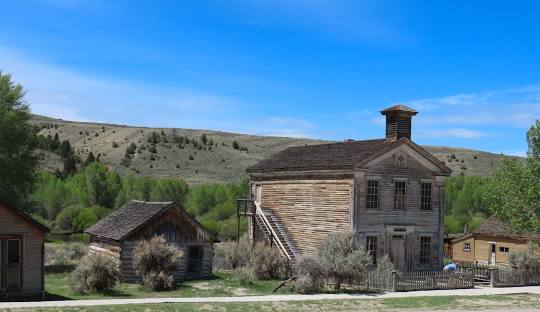
Ghost Town
Bannack State Park – Haunted Ghost Town in Dillon, Montana
Dillon (Montana), Montana
Bannack State Park stands as Montana’s best-preserved ghost town and one of the most haunted...
Explore This Location →
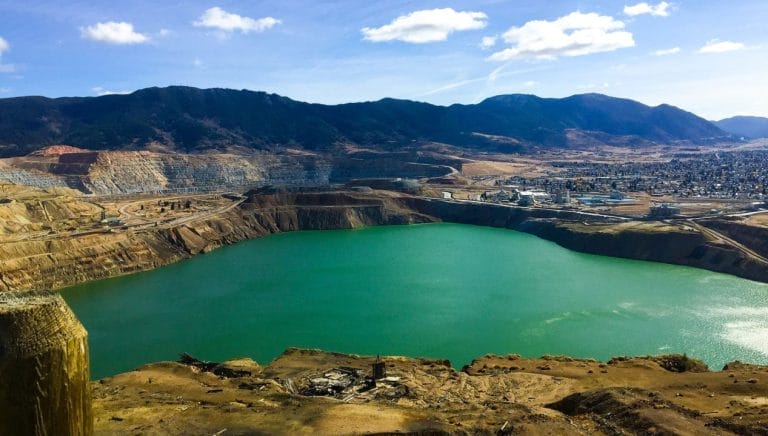
Mine
Berkeley Pit – Haunted Mine in Butte, Montana
Butte (Montana), Montana
The Berkeley Pit stands as one of America’s most toxic and haunted industrial sites. This...
Explore This Location →

Brothel
Dumas Brothel Museum – Haunted Brothel in Butte, Montana
Butte (Montana), Montana
The Dumas Brothel stands as America’s longest-running house of ill repute. This infamous establishment operated...
Explore This Location →
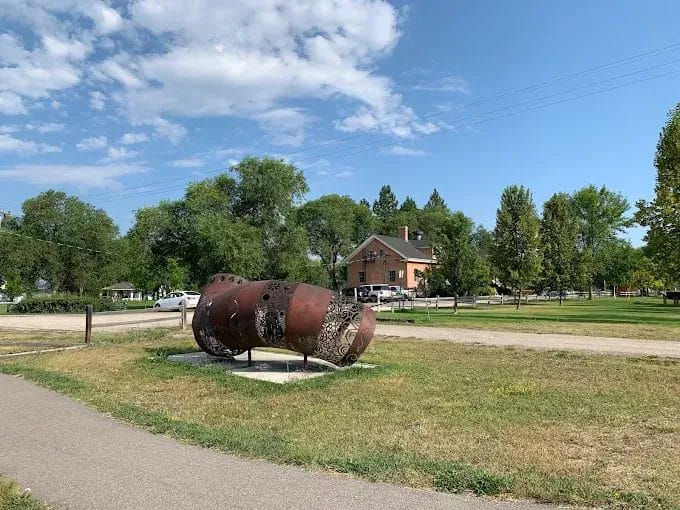
Fort
Fort Missoula – Haunted Fort in Missoula, Montana
Missoula (Montana), Montana
Fort Missoula stands as a weathered sentinel on the outskirts of Missoula, Montana. Its military...
Explore This Location →
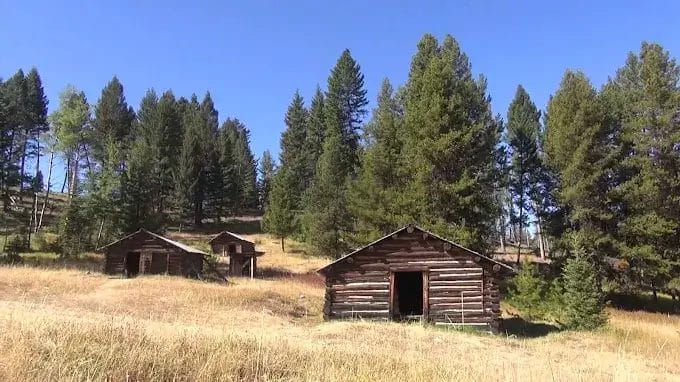
Ghost Town
Garnet Ghost Town – Haunted Mining Town in Garnet, Montana
Garnet (Montana), Montana
Deep in the mountains of western Montana lies one of America’s best-preserved ghost towns. Garnet...
Explore This Location →
Hotel
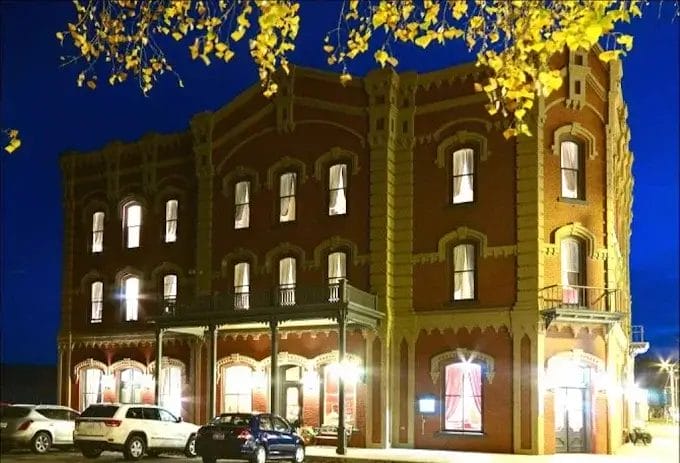
Grand Union Hotel – Haunted Hotel in Fort Benton, Montana
Fort Benton (Montana), Montana
The Grand Union Hotel stands as a Victorian masterpiece along the banks of the Missouri...
Explore This Location →
Ghost Town
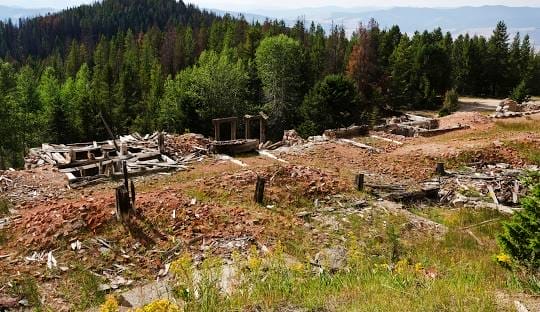
Granite Ghost Town – Haunted Mining Town in Philipsburg, Montana
Philipsburg (Montana), Montana
High in the rugged Flint Creek Mountains of Montana sits a crumbling reminder of boom-and-bust...
Explore This Location →
Battlefield
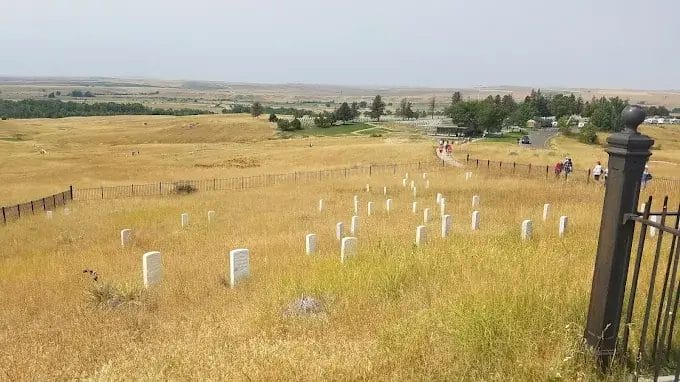
Little Bighorn Battlefield – Haunted Battlefield in Crow Agency, Montana
Crow Agency (Montana), Montana
The windswept hills of southeastern Montana hold one of America’s most infamous battlegrounds. Little Bighorn...
Explore This Location →
Mansion
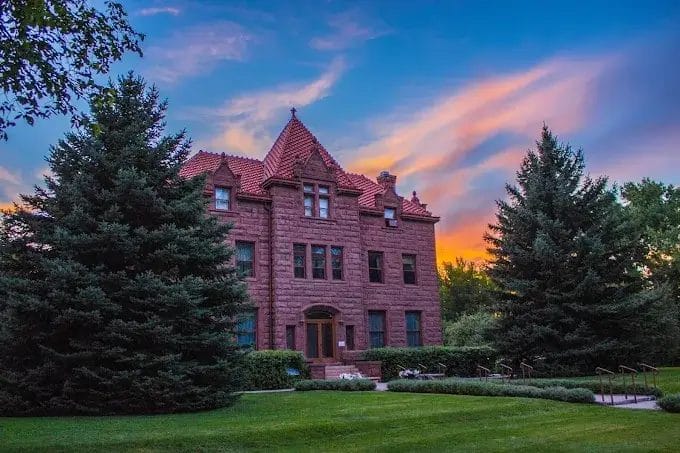
Moss Mansion – Haunted Historic Mansion in Billings, Montana
Billings (Montana), Montana
The Moss Mansion stands as one of Montana’s most elegant historic homes. This three-story red...
Explore This Location →
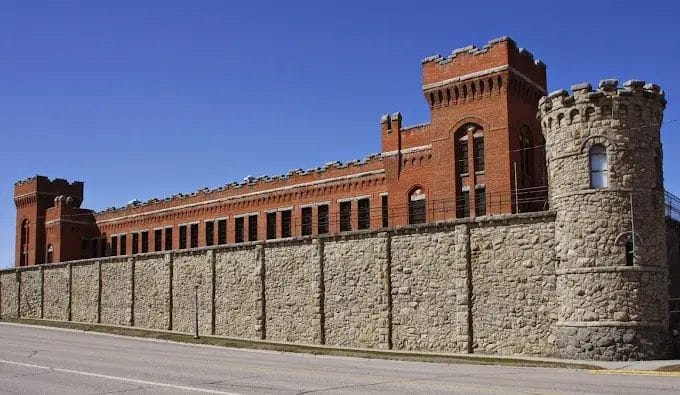
Prison
Old Montana Prison – Haunted Prison in Deer Lodge, Montana
Deer Lodge (Montana), Montana
The Old Montana Prison stands as a towering fortress of stone in the quiet town...
Explore This Location →
Montana’s vast open skies and rugged mountain terrain might evoke images of pristine wilderness and cowboy culture, but beneath the beauty of Big Sky Country lies a darker, more restless history. From blood-soaked battlefields and abandoned gold rush towns to former brothels and crumbling prisons, Montana is home to some of the most actively haunted locations in the American West.
The state’s paranormal reputation isn’t accidental. Montana’s turbulent past — marked by violent frontier conflicts, mining disasters, lawless boomtowns, and the desperation of Prohibition-era life — has left behind a residual energy that visitors and investigators continue to encounter today. Whether you’re a seasoned ghost hunter or simply curious about the supernatural, this guide will walk you through the most haunted places in Montana, complete with the history behind each haunting and what you might experience if you visit.
Little Bighorn Battlefield National Monument — Crow Agency
If there’s one location in Montana that paranormal researchers consistently rank as the most haunted, it’s the Little Bighorn Battlefield. The site of one of the most famous military engagements in American history, this stretch of southeastern Montana prairie witnessed the deaths of 268 soldiers under Lt. Col. George Armstrong Custer on June 25-26, 1876, along with an estimated 100 Lakota Sioux, Cheyenne, and Arapaho warriors.
The sheer intensity of violence that unfolded here appears to have left a permanent mark on the landscape. Visitors and park employees have reported an extraordinary range of paranormal phenomena over the decades, from full-body apparitions of soldiers and Native American warriors on horseback to the distant sounds of gunfire, screaming, bugles, and war cries echoing across the empty plains.
The Stone House
The epicenter of the battlefield’s supernatural activity is the Stone House, built in 1894 as a residence for the cemetery’s caretaker. Local Crow tribesmen gave the early superintendent the nickname “Ghost Herder,” believing he allowed the dead to walk the grounds at night after the American flag was lowered, only to send them back to their graves at sunrise when the flag was raised again.
Park employees who have lived in or near the Stone House have reported phantom footsteps, doorknobs turning on their own, lights switching on and off in the dead of winter when the building sat empty, and strange knocking sounds within the walls. One of the most chilling accounts comes from a former employee named Christine Hope, who awoke one night in the mid-1980s to find the ghostly figure of a man in military uniform with a long handlebar mustache sitting at her kitchen table. The apparition stared directly at her for several moments before fading away. She later identified the figure as Lt. Benjamin H. Hodgson, who died during the battle.
Custer’s Ghost and Battlefield Apparitions
The ghost of Custer himself has reportedly been seen making silent inspection rounds through the battlefield’s museum and visitor center late at night. Perhaps the most remarkable accounts involve visitors who claim to have been temporarily transported back to the day of the battle itself. One Vietnam veteran from New Orleans went missing for several hours during a visit. When his worried companions found him, he was pale, shaking, and covered in dust, insisting he had witnessed the entire battle unfold around him — the sights, sounds, and smells — before the vision vanished.
A shadowy figure wearing a brown shirt and cartridge belt has been reported in the visitor center, and the cemetery itself produces frequent reports of cold spots and apparitions of mounted warriors charging through the headstones.
Visiting Information: Little Bighorn Battlefield National Monument is located off I-90 on Highway 212, about an hour east of Billings. The park is wheelchair accessible and closes before dark, though many visitors report sensing a heavy, unexplainable presence even during daylight hours.
The Dumas Brothel — Butte
Butte’s Dumas Brothel holds the distinction of being one of the longest-running houses of prostitution in American history, operating continuously from 1890 until 1982. Situated at 45 East Mercury Street in what was once the entrance to the notorious Venus Alley — Butte’s crime-ridden red-light district — the Dumas was a place of profound human suffering, desperation, and tragedy for nearly a century.
The building’s most prominent ghost is believed to be Eleanor Knott, a madam who took her own life on the upper floor. Her spirit is said to be one of several that inhabit the space. Visitors regularly report seeing a female apparition descending the staircase, while others encounter unexplained cold spots, shadow figures, and a pervasive sense of heaviness throughout the building.
The Singing Mirror
One of the most unusual paranormal claims associated with the Dumas is “The Singing Mirror,” an antique mirror within the brothel that has been identified as possibly the single most haunted object in all of Montana. The mirror reportedly emits faint sounds, and some investigators have captured EVPs (Electronic Voice Phenomena) in its vicinity.
The Dumas has been featured in over 12 paranormal investigation documentaries and films, including “Ghosts of the Devil’s Perch.” Its combination of documented history, tragic stories, and consistent paranormal reports makes it one of the most compelling haunted locations in the American West.
Visiting Information: The Dumas Brothel is located at 45 E. Mercury Street in Butte. It operates seasonally, so it’s best to call ahead at (406) 560-4989 to confirm hours and tour availability.
Old Montana State Prison — Deer Lodge
Few places in Montana carry as much dark energy as the Old Montana Territorial Prison in Deer Lodge. Operational from 1871 until the late 1970s, this was a place defined by overcrowding, miserable conditions, barely edible food, and rampant violence. Multiple murders and suicides occurred within its walls, and a massive and deadly riot erupted in 1959, adding even more tragedy to the prison’s already grim record.
Today, the Old Montana Prison is one of the state’s most popular destinations for paranormal investigators, and for good reason. The reports coming from this location are among the most aggressive and unsettling in the state. Visitors on ghost tours have reported being physically touched, scratched, pushed, and even feeling as though they are being choked — particularly in the solitary confinement area, which investigators consider the most active zone.
Full-body apparitions have been seen standing in empty cells, phantom footsteps echo through deserted corridors, and heavy cell doors have been observed closing on their own. Investigators from the Bozeman Paranormal Society have documented seeing mists, shadow figures, and smelling unexplained perfume in the empty warden’s office. They describe the spirits here as “nasty” and warn that the experience isn’t for everyone.
The prison offers organized ghost tours that are split into two halves. During the first portion, a guide leads visitors through the most haunted sections of the facility. The second half allows you to explore independently and conduct your own investigation — though you’ll need to bring your own ghost-hunting equipment.
Visiting Information: The Old Montana Prison is located in Deer Lodge. Most sections are wheelchair accessible. Ghost tours are offered seasonally, and advance booking is recommended.
Garnet Ghost Town — Granite County
Nestled at 6,000 feet in the Garnet Mountain Range, roughly 30 miles east of Missoula, Garnet is the most intact ghost town in Montana. With more than 30 preserved buildings — including hotels, saloons, cabins, and a schoolhouse — the town offers a remarkably well-preserved window into Montana’s gold rush era.
Garnet was founded in 1895 and boomed after an abundant gold strike at the Nancy Hanks Mine, which produced $690,000 in its peak year of 1896. At its height, nearly 1,000 people called the town home, supporting 13 saloons, four stores, seven hotels, a school, and numerous other businesses. Unlike many mining towns populated primarily by single men, Garnet was a family community with an active social life built around dances, sledding parties, and fishing trips.
A devastating fire destroyed much of the town in 1912. A brief revival during the 1930s couldn’t sustain the community, and by the 1940s, Garnet was completely abandoned.
The Ghosts of Garnet
But “abandoned” may not be entirely accurate. Caretakers and visitors — particularly during the winter months when the town is accessible only by snowmobile or cross-country skis — have reported a persistent array of paranormal phenomena.
The most frequently cited haunted building is Kelly’s Saloon, where the sounds of piano music, laughter, and lively conversation have been heard emanating from the empty building, even in the dead of winter when only a single caretaker oversees the entire town. At the old Wells Hotel, caretakers report hearing mysterious footsteps and the sound of doors shutting — in places where no doors even exist anymore.
There have also been reports of seeing a woman’s face in the window of one of the hotels, transparent figures moving through the streets, and an overwhelming sense that you are not alone as you walk among the silent buildings. What makes these accounts particularly compelling is that the phenomena consistently stop the moment someone approaches the source of the sounds.
The Bureau of Land Management rents out two cabins in Garnet from December through April — the period when paranormal activity is reportedly at its peak. Volunteer opportunities to help maintain the town also provide extended stays, though these positions are said to fill up quickly.
Visiting Information: Garnet is accessible from State Highway 200, about 30 miles east of Missoula. The visitor center is open daily from late May through September. Winter access is limited to snowmobiles and cross-country skis. RVs and motorhomes are not recommended on the approach roads.
Virginia City and Nevada City
As Montana’s second territorial capital, Virginia City was once the most important settlement in the territory — and one of its most dangerous. Founded in 1863 after gold was discovered at Alder Gulch (the site of the largest placer gold strike in world history, producing $10 million in its first year), the town attracted fortune seekers, outlaws, and vigilantes in equal measure.
Today, Virginia City is one of the most well-preserved frontier towns in America, and investigators from the Bozeman Paranormal Society consider it Montana’s most haunted ghost town. The team reports having paranormal experiences virtually every time they visit.
Boot Hill and the Hanging House
Near the old hanging house, investigators have reported extended interactions with an entity that was noticeably colder than the surrounding air. Full-body spirits have been seen in the cemetery and on Boot Hill, and a mysterious mist has been observed traveling up the Boot Hill Road.
The Fairweather Inn
At the Fairweather Inn, investigators documented a door in Room 4 attempting to shut on its own and lock them inside. Video footage captured the sound of the door’s lock engaging without anyone touching it. The Opera House yields its own phenomena, including children’s voices and the sounds of people preparing for a performance.
The Black-Robed Figure
One of the most distinctive recurring apparitions in Virginia City is a black-robed figure seen walking the streets, believed to be Sister Irene, a beloved nun from the town’s gold rush days. The nearby Bonanza Inn — which once served as a hospital run by the Sisters of Charity — generates frequent reports of unexplained knocking, unusual smells, and disturbances severe enough that guests have packed their belongings and slept in their cars.
Visiting Information: Virginia City is located in Madison County and hosts a full summer calendar of living history events and live performances. Nevada City, located along the Vigilante Trail, serves as an open-air museum with 108 buildings.
The Copper King Mansion — Butte
Built by William Andrews Clark, one of Montana’s infamous “Copper Kings,” this opulent mansion in Butte carries the spectral imprint of its original owner. Clark’s spirit is said to still wander the halls of his former home, manifesting as a warm, welcoming presence that contrasts with the building’s other reported phenomena.
Visitors and staff describe seeing unexplained shadow figures moving through the rooms, encountering cold spots in areas with no draft or ventilation source, and feeling as though they are being watched. The mansion’s perfectly preserved 1800s furniture and the atmosphere of old wealth and secretive societies only amplify the eerie quality of the experience.
Visiting Information: The Copper King Mansion is located at 219 W. Granite Street in Butte. Tours and event hosting are available; contact (406) 565-5600 for details.
Moss Mansion — Billings
The spirits at Moss Mansion in downtown Billings are described as playful rather than threatening, making this one of Montana’s more approachable haunted locations. The most frequently encountered ghost is believed to be little Virginia Moss, who died at just six years old.
A docent named Sherri reported seeing three small children in the mansion’s upstairs windows one evening while stopped at a traffic light across the street. Inside the home, lights turn on and off with no explanation — a phenomenon that visitors have witnessed firsthand. After hours, staff members hear footsteps in the hallways, and paranormal investigators have captured the voice and laughter of a little girl during audio playback sessions.
Visiting Information: Moss Mansion Museum is located at 914 Division Street in Billings and offers regular tours.
The Grand Union Hotel — Fort Benton
Fort Benton holds the title of Montana’s oldest town, and the Grand Union Hotel — built in 1882 — is one of its most enduring landmarks and one of the most haunted hotels in the state.
Local legend tells of a drunken cowhand who rode his horse straight into the hotel and all the way up the main staircase before being shot dead by the bar manager. Since that fateful night, the hotel has been a source of persistent paranormal activity. Guests and staff report hearing phantom hoofbeats on the stairs, witnessing mysterious blue lights dancing across Room 202, and encountering the full-body apparition of a man in a long coat who appears in various parts of the hotel before vanishing.
Visiting Information: The Grand Union Hotel is located at 1 Grand Union Square in Fort Benton and remains operational as a hotel, meaning you can book a room and spend the night with whatever lingers within.
Fort Peck Theatre — Fort Peck
This Art Deco theater in the remote northeastern corner of Montana is said to be haunted by a male ghost who appears wearing 1930s-style work clothing, consistent with the era when the Fort Peck Dam was under construction. The dam project brought thousands of workers to the area, and the town that sprang up around the construction site had its share of tragedy.
People commonly report hearing the sounds of men at work when the theater should be completely empty. Apparitions have been spotted in the dressing rooms, and a general sense of unease pervades certain areas of the building, particularly after dark.
Bear Canyon — Bozeman
Bear Canyon offers some of Montana’s most beautiful hiking and camping terrain, but it also carries one of the state’s most unsettling legends. Multiple hikers and campers have reported encountering the ghost of a little girl in a white dress among the trees.
What makes this particular spirit unnerving is her apparent intent. According to reports, the girl appears specifically to lure women away from established trails, causing them to become disoriented and lost in the dense forest. Investigators from the Bozeman Paranormal Society report having consistent experiences in the canyon, including phantom phone calls received in areas with no cell service and other unexplained electronic interference.
The New Lobby Bar — Great Falls
Great Falls has earned a reputation as one of Montana’s most haunted cities, and the New Lobby Bar at 518 Central Avenue is one of its paranormal epicenters. The building dates to 1914 and has served as a speakeasy and brothel during Prohibition, a jazz nightclub in the 1940s, and a bar in the decades since.
The building’s upper floors are closed to the public, but that hasn’t stopped the ghosts from making themselves known. A lean cowboy has been repeatedly seen looking out from a second-floor window in the afternoon. Staff and patrons hear the sound of cowboy boots walking across the upper floors, yet when anyone inspects the dusty, sealed-off rooms above, no footprints are ever found.
The bar’s former incarnation as a brothel produced its own share of tragedy. A fire reportedly killed several of the working women on the upper floors, and their cries are said to still echo from within the walls. CJ Peterson, a former owner who ran the establishment as the Jockey Club — a jazz nightclub with Art Deco murals and possible mob connections — is also believed to be among the building’s spectral inhabitants.
The Elks Lodge — Miles City
During Prohibition, the Elks Lodge in Miles City was the place to be for anyone seeking drinks and entertainment. There are even rumors that Bonnie and Clyde were occasional visitors who came to play cards. In 1963, the building became the site of a suicide, and paranormal activity has been reported there ever since.
The most commonly reported phenomenon is the apparition of a female spirit wearing a long dress who wanders the halls. She has been seen by numerous witnesses over the years and has even been captured on camera emerging from a bathroom.
The Rialto Theater — Bozeman
One of Bozeman’s most popular entertainment venues also happens to be one of its most haunted. Investigators believe the spirit of Pablo Elvira, a celebrated opera singer who considered the Rialto one of his favorite performance venues, remains in the building.
During investigations, the Bozeman Paranormal Society captured a disembodied voice in the production room that repeated the name “Pablo” three times. Staff have reported encounters with mists in the upstairs bar area, and a teenage boy has been seen appearing in the storage areas. On one visit, investigators observed a mist rising toward the theater stage with no identifiable source.
O’Fallon Historical Museum — Baker
Originally built in 1916 as the Fallon County jail and sheriff’s quarters, this museum in the small eastern Montana town of Baker carries a particularly poignant haunting. In July 1947, Sheriff Andolshek took his own life in the building’s lower level after his fiancée asked to delay their wedding. He left a note addressed to his sister before ending his life.
Visitors have reported smelling gun smoke in the exact area where the sheriff died — without having any prior knowledge of the building’s history. Other phenomena include kitchen doors slamming spontaneously, the sound of disembodied conversations, and an overall atmosphere of unease.
The building is also believed to be haunted by a child ghost named Priscilla, whose small footprints have been found in the attic walkways. She is known to play on the steps of the building’s tower. An elderly male ghost has been spotted sitting in an armchair near the basement fireplace on multiple occasions by independent witnesses who had no knowledge of each other’s sightings. This spirit appears to be drawn to the paintings of artist James Kenneth Ralston that are displayed in the basement.
The Myra Hotel — Butte
Above Tony’s Tin Shop in Butte, the space now known as the Myra Hotel has one of the most colorful haunted histories in the city. From 1926 to 1929, Ned and Mary Owen leased the top floor and advertised it as a hotel when it was actually operating as a brothel. Ned Owen died a painful death in 1927 from Prohibition-era alcohol poisoning.
Both Ned and Mary’s spirits are said to frequent the building, along with the notoriously violent Lucian Pippen, known as the “Mad Greek.” Paranormal experiences reported at the Myra include shadowy figures, the sound of children laughing, the smell of cigar smoke, and women’s voices calling out for someone named “Rosie.”
Grandstreet Theatre — Helena
Helena’s Grandstreet Theatre, housed in a former church, is home to one of Montana’s more gentle hauntings. The theater’s beautiful stained glass window was commissioned as a memorial to Clara Bicknell Hodgin, the minister’s wife who died in 1905. Though Clara lived in Helena for only a few years, she was a deeply beloved figure in the community, particularly among children.
Today, actors and patrons frequently comment on a powerful, comforting presence associated with the memorial window. The theater is nationally renowned for its haunting and is listed in the book “Haunted Places: The National Directory.” Paranormal investigators have experienced equipment failures during investigations — a phenomenon commonly attributed to spirits drawing energy from electronic devices.
Benton Avenue Cemetery — Helena
Established in 1870 and listed on the National Register of Historic Places, Helena’s Benton Avenue Cemetery is a site where locals have reported paranormal activity and ghost sightings for generations. The most frequently reported apparition is a young girl in a yellow dress who has been seen wandering among the headstones.
Tips for Paranormal Exploration in Montana
If you’re planning to visit Montana’s haunted locations, here are some practical considerations to keep in mind.
Bring extra batteries. Experienced investigators consistently report that electronic devices — cameras, audio recorders, and smartphones — drain unusually quickly at active paranormal sites. Spirits are widely believed to draw energy from batteries, so pack spares for every device you bring.
Respect the locations and their history. Many of Montana’s haunted places are sites of genuine human tragedy. The best paranormal experiences tend to come to those who approach with respect and sensitivity rather than provocation. This is especially true at culturally significant sites like the Little Bighorn Battlefield.
Visit during off-peak times. Many investigators find that activity increases during quieter periods — early morning, late evening, or during Montana’s long winter months. Garnet Ghost Town, for example, is reportedly most active between December and April.
Use recording equipment. Even if you don’t see or hear anything unusual in the moment, audio and video recordings frequently capture phenomena that weren’t perceptible in real time. EVP sessions (Electronic Voice Phenomena) are one of the most accessible investigation techniques for beginners.
Check seasonal availability. Many of Montana’s haunted locations operate on seasonal schedules, particularly ghost towns and outdoor sites. Always call ahead or check websites to confirm hours and tour availability before making the trip.
Layer up. Montana’s weather can shift dramatically, and many haunted sites — particularly ghost towns and battlefields — are exposed to the elements. Cold spots are also one of the most commonly reported paranormal phenomena, so you’ll want to be able to distinguish between a ghostly chill and a Montana breeze.
Final Thoughts
Montana’s haunted places are as diverse as the state itself — from the solemn weight of a battlefield where hundreds died to the playful antics of a child ghost in a Billings mansion, from the aggressive entities that prowl a crumbling prison to the phantom music that drifts from an abandoned saloon in a ghost town high in the mountains.
What unites these locations is the sense that Montana’s history hasn’t entirely finished playing out. The miners, soldiers, madams, outlaws, and ordinary families who shaped Big Sky Country seem reluctant to leave it behind entirely. Whether you interpret these phenomena as residual energy, active spirits, or simply the power of place and memory, there’s no denying that Montana offers some of the richest and most varied paranormal experiences in the American West.
So the next time you find yourself under Montana’s endless sky, take a moment to listen. You might hear more than the wind.
Explore America’s Most Haunted Places by State
Discover spine-chilling locations, paranormal hotspots, and supernatural encounters across all 50 states. Click any state to begin your journey into the unknown.