
📍 Map of Haunted Places in Alaska
Explore all 10 haunted locations across Alaska. Click any pin to view details.
Hotel
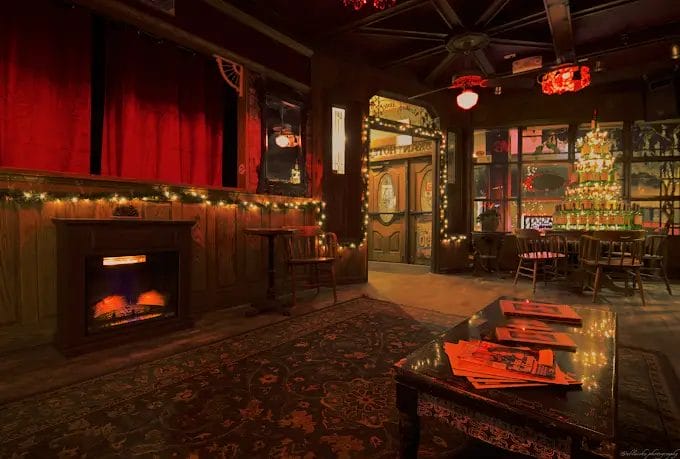
Alaskan Hotel – Haunted Hotel in Juneau, Alaska
Juneau (Alaska), Alaska
The Alaskan Hotel stands as a weathered sentinel along Franklin Street in downtown Juneau. Its...
Explore This Location →
Landmark
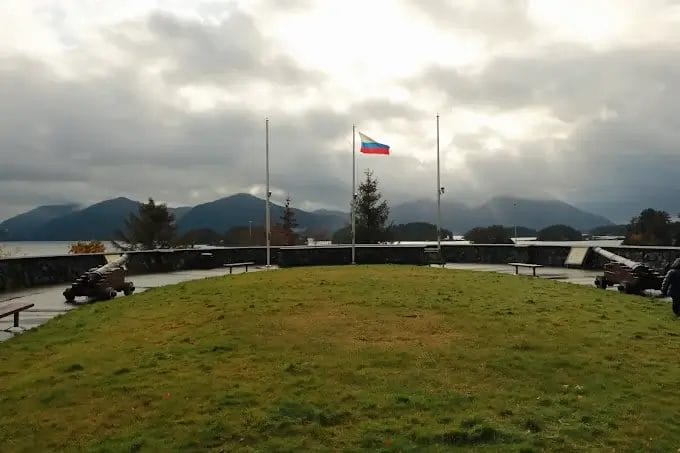
Baranof Castle Hill – Haunted Historical Site in Sitka, Alaska
Sitka (Alaska), Alaska
Baranof Castle Hill rises 60 feet above downtown Sitka like a sentinel watching over the...
Explore This Location →
Hotel
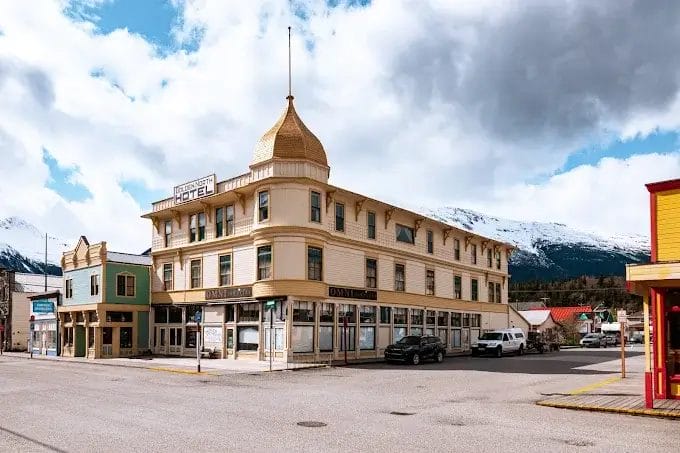
Golden North Hotel – Haunted Hotel in Skagway, Alaska
Skagway (Alaska), Alaska
The Golden North Hotel stands as Alaska’s oldest operating hotel and perhaps its most haunted...
Explore This Location →
Mine
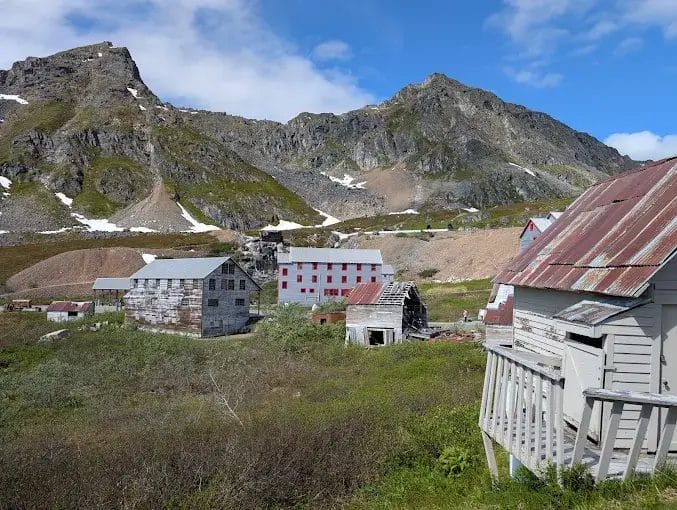
Independence Mine – Haunted Gold Mine in Palmer, Alaska
Palmer (Alaska), Alaska
Deep in the Talkeetna Mountains north of Palmer, Alaska, sits Independence Mine State Historical Park....
Explore This Location →

Ghost Town
Kennecott Ghost Town – Haunted Mining Town in McCarthy, Alaska
McCarthy (Alaska), Alaska
Deep in the Wrangell Mountains of Alaska sits an abandoned copper mining town frozen in...
Explore This Location →
Glacier
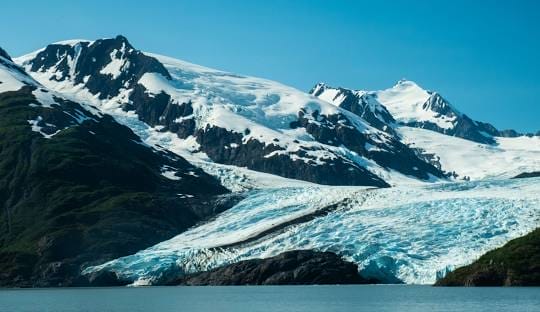
Portage Glacier – Haunted Glacier in Girdwood, Alaska
Girdwood area (Alaska), Alaska
Portage Glacier sits approximately 50 miles southeast of Anchorage in the Chugach National Forest. This...
Explore This Location →
Brothel
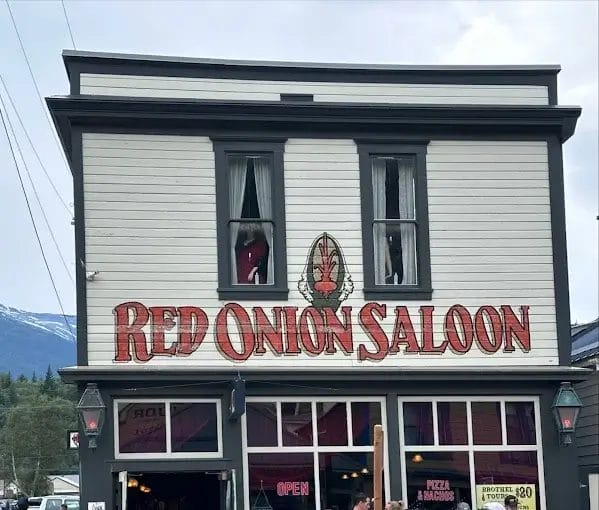
Red Onion Saloon – Haunted Brothel in Skagway, Alaska
Skagway (Alaska), Alaska
The Red Onion Saloon stands as a weathered testament to Alaska’s wild Gold Rush days....
Explore This Location →
Museum
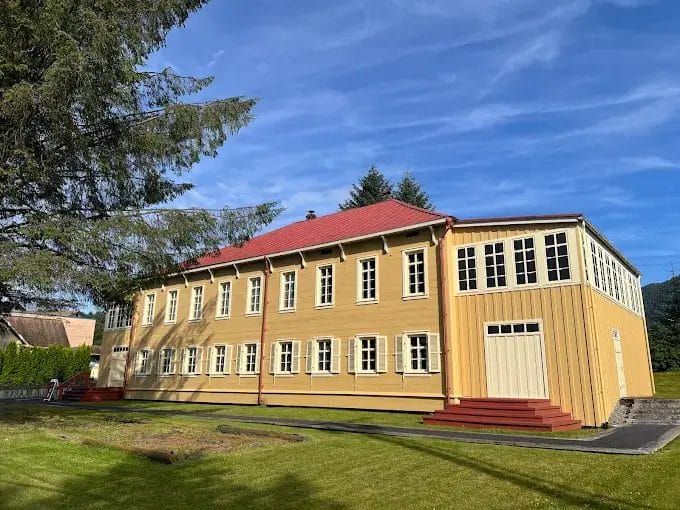
Russian Bishop’s House – Haunted Historic Museum in Sitka, Alaska
Sitka (Alaska), Alaska
The Russian Bishop’s House stands as one of the finest examples of Russian colonial architecture...
Explore This Location →
Hotel
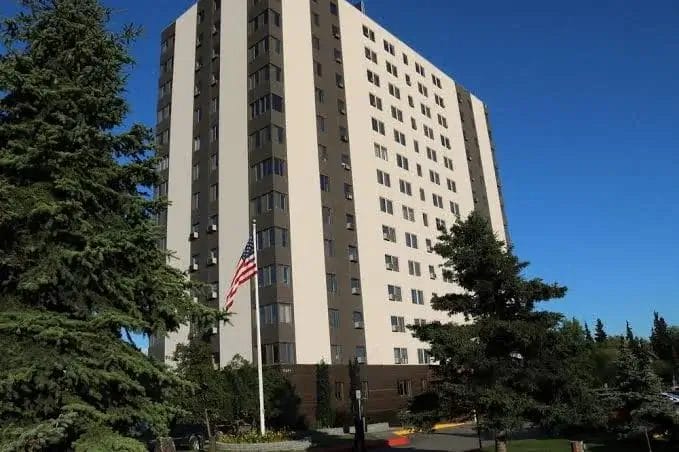
The Inlet Tower Hotel – Haunted Hotel in Anchorage, Alaska
Anchorage (Alaska), Alaska
The Inlet Tower Hotel stands as one of downtown Anchorage’s most iconic landmarks. This aging...
Explore This Location →
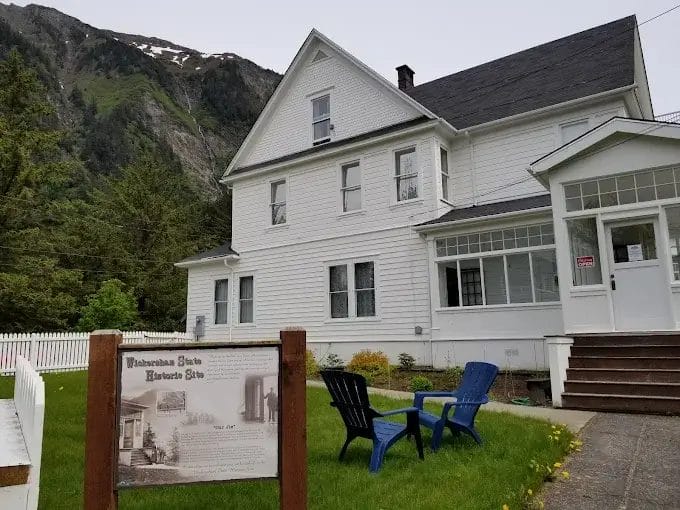
Mansion
Wickersham House – Haunted Historic Home in Juneau, Alaska
Juneau (Alaska), Alaska
Perched on a hillside overlooking downtown Juneau sits a white clapboard house with dark secrets....
Explore This Location →
Alaska is a land of extremes — vast wilderness, punishing winters, months of near-total darkness, and an isolation so profound it can alter the way your mind works. It is also, as it turns out, a land of ghosts. Beneath the glaciers, inside the crumbling military barracks, and behind the doors of Gold Rush-era hotels, the Last Frontier harbors a paranormal history as wild and untamed as the landscape itself.
Alaska’s haunted reputation draws from centuries of layered history. Indigenous Tlingit, Haida, and Alutiiq peoples have long told stories of spirits and mysterious beings inhabiting the forests and waters. The chaos of the Klondike Gold Rush left behind boomtowns full of desperation, violence, and sudden death. Military installations from two world wars and the Cold War created massive concrete structures that now stand abandoned, echoing with something more than wind. And the sheer remoteness of the state means that when people disappeared here, they often disappeared completely.
Whether you’re a paranormal investigator planning an expedition or simply fascinated by ghost stories from America’s wildest state, this guide covers the most haunted places in Alaska — from abandoned ghost towns to luxury hotels where the guests never checked out.
Portlock — The Ghost Town on the Kenai Peninsula
No discussion of haunted Alaska can begin anywhere other than Portlock, a ghost town on the southern tip of the Kenai Peninsula that may be the most chilling abandoned settlement in the entire state. What happened here — or what people believe happened — has inspired books, podcasts, and a Discovery+ television series.
Portlock was established as a cannery community in the early 1900s, named after Captain Nathaniel Portlock of the British Royal Navy who first sailed through the area in 1786. The town’s population was largely composed of Russian-Aleuts and indigenous Alutiiq people, and for decades it functioned as a small but active fishing village.
Then, according to local lore, things began to go wrong.
The Nantiinaq
Long before Portlock was settled, indigenous peoples of the region spoke of a creature they called the Nantiinaq — a word roughly translating to “half-man, half-beast” or, in some interpretations, “those who steal people.” Unlike the relatively benign Bigfoot of Pacific Northwest legend, the Nantiinaq was described as aggressive and dangerous, standing over seven feet tall with immense strength.
According to the stories, mysterious deaths and disappearances began plaguing the area in the early decades of the 20th century. In the 1920s, a hunter named Albert Petka allegedly encountered a massive hairy creature that struck him fatally in the chest before his dogs chased it away. Petka survived long enough to describe what attacked him before succumbing to his injuries. Hunters and loggers would venture into the surrounding forests and never return. Some bodies were reportedly found in ways that locals insisted could not be explained by bears or other known wildlife.
The Spirit Woman
The Nantiinaq wasn’t the only supernatural presence reported at Portlock. Malania Helen Kehl, believed to be one of the oldest surviving former residents, described to the Homer Tribune a white-faced woman in a long black dress who would appear on the cliffs above town. The apparition would scream and moan before vanishing back into the rock face.
By the late 1940s, according to the legend, residents had endured enough. Families packed up and fled, many relocating to nearby communities like Nanwalek and Seldovia. The post office closed around 1950, and Portlock became a ghost town.
It should be noted that the historical record offers a more mundane explanation for the abandonment — the construction of Alaska Route 1 shifted economic activity to more accessible towns, and the cannery’s closure made staying impractical. Some researchers have suggested that the more sensational stories emerged decades later and may contain elements of fabrication. Nevertheless, those who visit the site today describe a pervasive sense of tension and unease, and the legend of Portlock remains one of Alaska’s most compelling paranormal narratives.
Visiting Information: Portlock is extremely remote and accessible only by boat or floatplane. The site is on private land, and access may be restricted.
The Historic Anchorage Hotel — Anchorage
If there is a ground zero for ghost stories in Alaska’s largest city, it is the Historic Anchorage Hotel. Built in 1916 when Anchorage was little more than a tent city on the banks of Ship Creek, the hotel was erected to house laborers constructing the Alaska Railroad. The original structure has since been demolished, but the Annex building remains as a historical landmark and continues to operate as a hotel.
It is not the architecture or the history that draws most visitors, however. It is the hotel’s extraordinary reputation for paranormal activity.
The Ghost Log
The haunting at the Anchorage Hotel is so well-documented that the staff maintains an official “Ghost Log” at the front desk, inviting guests to record their experiences. A psychic who visited the hotel in 2012 during a formal investigation reportedly identified nearly three dozen individual spirits occupying the building.
The most frequently encountered ghost is that of a woman in a wedding dress who roams the second floor, believed to be a jilted bride who never received closure. Guests report televisions flickering on and off, faucets running on their own, and an overwhelming sense of being watched.
Chief Jack Sturgus
Perhaps the hotel’s most famous resident spirit is John “Jack” Sturgus, Anchorage’s first police chief. Sturgus was murdered just outside the hotel in 1921 under circumstances that remain murky. His apparition has been seen throughout the building, and some guests report hearing his heavy footsteps in the hallways at night.
The hall on the second floor is a particular hotspot, where many guests have seen the ghost of a young girl. Rooms 215 and 217 generate especially frequent reports of televisions turning on by themselves and bathroom faucets running with no explanation.
Visiting Information: The Historic Anchorage Hotel is located in downtown Anchorage and remains fully operational. You can book a room and experience the haunting firsthand.
The Golden North Hotel — Skagway
The Golden North Hotel is one of Alaska’s most iconic haunted landmarks, even though it no longer operates as a hotel. Built in 1898 at the height of the Klondike Gold Rush, the building with its distinctive golden onion-shaped dome served as a beacon for the roughly 1,000 prospectors passing through Skagway every week on their way to the Yukon gold fields.
Scary Mary
The hotel’s most famous ghost story involves a prospector known as “Klondike Ike” who traveled to Skagway with his fiancée, Mary. While Ike headed out on the 500-mile journey to the gold fields, Mary took up residence in Room 23 on the third floor and waited for his return.
He never came back.
The details vary depending on who tells the story. Some say Mary fell ill with pneumonia. Others say she locked herself in her room, terrified of local ruffians, and refused to eat. Still others say she simply wasted away from grief and worry. When the hotel staff finally forced open the door to Room 23, they found Mary dead in bed, dressed in her wedding clothes — the gown she had planned to wear when Ike returned with enough gold to buy them a homestead.
Guests who stayed in Room 23 when the hotel was operational reported seeing Mary’s pale apparition hovering above their beds in the middle of the night, as if checking whether Ike had finally returned. Others experienced choking sensations, cold air pockets in the hallways, and the feeling of unseen hands tucking the blankets around their feet. Room 14 was haunted by a separate entity that manifested as an unexplained orb of light moving around the room at night.
Visiting Information: The Golden North Hotel closed in 2002 and is now occupied by a tour company. The building is located at the corner of 3rd and Broadway in Skagway’s historic district. Ghost tours frequently include the hotel as a stop.
The Alaskan Hotel & Bar — Juneau
Juneau’s oldest continuously operating hotel, the Alaskan Hotel opened in 1913 during the tail end of the Gold Rush era and originally served as both a hotel and a bordello. It now sits on the National Register of Historic Places and has been featured on the Travel Channel’s “Portals to Hell,” which only amplified its already formidable haunted reputation.
Alice’s Tragedy
The hotel’s most well-known ghost is a woman named Alice. According to local legend, Alice was driven to prostitution after her husband disappeared on a mining expedition and was presumed dead. When her husband eventually returned months later and discovered what had become of his wife, he flew into a rage and killed her inside the hotel.
Alice’s spirit has been seen throughout the building, typically appearing as a woman in white drifting past the bar or roaming the hallways. Employees openly acknowledge that some rooms feel distinctly off, and shadowy figures are frequently reported.
The Room 315 Incident
The most dramatic modern event occurred in 2007 when a U.S. Navy sailor, staying at the hotel while his ship was docked in Juneau, was placed in Room 315 at his own request — he had specifically asked for the haunted room. During the night, something happened that terrified him so severely that he broke a third-story window and leapt out. He survived the fall, but the incident left behind a room splattered with blood and a story that still echoes through the hotel.
Paranormal investigators who examined the basement captured unexplained activity, and disembodied voices have been recorded on multiple occasions.
Visiting Information: The Alaskan Hotel & Bar is located at 167 South Franklin Street in Juneau and remains fully operational as a hotel.
Whittier — The Most Haunted Town in Alaska
The town of Whittier may be the strangest and most haunted settlement in the entire state. Accessible only through the 2.5-mile Anton Anderson Memorial Tunnel — the longest highway tunnel in North America, which alternates single-lane traffic — Whittier is a place that unsettles visitors before they even arrive.
Nearly all of Whittier’s approximately 272 residents live in a single 14-story building called Begich Towers, which contains apartments, a post office, a grocery store, a school, a police station, and a church. The building was originally constructed in 1956 as Cold War-era military barracks.
The Buckner Building
Looming over the town like the ghost of an old warrior is the Buckner Building, a massive abandoned military structure completed in 1953. At 275,000 square feet and six stories tall, it was once the largest building in Alaska, containing a mess hall, sleeping quarters for over 1,000 soldiers, a movie theater, a bowling alley, and a small jail. The military abandoned it in the 1960s, and it has been decaying ever since.
The Buckner Building is now covered in graffiti, its windows shattered, its concrete corridors slowly being reclaimed by the brutal Alaskan elements. Urban explorers and paranormal investigators who have ventured inside report overwhelming feelings of dread, the sounds of footsteps and voices in empty hallways, and shadowy figures lurking just beyond the reach of their flashlights. A woman in white has been seen peering from the cracked windows. In 2018, an EVP captured inside the building was said to contain a disembodied voice speaking to investigators.
Begich Towers
The paranormal activity doesn’t stay confined to the Buckner Building. Residents of Begich Towers report their own persistent phenomena — televisions and alarm clocks activating at odd hours with no explanation, the sound of their names being whispered in empty rooms, and sudden, inexplicable cold spots near certain doorways. The building’s elevator has been known to travel between floors without being called, its doors opening onto darkened, largely unoccupied levels. One resident described stepping into the elevator late at night only to have it stop on the third floor — one of the building’s least occupied sections — where he felt an overwhelming presence standing just beyond the open doors, though he could see nothing.
Some believe the spirits from the Buckner Building have migrated to the only other major structure in town. Others attribute the experiences to Whittier’s extreme isolation and the psychological effects of near-perpetual winter darkness.
Visiting Information: Whittier is located about 60 miles from Anchorage and is accessible via the Anton Anderson Memorial Tunnel. The Buckner Building is officially off-limits due to safety concerns and asbestos contamination.
The Red Onion Saloon — Skagway
The Red Onion Saloon in Skagway has a rich history as one of the most notorious establishments from Alaska’s Gold Rush era. Originally built as a brothel, the building’s upper floor housed the working women while the ground floor served as a saloon. Today, the bar is a popular tourist destination — and one of Alaska’s most reliably haunted locations.
Lydia
The most prominent spirit at the Red Onion is a woman known as Lydia, believed to have been one of the prostitutes who worked in the upstairs brothel. Her presence is felt most strongly on the second floor, where visitors report hearing her footsteps, encountering sudden cold spots, and detecting a strong scent of perfume with no identifiable source.
Lydia has been seen as a full-body apparition walking through the madam’s room and running down the hallway. In one of the more unusual manifestations, she is credited with watering the plants — hostesses frequently arrive to find the soil in the pots damp despite no one having tended to them. Lydia is also said to behave aggressively toward male visitors on occasion.
Visiting Information: The Red Onion Saloon is located on Broadway Street in Skagway and offers brothel museum tours of the second floor.
The Hotel Captain Cook — Anchorage
Despite being a relatively modern luxury hotel — built in 1965 — the Hotel Captain Cook in downtown Anchorage has generated a steady stream of paranormal reports since the 1970s.
The most well-known haunting centers on the women’s restroom in the hotel lobby, where the ghost of a woman in white has been seen repeatedly by staff and guests over the decades. The origin of this spirit was initially kept quiet by hotel management, but it was eventually revealed that in 1972, a young woman took her own life in that very bathroom.
Beyond this primary haunting, guests report hearing children laughing and running in hallways when no children are present, objects such as chairs and lamps moving on their own, and an unsettling presence in certain areas of the building that defies easy explanation.
Visiting Information: The Hotel Captain Cook is located at 939 West 5th Avenue in Anchorage and remains fully operational.
The Van Gilder Hotel — Seward
Constructed in 1916, the Van Gilder Hotel in Seward is one of Alaska’s oldest hotels and one of its most persistently haunted. The building has served multiple purposes over its long history — hospital, daycare center, and hotel — and each era appears to have left its own spectral imprint.
The hotel’s primary ghost is believed to be a woman named Fannie, who was reportedly murdered in the building during the 1950s. Guests have heard her footsteps pacing the hallway, particularly near Room 209, and some have caught a glimpse of a woman standing silently at the foot of their bed in the middle of the night.
The Van Gilder has become a frequent stop for paranormal investigators and is a popular destination for ghost tours in the Seward area. Front desk staff are known to have their own collection of stories that they prefer not to recount after dark.
Visiting Information: The Van Gilder Hotel is located in downtown Seward and is open to guests.
Nightmute High School — Nightmute
In the remote western Alaska village of Nightmute, the local high school has its own version of a haunting that would feel at home in fiction. A little girl’s ghost is said to haunt the school’s bathrooms, where she flushes toilets and flicks the lights on and off without any apparent cause.
Unlike a ghost confined to a single room, the Nightmute spirit has been heard wandering the school halls, humming to herself, and she has a particular fondness for basketballs — if left unattended in the gymnasium, the balls have been known to bounce on their own.
The identity of the ghost remains unknown, but the discovery of a grave beneath Room 106 may offer a clue to the origin of the haunting.
The 4th Avenue Theatre — Anchorage
The 4th Avenue Theatre was completed in 1947 as a glamorous 960-seat movie palace and quickly became one of Anchorage’s most beloved landmarks. It operated as a theater until the 1980s before transitioning to a banquet and events venue.
The building’s haunting is believed to be connected to the devastating 1964 Good Friday Earthquake, which struck Anchorage at 9.2 magnitude — the most powerful earthquake ever recorded in North America. The theater was in operation at the time and was placed on lockdown. One hundred thirty-one people in the area died as a result of the quake.
The ghost of a woman has been seen reflected in the long mirrors between the men’s and women’s washrooms. Staff working after hours have reported whispering voices in empty rooms and the sense of an unseen presence following them through the building. Despite multiple attempts at renovation over the years, the theater was unable to be saved and faced long-term closure, though the ghost stories have endured.
Independence Mine — Hatcher Pass
High in the Talkeetna Mountains, the abandoned buildings of Independence Mine sit wrapped in fog above Hatcher Pass. Once a bustling gold mining operation, it is now a state historical park that visitors can walk through — and many who do report that the atmosphere is deeply unsettling.
The mine operated during the early to mid-20th century, and the remnants of the operation — rusting equipment, crumbling bunkhouses, and empty processing buildings — create a landscape that feels frozen in time. The mountain fog adds to the effect, rolling in without warning and reducing visibility to just a few feet.
While specific ghost sightings are less commonly reported here than at other Alaska locations, visitors consistently describe feelings of being watched, sudden temperature drops inside the buildings, and an eerie quality to the silence that feels intentional rather than natural.
Visiting Information: Independence Mine State Historical Park is located off Hatcher Pass Road, about 19 miles from Palmer, Alaska. The site is open seasonally.
Ship Creek — Anchorage
Ship Creek in downtown Anchorage is best known as a popular fishing spot, but it carries a darker reputation in paranormal circles. The haunting centers on a woman named Marie, a Native Alaskan who was tragically murdered in the area in 1987. Her case remains unsolved.
Visitors have reported hearing Marie’s cries for help and seeing her apparition running alongside the creek. She is said to appear most frequently to homeless individuals in the area, seemingly warning them not to stay. Between the aged Alaska Native Service Hospital and the old Alaska Railroad terminal, people have reported seeing additional apparitions and shadowy figures, sudden drops in temperature, and an unexplained sense of dread.
The Wendy Williamson Auditorium — University of Alaska Anchorage
This auditorium on the University of Alaska Anchorage campus is just over 40 years old, making it one of the newer haunted locations in the state. Despite its relative youth, it has accumulated a significant body of paranormal reports.
The most distinctive entity is said to be an angry male spirit with a particular dislike for women with long brown hair. Brunettes have reported being pushed by an unseen force while inside the building. During one performance, a woman in white appeared on stage — the audience initially assumed she was part of the show before she vanished.
Chena Hot Springs Road — Fairbanks
Between miles 8 and 12 of Chena Hot Springs Road outside Fairbanks, witnesses have reported seeing mysterious orbs of blue, white, and orange light. The orbs are frequently described as resembling headlights, hovering in the sky and, in some cases, following vehicles along the road.
The phenomenon occurs most frequently during winter months and typically after 7 p.m. Some witnesses have described glowing balls merging together and creating trails of light across the dark Alaskan sky. While explanations ranging from atmospheric phenomena to the northern lights have been proposed, the consistency of the reports and the specific location have made this stretch of road a hotspot for paranormal enthusiasts.
The Igloo City Hotel — Cantwell
Along an isolated stretch of the Parks Highway near Cantwell sits one of Alaska’s most visually distinctive abandoned structures — a four-story building shaped like a giant igloo. The Igloo City Hotel was built in the 1970s but was never completed, possibly due to failure to meet building codes or simply because the developers ran out of money.
The structure has been deteriorating for decades, its exterior covered in graffiti and its windows shattered. Despite its unfinished state, or perhaps because of it, the building has acquired a haunted reputation. Visitors report seeing strange lights emanating from inside the structure when it should be completely dark and empty. A woman in white has been spotted looking out from one of the upper windows on multiple occasions.
The Seaburg House — Anchorage
The Seaburg House, one of Anchorage’s earliest residential homes, is connected to the city’s founding era. Built by Augustus Seaburg, a Swedish immigrant who came to Alaska in 1915, the house has been the site of numerous paranormal reports.
Visitors have heard disembodied voices throughout the house, experienced cold spots in multiple rooms, and been physically pushed by an unseen force. Two distinct apparitions are regularly reported — a man believed to be Augustus Seaburg himself, heard pacing the upper floors and sometimes seen on the staircase landing, and a woman dressed in white who appears most frequently in the parlor and main bedroom. The female apparition is commonly thought to be Seaburg’s daughter Helen, though more than one tragedy occurred within the family.
Dimond Center Mall — Anchorage
Shopping malls are not typical paranormal hotspots, but Anchorage’s Dimond Center has developed an eerie reputation over the years. According to local legend, the mall was built over an ancient Alaska Native burial ground. During construction, workers discovered several graves, which were reportedly given minimal attention due to their age and small size.
Staff working late shifts have reported unexplained voices, flickering lights, and sudden cold drafts. More unusual reports include the sound of flute and drum music, sightings of transparent wolves inside the mall, and apparitions of people dressed in traditional Native clothing.
Tips for Paranormal Exploration in Alaska
Alaska presents unique challenges for ghost hunters and paranormal enthusiasts. Here are some essential considerations for planning your investigation.
Prepare for extreme conditions. Alaska’s weather can be dangerous, particularly in winter. Many of the state’s most haunted locations are in remote areas where temperatures can plunge well below zero. Dress in layers, carry emergency supplies, and never venture to remote sites alone.
Respect indigenous cultural sites. Many of Alaska’s haunted locations are intertwined with indigenous history and sacred traditions. The Tlingit, Haida, Alutiiq, and Dena’ina peoples have deep spiritual connections to this land. Approach these sites with cultural sensitivity and avoid disturbing sacred grounds.
Bring backup power. As with haunted locations everywhere, electronic equipment is known to drain rapidly at paranormal hotspots. In Alaska, the cold will drain your batteries even faster. Carry multiple backup batteries for cameras, audio recorders, and phones, and keep them warm inside your clothing.
Darkness is your friend — and your enemy. Alaska’s winter months provide extended darkness that many investigators believe enhances paranormal activity. However, the extreme darkness also makes navigation dangerous, particularly at remote sites. Always carry reliable lighting and inform someone of your plans.
Investigate during shoulder seasons. Many of Alaska’s haunted hotels and historic sites operate on seasonal schedules. The months of May through September offer the best access to most locations, while winter provides the darkness and isolation that some investigators prefer — but with significantly more logistical challenges.
Check access restrictions. Several haunted locations in Alaska, particularly the Buckner Building in Whittier and the ghost town of Portlock, are officially off-limits due to safety concerns, structural instability, or private ownership. Always verify access before making the journey.
Take advantage of ghost tours. Several Alaska cities, including Juneau, Ketchikan, Anchorage, and Skagway, offer organized ghost walks led by local historians and paranormal researchers. These tours provide access to locations and stories you might not discover on your own.
Final Thoughts
Alaska’s haunted places are unlike anything you’ll find in the lower 48. The scale of the wilderness, the depth of the darkness, and the weight of the isolation create conditions where the boundary between the natural and the supernatural feels thinner than anywhere else in America.
From a ghost town where an entire community fled a creature they couldn’t explain, to a single building where an entire town’s population lives alongside unexplained phenomena, to Gold Rush hotels where women in white still wait for lovers who never returned — Alaska’s paranormal landscape is as vast and varied as the state itself.
The Last Frontier earned its name because it represents the edge of the known world. For those willing to look beyond the glaciers and the northern lights, it may also represent the edge of something else entirely.
Explore America’s Most Haunted Places by State
Discover spine-chilling locations, paranormal hotspots, and supernatural encounters across all 50 states. Click any state to begin your journey into the unknown.