
📍 Map of Haunted Places in Vermont
Explore all 10 haunted locations across Vermont. Click any pin to view details.
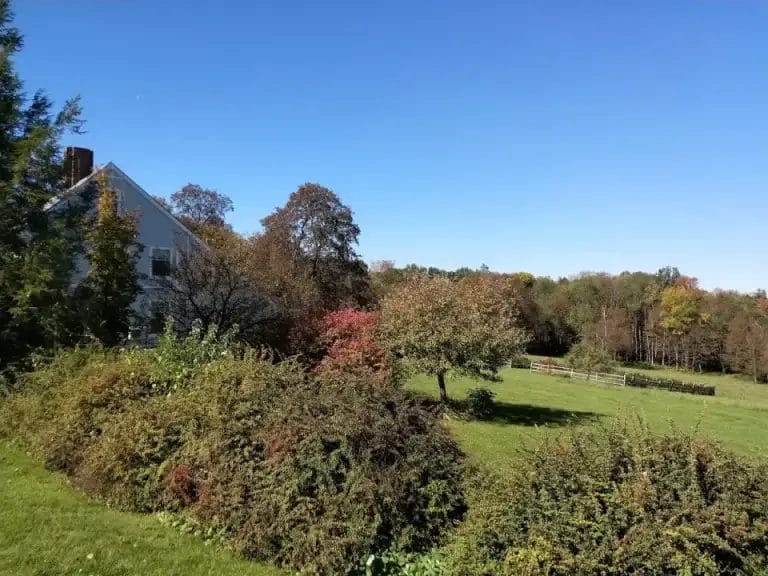
Landmark
Bennington Battle Monument – Haunted Monument in Bennington, Vermont
Bennington (Vermont), Vermont
The Bennington Battle Monument towers 306 feet above Vermont’s landscape. This limestone obelisk marks where...
Explore This Location →

Cemetery
Bowman Cemetery – Haunted Cemetery in Cuttingsville, Vermont
Cuttingsville (Vermont), Vermont
Nestled in the quiet village of Cuttingsville, Vermont, Bowman Cemetery stands as one of New...
Explore This Location →
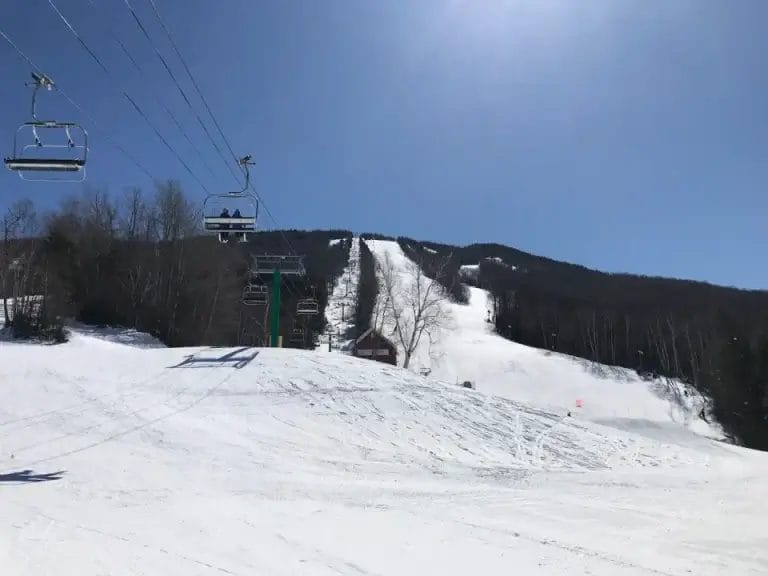
Hotel
Burke Mountain Resort – Haunted Ski Resort in East Burke, Vermont
East Burke (Vermont), Vermont
Nestled in Vermont’s Northeast Kingdom, Burke Mountain Resort towers over the surrounding landscape with an...
Explore This Location →
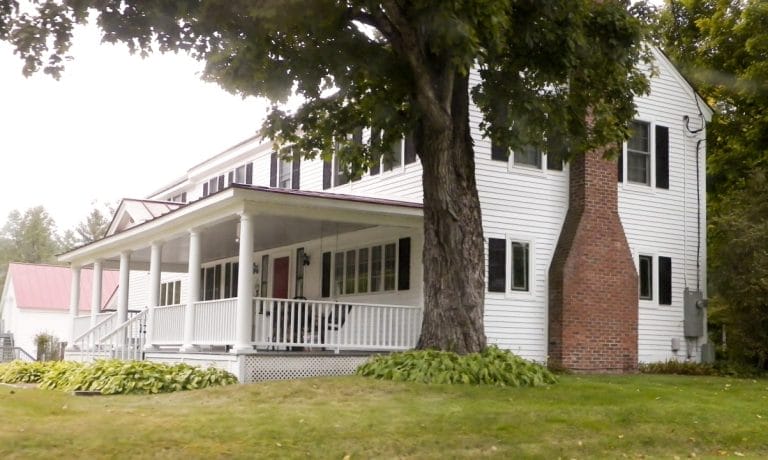
Castle
Eddy House / Wilson Castle – Haunted Castle in Proctor, Vermont
Proctor (Vermont), Vermont
Nestled in the rolling hills of Proctor, Vermont, Wilson Castle stands as a magnificent Victorian...
Explore This Location →
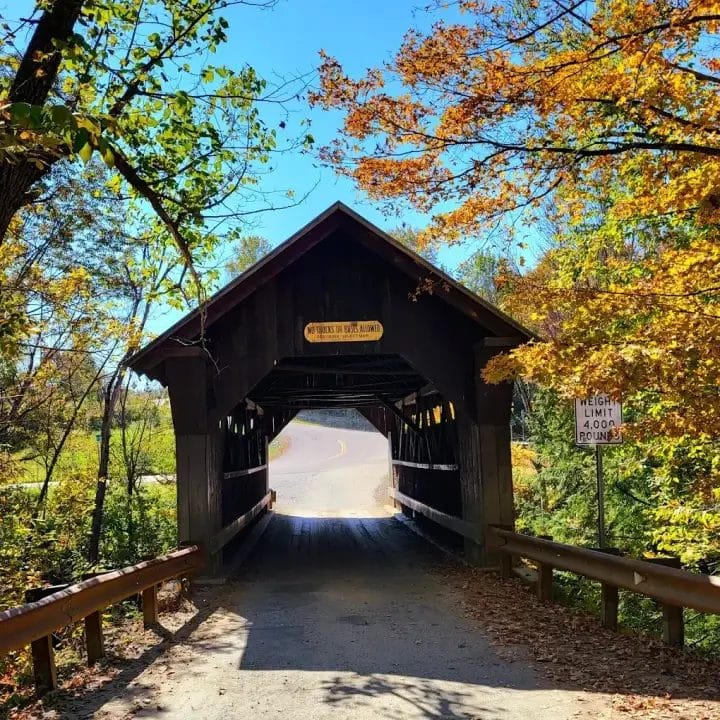
Bridge
Emily’s Bridge / Gold Brook Covered Bridge – Haunted Bridge in Stowe, Vermont
Stowe (Vermont), Vermont
Nestled in the picturesque Green Mountains of Vermont stands a structure that harbors one of...
Explore This Location →
Hotel
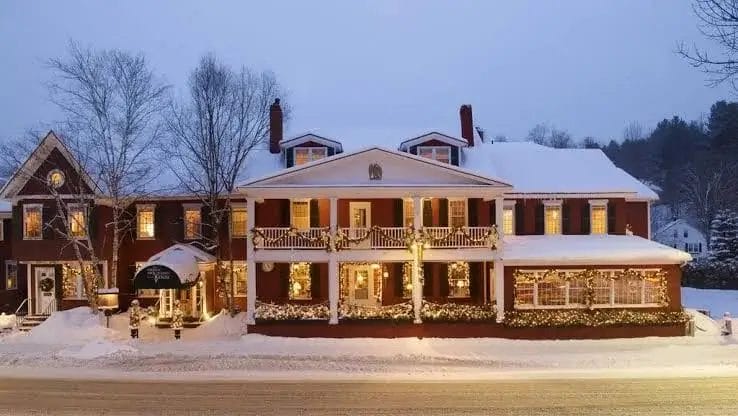
Green Mountain Inn – Haunted Hotel in Stowe, Vermont
Stowe (Vermont), Vermont
The Green Mountain Inn stands as a charming landmark in the heart of Stowe, Vermont’s...
Explore This Location →
Lake
Lake Bomoseen Ghost Sightings – Haunted Lake in Castleton, Vermont
Castleton area (Vermont), Vermont
Lake Bomoseen stretches across western Vermont like a dark mirror reflecting centuries of tragedy. This...
Explore This Location →
Museum
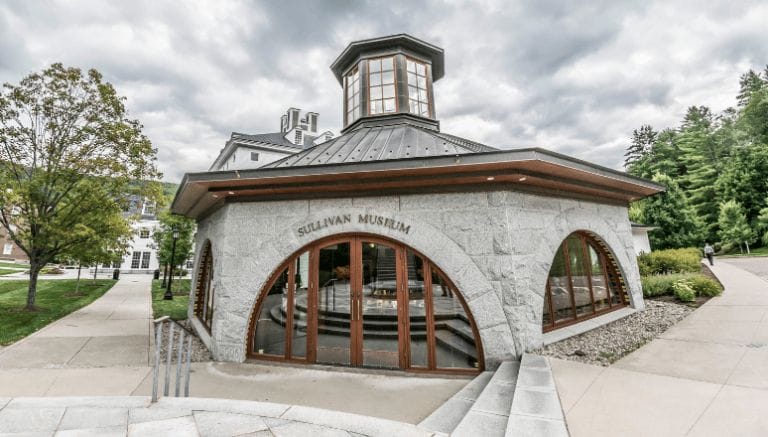
Norwich University Sullivan Museum – Haunted Military Museum in Northfield, Vermont
Northfield (Vermont), Vermont
The Sullivan Museum and History Center sits on the grounds of Norwich University in Northfield,...
Explore This Location →
Museum
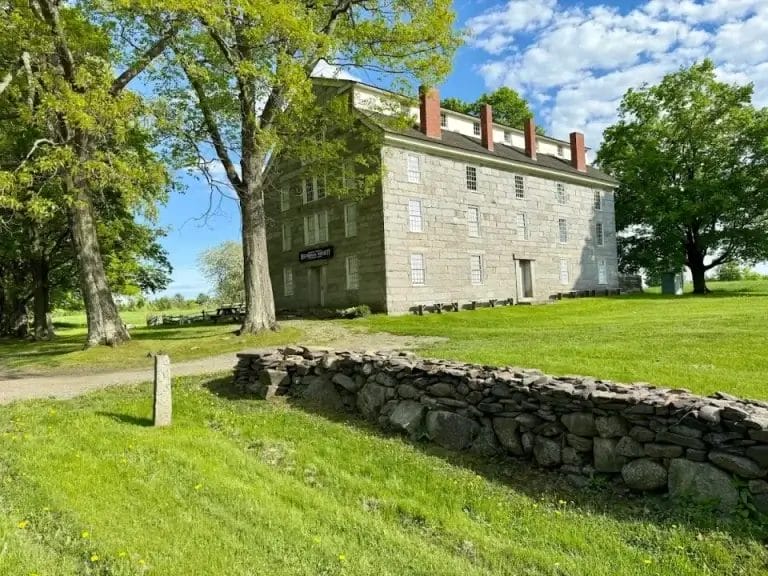
Old Stone House Museum – Haunted Museum in Brownington, Vermont
Brownington (Vermont), Vermont
Perched atop a hill in rural Brownington, Vermont, the Old Stone House Museum commands attention...
Explore This Location →

Hotel
The Equinox Resort – Haunted Hotel in Manchester, Vermont
Manchester (Vermont), Vermont
The Equinox Resort stands as a magnificent white-columned landmark in the heart of Manchester Village....
Explore This Location →
Vermont’s rugged Green Mountains, isolated farmsteads, and centuries-old villages create a landscape seemingly designed for hauntings. The state’s harsh winters drove early settlers to desperate measures. Its remote communities developed insular traditions that sometimes crossed into the macabre. And its covered bridges, abandoned quarries, and crumbling cemeteries provide perfect settings for restless spirits.
This comprehensive guide explores Vermont’s most haunted locations, examining the histories that created them and the paranormal phenomena reported by investigators, locals, and visitors who ventured into the Green Mountain State’s supernatural territory.
Vermont’s Unique Paranormal Character
Vermont stands apart from other New England states in ways that shape its hauntings. While Massachusetts had Salem and Connecticut had its witch trials, Vermont developed different dark traditions. The state’s isolation bred superstitions that persisted longer than in more connected regions. The “vampire panic” of the nineteenth century led Vermont families to exhume and ritually mutilate corpses they believed were draining the life from living relatives. Tuberculosis, then called consumption, devastated entire families in remote valleys where medical care barely existed.
The granite and marble quarrying industries brought immigrant workers who died in accidents, their bodies sometimes never recovered from flooded pits. Logging camps saw men crushed by falling trees or swept away in spring log drives. And the unforgiving winters claimed lives through exposure, isolation, and the despair that darkness breeds.
These accumulated tragedies left spiritual residue across Vermont’s landscape, creating one of New England’s most genuinely haunted states.
Emily’s Bridge: Vermont’s Most Famous Haunting
No discussion of Vermont’s supernatural landscape can begin anywhere but Stowe, where a covered bridge over Gold Brook has terrified visitors for generations. Emily’s Bridge—officially the Gold Brook Bridge—ranks among America’s most investigated haunted locations.
The Legend
Multiple versions of Emily’s story circulate through Vermont, each tragic in its own way. The most common holds that a young woman named Emily fell in love with a man her family considered unsuitable. The couple planned to elope, agreeing to meet at the covered bridge at midnight. Emily waited through the cold Vermont night, but her lover never arrived. Some versions say he changed his mind. Others claim he died en route. A few suggest he was murdered by Emily’s family.
What happened next varies by telling. In most versions, Emily hanged herself from the bridge’s rafters, unable to face life without her love. Other accounts claim she threw herself from the bridge into Gold Brook below. A minority version suggests she died of exposure, waiting through a winter night that turned fatal.
The historical accuracy of this legend remains unverified. Researchers have found no death certificates, newspaper accounts, or cemetery records confirming Emily’s existence. But the absence of documentation hasn’t diminished the paranormal activity reported at the bridge.
Documented Phenomena
Visitors to Emily’s Bridge report consistent experiences that suggest something genuinely unusual occurs there. The most common phenomenon involves unexplained scratches appearing on parked vehicles. People who stop at the bridge at night return to find long scratch marks along their car doors, hoods, or trunks—damage that wasn’t present when they arrived.
Those brave enough to enter the bridge itself report more direct encounters. Many describe feeling grabbed, pushed, or touched by invisible hands. Women seem particularly targeted, with female visitors reporting hair pulling, scratching, and the sensation of hands around their throats.
Disembodied voices echo through the bridge’s wooden interior. Most commonly, witnesses hear a woman crying or screaming, though some report hearing whispered words they can’t quite decipher. The temperature inside the bridge frequently drops dramatically, even on warm summer nights, creating cold spots that move through the structure.
Photographic evidence from Emily’s Bridge fills paranormal databases. Orbs, mists, and what appear to be human figures have been captured by countless cameras over the decades. Some investigators have recorded EVP sessions that seem to contain female voices responding to questions.
The bridge’s notoriety has made it a target for vandalism and trespassing, and local authorities have increased patrols in recent years. Visitors should be aware that the bridge is on a public road and parking overnight may attract police attention.
The Equinox Resort: Haunted Hospitality in Manchester
The Green Mountains provide dramatic backdrop for the Equinox Resort, a historic hotel that has welcomed guests since 1769. Among those guests, apparently, are several who never left.
Resort History
The property began as Marsh Tavern, a stagecoach stop serving travelers on the route between Bennington and the north. Over subsequent centuries, the establishment expanded into one of New England’s grand resort hotels, hosting presidents, celebrities, and generations of vacation travelers. The resort’s proximity to Manchester Village, with its marble sidewalks and historic architecture, made it a destination for wealthy families seeking mountain air and scenic beauty.
During the Civil War era, Mary Todd Lincoln and her sons vacationed at the Equinox, seeking respite from the pressures of Washington. Abraham Lincoln planned to join them but never made the trip—an assassination intervened. This connection to American tragedy perhaps explains some of the melancholy that reportedly pervades certain areas of the property.
Paranormal Activity
Room 330 generates the most consistent paranormal reports. Guests have awakened to find a woman standing at the foot of their bed, watching them with an expression witnesses describe variously as sad, curious, or menacing. She wears period clothing—descriptions suggest mid-nineteenth century—and vanishes when addressed or when lights are turned on.
Other guests in Room 330 report their belongings being moved during the night, bathroom faucets turning on by themselves, and the distinct feeling of someone sitting on the edge of the bed when no one visible is present. The room’s temperature reportedly fluctuates without explanation, and electrical devices behave erratically.
The resort’s hallways produce their own supernatural encounters. Staff members have seen a man in Civil War-era clothing walking the corridors late at night, disappearing through walls or around corners. Some researchers speculate this might be connected to the Lincoln family’s stay, though his identity remains unconfirmed.
The resort’s oldest section, dating to the original tavern, seems particularly active. Disembodied footsteps echo through empty corridors. Doors open and close without human intervention. And the distinct smell of tobacco smoke occasionally permeates areas where smoking has been prohibited for decades.
Management takes a balanced approach to the Equinox’s haunted reputation, neither aggressively marketing it nor denying the numerous guest reports accumulated over the years.
Green Mount Cemetery: Burlington’s City of the Dead
Burlington’s Green Mount Cemetery ranks among New England’s most beautiful burial grounds—and among its most haunted. Established in 1876 as a “rural cemetery” in the Victorian garden tradition, the grounds contain elaborate monuments, winding paths through mature trees, and reportedly, active spirits who refuse to rest.
The Cemetery’s Character
Victorian Americans transformed their relationship with death, creating parklike cemeteries designed for contemplation and family visits. Green Mount exemplifies this approach, with its rolling hills, diverse plantings, and monuments ranging from simple headstones to elaborate mausoleums. Many of Burlington’s most prominent families rest here, their graves marked by obelisks, angels, and sculptures imported from European artisans.
But Green Mount also contains darker corners. Sections dedicated to the poor feature unmarked or minimally marked graves. A plot holds remains of those who died in the city’s various epidemics. And scattered throughout the grounds lie victims of accidents, violence, and tragedy whose stories have faded from memory but whose spirits, some believe, remain.
Haunting Reports
The cemetery’s most famous ghost is a woman in white who appears near a specific cluster of Victorian monuments. Witnesses describe her walking slowly between the gravestones, pausing occasionally as if reading inscriptions. She seems unaware of observers and vanishes when anyone approaches too closely.
Children’s laughter has been reported echoing across the grounds, particularly near the infant burial section. This area, with its small headstones and lamb sculptures marking young lives cut short, produces emotional responses from visitors even without paranormal overlay. But the laughter—heard by multiple witnesses over the years—adds supernatural dimension to the area’s inherent sadness.
A man in period clothing has been seen near the cemetery’s older sections, apparently tending graves that may be his own family’s plots. He carries what appears to be gardening equipment and seems focused on his work. Witnesses who have tried to approach him report that he simply isn’t there when they reach his location.
Late evening visitors have reported seeing lights moving through the cemetery—not flashlights, which would be prohibited after closing, but floating orbs that drift between monuments before extinguishing. Some attribute these to natural phenomena like swamp gas or bioluminescence, but skeptics note that the cemetery’s hilltop location makes such explanations problematic.
The Hartness House Inn: Presidential Ghosts in Springfield
Springfield’s Hartness House Inn offers visitors both luxury accommodations and apparently supernatural roommates. Built by James Hartness, inventor, astronomer, and governor of Vermont, the mansion contains features as unique as its reported hauntings.
The Inventor’s Legacy
James Hartness made his fortune developing precision tools and machine parts, holding over 120 patents during his prolific career. His intellectual curiosity extended beyond engineering into astronomy, and he built a remarkable underground observatory beneath his Springfield home. A 240-foot tunnel connects the main house to the telescope chamber, allowing Hartness to observe the heavens regardless of surface weather conditions.
Hartness served as Vermont’s governor from 1921 to 1923, hosting numerous dignitaries at his home. His most famous guest was President Calvin Coolidge, a Vermont native who visited the property and used the underground observatory. Hartness died in 1934, but by numerous accounts, he never entirely vacated his beloved home.
The Hauntings
The underground tunnel system produces the most consistent paranormal reports. Guests who tour the observatory and tunnel describe feeling watched, touched, and followed by unseen presences. Footsteps echo behind visitors in passages where no one else is walking. Cold spots move through the tunnel’s length without correlation to ventilation patterns.
James Hartness himself reportedly appears in the observatory, still pursuing his astronomical observations decades after death. Witnesses describe a distinguished older man examining equipment or gazing upward through the telescope dome. He seems benign, even friendly, but vanishes when observers attempt to engage him in conversation.
Inside the main house, paranormal activity concentrates in the rooms Hartness used during his lifetime. His study produces reports of books being moved, papers being rustled, and the sound of someone writing—pen scratching across paper—when the room is empty. The master bedroom has hosted multiple sightings of a female figure believed to be Hartness’s wife, who reportedly straightens bedding and adjusts curtains in rooms where guests have already retired.
The inn’s current owners embrace their supernatural reputation, offering tours of the underground complex and sharing the property’s paranormal history with interested guests.
The Bennington Triangle: Vermont’s Zone of Disappearance
Southwest Vermont contains an area that rivals better-known paranormal hotspots like the Bermuda Triangle and the Bridgewater Triangle. The Bennington Triangle encompasses Glastenbury Mountain and the surrounding wilderness—a region plagued by unexplained disappearances, strange sightings, and phenomena that defy conventional explanation.
The Disappearances
Between 1945 and 1950, at least five people vanished without explanation in the Glastenbury area. Their cases share disturbing commonalities that suggest something beyond ordinary missing-persons scenarios.
Middie Rivers disappeared on November 12, 1945. The 74-year-old hunting guide was leading a group through familiar territory when he walked ahead of his companions and simply vanished. Despite his advanced age, Rivers knew the mountains intimately and had navigated them for decades. Searchers found no trace of him—no body, no equipment, no clothing.
Paula Welden vanished on December 1, 1946. The 18-year-old Bennington College student set out for a hike on the Long Trail and was never seen again. Multiple witnesses saw her on the trail, but she seemed to evaporate somewhere on Glastenbury Mountain. Her disappearance prompted Vermont to create its first state police unit, but the case was never solved.
James Tedford disappeared on December 1, 1949—exactly three years after Welden. Tedford was returning to Bennington on a bus from St. Albans. Multiple passengers saw him in his seat during the trip. But when the bus arrived in Bennington, Tedford was gone. His luggage remained on the rack. His open timetable sat on his seat. But Tedford himself had vanished from a moving bus.
Paul Jepson disappeared on October 12, 1950. The eight-year-old wandered away from his mother’s truck while she tended pigs. Despite his red jacket and blonde hair—highly visible in autumn woods—searchers never found him. Bloodhounds tracked his scent to a nearby highway, where it simply ended.
Frieda Langer disappeared on October 28, 1950. The experienced hiker went missing during a camping trip near Somerset Reservoir. Unlike the others, her body was eventually found—seven months later, in an area searchers had covered multiple times. The remains were too decomposed to determine cause of death.
Theories and Phenomena
The Bennington Triangle has attracted numerous explanations, none entirely satisfying. Native American tribes reportedly avoided Glastenbury Mountain, believing it cursed or inhabited by malevolent spirits. Some researchers note the area’s unusual geological properties, including a high concentration of granite that theoretically might affect compass readings or even consciousness.
Cryptozoological explanations suggest some unknown predator might inhabit the region—a theory supported by occasional Bigfoot sightings and reports of strange creatures in the surrounding forests. UFO activity has also been reported in the area, leading some to speculate about alien abduction.
Modern visitors to Glastenbury report consistent phenomena. Compasses behave erratically. Hikers describe disorientation even on marked trails. The forest seems unnaturally quiet—no birds, no insects, no animal sounds. Some visitors report overwhelming feelings of dread that compel them to leave the area immediately.
The abandoned town of Glastenbury, once a logging community but depopulated since the early twentieth century, sits at the mountain’s base. Its crumbling foundations and overgrown roads add to the area’s unsettling atmosphere.
The Bowman Mausoleum: Cuttingsville’s Monument to Grief
The small village of Cuttingsville contains one of Vermont’s most unusual and disturbing monuments—a mausoleum that serves as both architectural marvel and potential supernatural beacon.
John Bowman’s Obsession
John P. Bowman made his fortune in the tanning industry during the nineteenth century. He built a grand mansion in Cuttingsville and seemed destined for a prosperous life. But tragedy struck repeatedly. His infant daughter died. His wife followed. His adult daughter died young. By the end of his life, Bowman had lost everyone he loved.
His response was to build a mausoleum unlike any other. The granite structure cost over $75,000 in 1880s dollars—a fortune that might have built a small town. Inside, Bowman created a room complete with furniture, mirrors, and a dining table set for four. He reportedly believed his family would return from death to join him, and he wanted them to have a proper home when they did.
Bowman established a trust to maintain the property in perpetuity, including the daily setting of the dining table for his ghostly family. The mansion was to be kept ready for their return, with fires lit and beds made. This arrangement continued for years after Bowman’s death in 1891, though the trust eventually ran dry.
Supernatural Reports
The mausoleum attracts visitors who report feeling profound sadness upon approaching the structure. Some describe being overwhelmed by grief that isn’t their own—an emotional residue, perhaps, of Bowman’s decades of mourning.
Lights have been seen inside the mausoleum at night, despite the structure having no electrical service. Witnesses describe a soft glow, as if candles or oil lamps were burning within. When approached, the lights extinguish.
The statue of John Bowman that stands outside the mausoleum—depicting him ascending the steps to join his family—reportedly moves. Multiple witnesses over the years have claimed the statue’s position shifts slightly between visits. Photographs seem to support these claims, though skeptics attribute the apparent movement to camera angles and observer error.
Some visitors report hearing voices from within the mausoleum, carrying on conversations as if at a dinner party. The voices are indistinct, but witnesses describe them as familial—a father, a mother, a child. Whether this represents Bowman finally reunited with his family, or merely auditory pareidolia among emotionally primed visitors, remains undetermined.
Wilson Castle: Proctor’s Haunted Mansion
Perched on a hill overlooking Proctor, Wilson Castle represents one of Vermont’s most ambitious architectural achievements—and one of its most actively haunted properties.
The Castle’s Creation
John Johnson built Wilson Castle in 1867, sparing no expense in creating a European-style manor in the Vermont countryside. The 32-room mansion incorporated materials imported from around the world: English brick, Italian marble, Chinese and Japanese art, and European antiques. The architecture blended Dutch, French, and English influences into something uniquely American in its excess.
The property passed through various owners, accumulating layers of history—and, apparently, supernatural residents. At various times, the castle has served as a private residence, a radio station, and a tourist attraction. Each era seems to have contributed spirits to the population.
Documented Hauntings
Wilson Castle’s most famous ghost is a woman in black who appears in the third-floor bedrooms. Witnesses describe her standing at windows, gazing out over the grounds with an expression of profound sadness. She’s been photographed multiple times—or at least, unexplained dark figures have appeared in photographs taken of those rooms.
The castle’s dungeon—a feature unusual in American architecture—produces consistent paranormal reports. Visitors describe feeling pushed, grabbed, or breathed upon while exploring the underground chamber. Disembodied voices echo from stone walls. The temperature drops dramatically, even compared to the already cool basement environment.
A male figure in period clothing has been seen in the castle’s formal rooms, apparently hosting parties that ended more than a century ago. He moves through the space as if greeting invisible guests, nodding and gesturing in conversation with people only he can see. Witnesses who observe him report that he never acknowledges their presence.
The castle’s current operators offer ghost tours that explore the property’s supernatural reputation, sharing documented experiences and inviting visitors to conduct their own informal investigations.
The Old Stagecoach Inn: Waterbury’s Spirited Hostelry
Waterbury’s Old Stagecoach Inn has served travelers since 1826, and some of those travelers apparently never continued their journeys. The meticulously restored property now operates as a bed and breakfast—with a few permanent, non-paying guests.
Historical Background
The inn began as a stagecoach stop on the route between Burlington and Montpelier, offering weary travelers food, drink, and lodging. Over its nearly two centuries of operation, countless guests have passed through its doors. Some died there—of illness, accident, or other causes. At least a few seem to have remained.
The building has been carefully restored to preserve its historical character while adding modern amenities. Original woodwork, fireplaces, and architectural details create an atmosphere that feels genuinely antique—perhaps too genuinely for comfort, some guests report.
Paranormal Activity
Room 2 generates the most paranormal reports. Guests have awakened to find a woman sitting at the room’s writing desk, apparently composing letters. She wears nineteenth-century clothing and seems unaware of observers. When addressed, she turns as if surprised, then vanishes.
Other Room 2 experiences include belongings being moved, doors opening by themselves, and the sensation of someone lying beside guests in bed. One visitor reported waking to find the covers being pulled from her bed by invisible hands.
The inn’s common areas produce their own supernatural phenomena. Staff members have seen figures moving through the dining room and parlor after hours. The smell of pipe tobacco appears without explanation. Footsteps echo from upper floors when all guests are accounted for elsewhere.
The basement seems particularly active. Workers conducting maintenance have reported tools being moved, lights turning on and off, and the overwhelming sensation of being watched. Some refuse to work alone in the underground space.
Hell’s Half Acre: The Haunted Swamp of Barre
Barre’s granite quarrying industry brought thousands of immigrant workers to central Vermont, and the dangerous work killed hundreds of them. Hell’s Half Acre, a swampy area near the quarries, reputedly served as a dumping ground for bodies—murder victims, accident casualties, and those who simply disappeared. Today, the area produces consistent paranormal reports.
The Quarries’ Dark History
Granite quarrying was brutally dangerous work. Men died in blasting accidents, falls, equipment failures, and the slow death of silicosis—lung disease caused by inhaling rock dust. The immigrant workers, often Italian or Scottish, lived in rough camps where violence was common and law enforcement distant.
Bodies were found with disturbing regularity in the swamps surrounding the quarries. Some were accident victims whose deaths couldn’t be explained. Others bore marks of violence. Many were never identified. Hell’s Half Acre earned its name during this period, a place where the dead were discarded and forgotten.
Supernatural Phenomena
Modern visitors to the area report seeing figures moving through the swamp—dark shapes that appear solid until observers try to focus on them. The figures seem to wander aimlessly, as if searching for something they’ll never find.
Disembodied voices speaking in foreign languages have been recorded in the area. Italian and Gaelic have been identified by researchers, consistent with the immigrant populations who worked the quarries. The voices sound confused, angry, or pleading, depending on the recording.
Equipment malfunctions are common during paranormal investigations at Hell’s Half Acre. Cameras fail, batteries drain inexplicably, and audio recorders capture sounds that weren’t audible to investigators present at the scene. Some researchers believe the granite deposits in the area might amplify or attract paranormal energy.
The most disturbing reports involve physical sensations. Visitors describe being grabbed by hands that aren’t there, pushed from behind on solid ground, and experiencing sudden, overwhelming fear that compels them to flee the area. Some have returned to their vehicles to find scratch marks similar to those reported at Emily’s Bridge.
The Shelburne Museum: Haunted History Collection
The Shelburne Museum houses one of America’s most significant collections of folk art, decorative arts, and historical artifacts. It also houses, according to numerous reports, spirits attached to the objects themselves—or perhaps to the historic buildings relocated to the museum grounds.
Museum Background
Electra Havemeyer Webb founded the Shelburne Museum in 1947, assembling a collection of American material culture that eventually numbered over 150,000 objects. Webb relocated entire buildings to the museum campus, including a lighthouse, a railroad station, a one-room schoolhouse, and the steamboat Ticonderoga. Each structure brought its own history—and potentially its own supernatural residents.
Paranormal Reports
The Ticonderoga generates the most consistent paranormal activity. The Lake Champlain steamboat was moved overland to the museum in 1955, an engineering feat that made national news. Staff members report seeing figures in period clothing moving through the vessel’s interior, apparently going about duties from the ship’s operating days. The smell of coal smoke occasionally permeates areas where no combustion is occurring.
Visitors have photographed apparent apparitions on the Ticonderoga’s decks—transparent figures that weren’t visible to the naked eye but appeared in developed images. Some researchers speculate that the ship’s history of service, carrying thousands of passengers over decades, imprinted spiritual energy on its structure.
The museum’s collection of quilts produces its own paranormal reports. These textiles, handmade by women whose lives were often hard and short, seem to carry emotional residue. Visitors describe feeling profound sadness in the presence of certain quilts, as if channeling the grief of women who stitched by candlelight in isolated farmhouses.
The relocated buildings on the museum campus each seem to have their own supernatural character. The lighthouse reportedly hosts a keeper who still climbs the stairs at night. The schoolhouse produces the sound of children reciting lessons. The general store smells of goods that haven’t been stocked for a century.
Practical Information for Paranormal Investigators
Vermont’s haunted locations vary significantly in accessibility and investigation protocols. Those interested in serious paranormal research should consider the following information.
Public Access Locations
Emily’s Bridge, Green Mount Cemetery, and Hell’s Half Acre are publicly accessible, though investigators should be aware of local ordinances regarding nighttime visitation. Many Vermont cemeteries close at dusk, and trespassing charges are possible for after-hours visitors.
Private Property Protocols
The Equinox Resort, Hartness House Inn, Old Stagecoach Inn, and Wilson Castle are private properties that welcome guests. Staying overnight at these locations provides legal access for informal investigation, though formal paranormal research typically requires prior arrangement with management.
The Shelburne Museum operates as a public attraction during daytime hours. After-hours investigation requires special permission from museum administration.
The Bennington Triangle
The Glastenbury wilderness is public land accessible for hiking and camping. However, the area’s history of disappearances warrants serious caution. Investigators should file trip plans with park authorities, travel in groups, carry GPS devices with fresh batteries, and maintain communication schedules with contacts outside the area.
Seasonal Considerations
Vermont’s climate significantly impacts paranormal investigation. Winter brings extreme cold, heavy snow, and limited daylight. Many locations are inaccessible from November through April. Summer offers comfortable conditions but also crowds at popular haunted sites.
Autumn provides perhaps the best investigation window—cool temperatures, colorful foliage that draws tourists away from paranormal locations, and the thinning of the veil between worlds that many traditions associate with the season.
Conclusion
Vermont’s supernatural landscape reflects its broader character: rugged, isolated, beautiful, and harboring darkness beneath its postcard-perfect surface. From covered bridges where jilted lovers still wait to quarry swamps where immigrant workers wander eternally, the Green Mountain State offers paranormal experiences unlike anywhere else in America.
The state’s hauntings connect to genuine historical trauma—the deaths of workers, the grief of families, the violence of frontier life, and the despair that isolation breeds. These aren’t sanitized tourist ghosts but spirits apparently bound by tragedy, loss, and unfinished business.
Whether you seek the state’s supernatural side as investigator, tourist, or simply curious traveler, Vermont rewards those who look beneath its charming exterior. The ghosts are there, waiting in covered bridges and grand hotels, in cemeteries and wilderness areas, in museums housing objects that carry the weight of human lives.
They’ve waited this long. They can wait for you.
Explore America’s Most Haunted Places by State
Discover spine-chilling locations, paranormal hotspots, and supernatural encounters across all 50 states. Click any state to begin your journey into the unknown.