
📍 Map of Haunted Places in Arkansas
Explore all 10 haunted locations across Arkansas. Click any pin to view details.

Hotel
Basin Park Hotel – Haunted Hotel in Eureka Springs, Arkansas
Eureka Springs (Arkansas), Arkansas
Perched on a hillside in the heart of downtown Eureka Springs, the Basin Park Hotel...
Explore This Location →
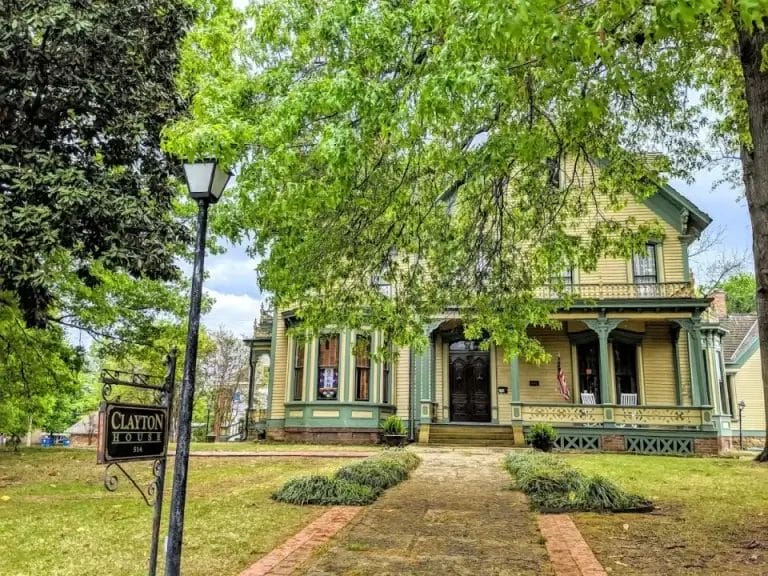
Historic Mansion
Clayton House – Haunted Historic Mansion in Fort Smith, Arkansas
Fort Smith (Arkansas), Arkansas
The Clayton House stands as one of Fort Smith’s most elegant Victorian mansions and its...
Explore This Location →
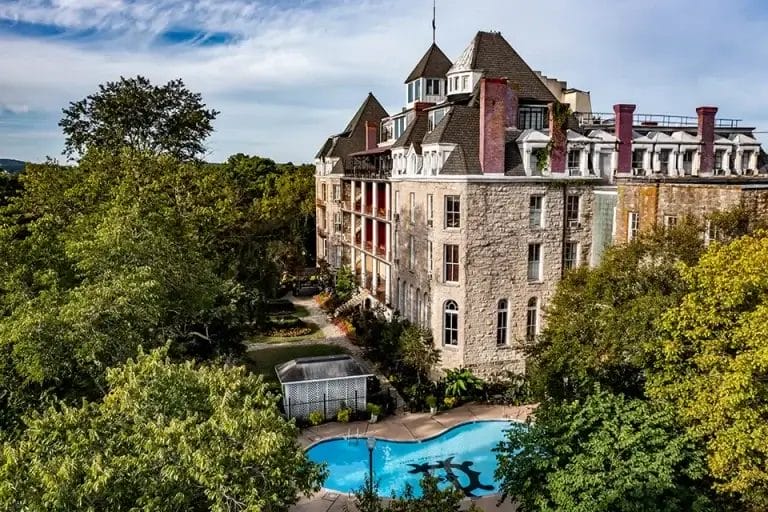
Hotel
Crescent Hotel – Haunted Hotel in Eureka Springs, Arkansas
Eureka Springs (Arkansas), Arkansas
The Crescent Hotel towers over the Victorian village of Eureka Springs like a crown jewel....
Explore This Location →

Railroad Tracks
Gurdon Light – Haunted Railroad Tracks in Gurdon, Arkansas
Gurdon (Arkansas), Arkansas
The small town of Gurdon, Arkansas harbors one of the most enduring paranormal mysteries in...
Explore This Location →
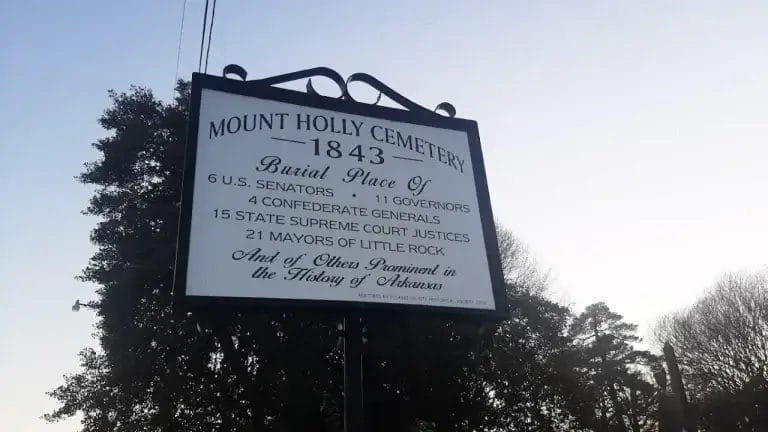
Cemetery
Mount Holly Cemetery – Haunted Cemetery in Little Rock, Arkansas
Little Rock (Arkansas), Arkansas
Mount Holly Cemetery stands as Little Rock’s oldest and most mysterious burial ground. The cemetery...
Explore This Location →
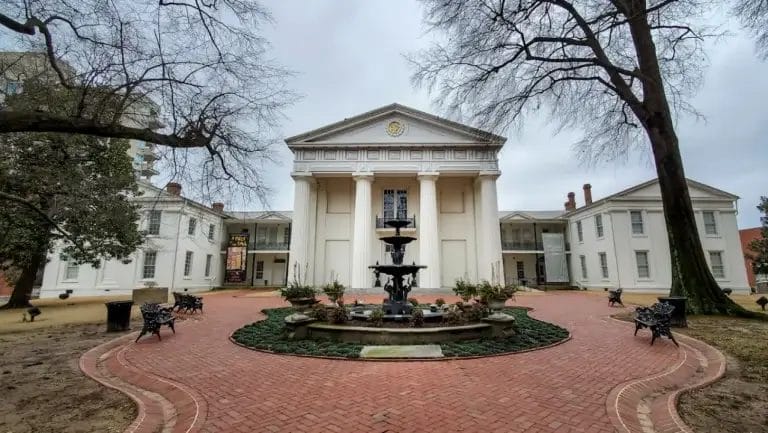
Government Building
Old State House Museum – Haunted Government Building in Little Rock, Arkansas
Little Rock (Arkansas), Arkansas
The Old State House Museum stands as Arkansas’s oldest surviving state capitol building in downtown...
Explore This Location →
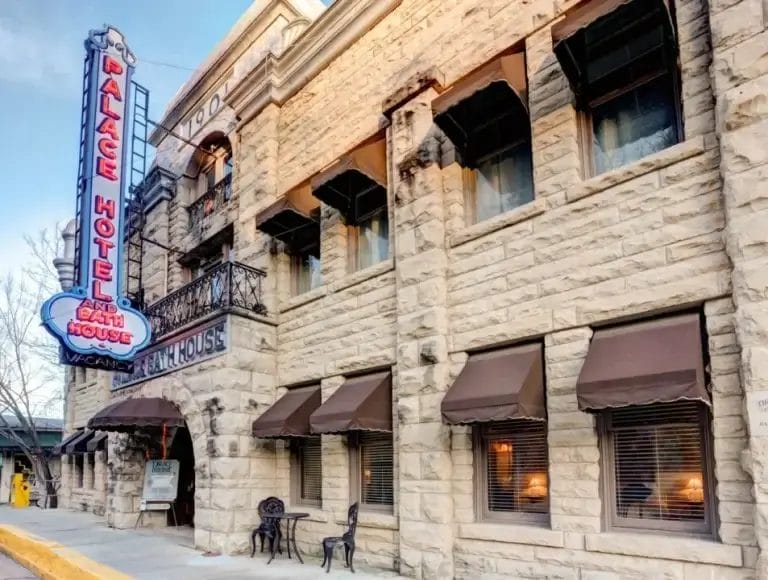
Hotel
Palace Hotel & Bath House – Haunted Hotel in Eureka Springs, Arkansas
Eureka Springs (Arkansas), Arkansas
Nestled in the heart of Eureka Springs’ historic downtown district sits the Palace Hotel &...
Explore This Location →
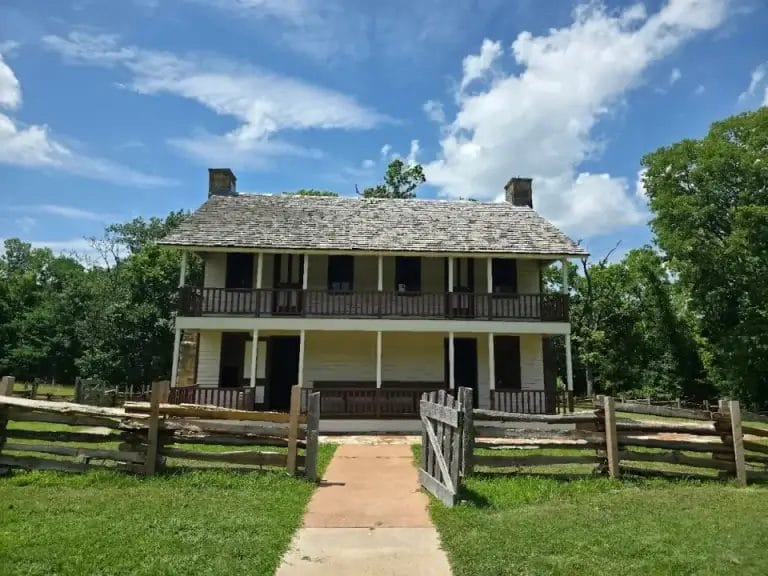
Battlefield
Pea Ridge National Military Park – Haunted Battlefield in Pea Ridge, Arkansas
Pea Ridge (Arkansas), Arkansas
Pea Ridge National Military Park sprawls across 4,300 acres of rolling northwestern Arkansas countryside. The...
Explore This Location →
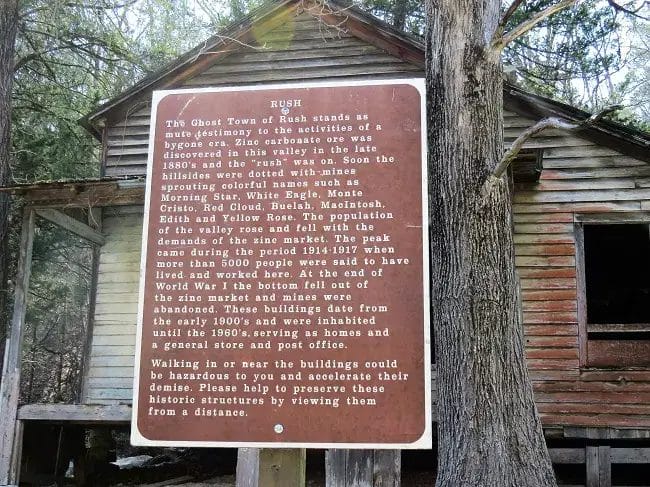
Mining Settlement
Rush Ghost Town – Haunted Mining Settlement in Rush, Arkansas
Rush (Arkansas), Arkansas
Deep in the Ozark Mountains of northern Arkansas lies Rush Ghost Town. This abandoned mining...
Explore This Location →
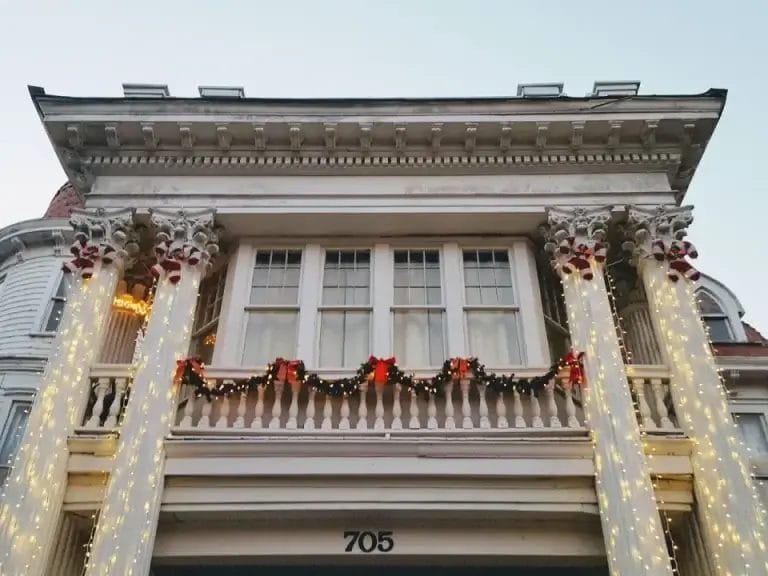
Mansion
The Allen House – Haunted Mansion in Monticello, Arkansas
Monticello (Arkansas), Arkansas
The Allen House stands as one of Arkansas’s most notorious haunted locations. This elegant three-story...
Explore This Location →
The Natural State holds secrets beyond its stunning mountains and pristine forests. Arkansas’s haunted locations weave together Native American legends, Civil War tragedies, Victorian-era mysteries, and modern paranormal encounters into a tapestry of supernatural intrigue. From the Ozark Mountains where ghostly lights dance above forgotten graves to the elegant hotels of Hot Springs where spirits refuse to check out, Arkansas offers paranormal enthusiasts an unforgettable journey into the unknown.
Why Arkansas Is a Paranormal Treasure Trove
Arkansas’s haunted reputation stems from layers of history that few other states can match. Long before European settlement, Native American tribes considered certain Arkansas locations sacred or spiritually powerful. The Trail of Tears passed directly through Arkansas, leaving a legacy of suffering that some believe anchored restless spirits to the land.
The Civil War brought devastating conflict to Arkansas, with major battles at Pea Ridge, Prairie Grove, and numerous smaller engagements throughout the state. The violence, death, and emotional trauma created conditions that paranormal researchers associate with increased haunting activity.
Arkansas’s geographic isolation—particularly in the remote Ozark and Ouachita Mountain regions—preserved folklore and legends that might have been lost in more developed areas. Small communities maintained oral traditions about haunted locations, keeping ghost stories alive across generations. The state’s commitment to historic preservation means many 19th-century structures remain intact, potentially maintaining the spiritual energy of their original inhabitants.
The Crescent Hotel, Eureka Springs: America’s Most Haunted Hotel
Perched majestically on the limestone cliffs overlooking Eureka Springs, the Crescent Hotel at 75 Prospect Avenue has earned its reputation as “America’s Most Haunted Hotel” through decades of documented paranormal activity and a dark history that reads like a Gothic novel.
The Grand Beginning: Built in 1886 as a luxury resort for wealthy visitors seeking the healing waters of Eureka Springs, the Crescent Hotel represented Victorian elegance at its finest. The five-story stone structure featured cutting-edge amenities and attracted high society guests from across America. But financial difficulties forced the hotel to close repeatedly, setting the stage for its darkest chapter.
Norman Baker’s House of Horrors: In 1937, a charlatan named Norman Baker transformed the Crescent into a fraudulent cancer hospital. Baker, who had no medical training whatsoever, claimed he could cure cancer through secret treatments. Desperate patients traveled to the Crescent seeking hope, only to receive worthless concoctions while Baker collected their money. Many patients died in the building, their last days marked by false promises and suffering. Baker eventually went to federal prison for mail fraud, but the damage was done.
The Spirits of the Crescent: The hotel hosts multiple documented ghosts, each with distinct characteristics and favorite haunting locations.
Michael, the Irish Stonemason: The most frequently encountered spirit is Michael, one of the Irish stonemasons who built the hotel in 1886. Michael fell to his death in Room 218 during construction. Guests staying in this room report seeing a bearded man in work clothes standing at the foot of the bed. He appears solid and real before vanishing suddenly. The room experiences temperature fluctuations, unexplained knocking sounds, and the scent of pipe tobacco.
Theodora, the Cancer Patient: A young woman believed to have died under Norman Baker’s fraudulent care, Theodora haunts the fourth floor. She appears wearing a nightgown from the 1930s era, pushing a gurney through the hallways. Guests report hearing a gurney’s wheels squeaking along corridors where no gurney exists. Theodora seems particularly active in rooms that served as patient quarters during the hospital era.
Dr. John Freemont Ellis: The hotel’s original physician, Dr. Ellis lived on the property and reportedly still makes his rounds. His apparition appears in formal Victorian attire, walking the hallways with a medical bag. Guests describe him as distinguished looking with a white beard. He seems to be checking on patients who are no longer there, pausing at doorways before moving on.
The Morgue: The hotel basement, which served as Norman Baker’s morgue, generates the most intense paranormal activity. Tour guides refuse to remain alone in this space. The morgue features original autopsy tables and equipment, creating an appropriately macabre atmosphere. Visitors report being touched, hearing voices, feeling overwhelming dread, and experiencing the sensation of being watched by multiple entities. Shadow figures dart between the morgue’s chambers, and electromagnetic field detectors register significant anomalies.
Room 419 – The Portal Room: This room has gained legendary status among paranormal investigators. Multiple mediums independently identified Room 419 as containing a “portal” or doorway to the spirit realm. Guests staying in this room report severe nightmares, sleep paralysis, apparitions of multiple entities, objects moving on their own, and feeling physically touched or grabbed. The hotel now offers this room specifically to paranormal enthusiasts seeking intense experiences.
Documented Evidence: The Crescent Hotel has been featured on numerous paranormal television programs including “Ghost Hunters,” “Ghost Adventures,” and “Most Terrifying Places.” Investigators have captured compelling EVP recordings, including voices responding to questions in vintage accents. Thermal imaging reveals human-shaped cold spots moving through hallways. Hundreds of guests have photographed anomalies including orbs, mists, and full-bodied apparitions.
Visiting Information: The Crescent Hotel operates as a full-service luxury hotel, allowing guests to stay overnight in haunted rooms. The hotel offers nightly ghost tours led by knowledgeable guides who share historical information and paranormal accounts. The tours include the morgue, Room 218, and other active locations. Special paranormal investigation packages are available, providing equipment and extended access to haunted areas. Reservations for ghost tours and investigation experiences should be made in advance, especially during peak season.
Gurdon Light, Gurdon: Arkansas’s Most Famous Unexplained Phenomenon
Deep in the pine forests near the small town of Gurdon in southwest Arkansas, a mysterious light has baffled witnesses for over a century. The Gurdon Light appears along abandoned railroad tracks, defying conventional explanation and drawing paranormal enthusiasts from around the world.
The Legend: The most popular explanation for the Gurdon Light involves a railroad worker who died along these tracks in the early 1900s. According to legend, a foreman named William McClain was murdered by one of his workers, who decapitated him with a railroad spike hammer. McClain’s ghost supposedly walks the tracks, carrying a lantern as he searches for his missing head.
Alternative versions claim the light belongs to a brakeman who fell between train cars and was crushed, or a conductor who died trying to stop a runaway train. Despite variations in the story, all versions agree that someone died violently along these tracks, and their spirit remains.
The Phenomenon: Witnesses describe seeing a bright light—usually white but sometimes changing to orange, red, or blue—appearing along the old Missouri Pacific Railroad tracks. The light moves with apparent intelligence, advancing toward observers before retreating, swinging side to side like a carried lantern, and sometimes splitting into multiple lights.
The phenomenon appears most frequently on dark, clear nights, though sightings occur in various weather conditions. The light typically appears about three to four feet above the ground, consistent with the height of a carried lantern. It moves along a specific section of abandoned track approximately two miles long.
Scientific Investigations: The Gurdon Light has attracted scientific scrutiny alongside paranormal investigation. Skeptics propose explanations including:
- Refracted car headlights from nearby Highway 67
- Swamp gas or methane emissions from surrounding wetlands
- Piezoelectric effects from quartz-bearing rocks under pressure
- Ball lightning or other atmospheric electrical phenomena
However, witnesses point out problems with these explanations. The light appeared long before automobiles existed in the area. It manifests in weather conditions that wouldn’t support swamp gas theories. The light’s intelligent movement patterns don’t align with natural phenomena.
A 1930s railroad investigation concluded the light was “of unknown origin.” Modern investigators using sophisticated equipment have documented the light while ruling out conventional sources like car headlights or flashlights.
Personal Experiences: Thousands of people have witnessed the Gurdon Light over the decades. Common elements in reports include:
- The light appearing suddenly rather than approaching gradually
- A feeling of being watched while observing the phenomenon
- The light responding to observers—advancing when called, retreating when approached
- Electronic equipment malfunctioning near the light
- Intense cold spots accompanying the light’s appearance
- The sound of footsteps on railroad gravel when the light is visible
Some witnesses report more unsettling experiences—feelings of intense dread, seeing shadow figures near the light, hearing disembodied voices, and experiencing vivid nightmares after viewing the phenomenon.
How to Experience It: The Gurdon Light viewing area is located just outside Gurdon. From Highway 67, turn onto Gurdon Light Road and follow it to the abandoned railroad tracks. The area is accessible but requires walking along uneven terrain in darkness.
Best viewing conditions:
- Arrive after full darkness (at least an hour after sunset)
- Choose nights with clear skies and minimal moon
- Allow 30-60 minutes of observation time
- Bring flashlights but keep them off while watching for the light
- Go with a group for safety and corroboration
The location is somewhat remote, so inform someone of your plans. Watch for uneven ground, and stay alert for wildlife including snakes and wild hogs. The tracks are abandoned but still private property, so remain respectful of the area.
When Not to Go: Avoid the location during inclement weather, as the area can become muddy and difficult to navigate. Heavy rain can make the access road impassable. The site attracts significant visitor traffic around Halloween, which can actually reduce the likelihood of sightings due to noise and light pollution from crowds.
Old State House Museum, Little Rock: Where Politics and Paranormal Collide
Standing proudly at 300 West Markham Street in downtown Little Rock, the Old State House served as Arkansas’s capitol building from 1836 to 1911. This Greek Revival masterpiece witnessed some of Arkansas’s most dramatic political moments—and according to numerous witnesses, some of its participants never left.
Historical Significance: The Old State House hosted the Arkansas Secession Convention in 1861, where delegates voted to leave the Union and join the Confederacy. The building witnessed heated debates that literally led to violence—Representative J. J. Anthony was stabbed to death on the building’s steps during a political dispute in 1837. Confederate soldiers used the building during the Civil War, and Union forces later occupied it when Little Rock fell to federal troops in 1863.
The Phantom Legislator: The most frequently reported apparition is a man in 19th-century formal attire, believed to be a former legislator who served before the Civil War. He appears in the old House and Senate chambers, sometimes sitting in period-appropriate locations, other times standing as if addressing an invisible assembly. Witnesses describe him as solid and real-looking until he vanishes, often in mid-gesture.
Security guards working overnight shifts report seeing this figure regularly. He walks established routes through the building, as if following a routine from his living days. When approached, he disappears, but guards report feeling a presence remaining in the room after the visible apparition fades.
The Murdered Representative: The spirit of J. J. Anthony, murdered on the building’s front steps in 1837, reportedly haunts the entrance area. Visitors and staff describe a cold spot near where the stabbing occurred. Some witnesses report seeing a man in 1830s clothing suddenly appear near the steps, looking confused or distressed, before vanishing.
Confederate Soldiers: Given the building’s use during the Civil War, reports of soldiers in Confederate gray shouldn’t surprise. These apparitions appear primarily in basement areas that served as storage and possibly holding areas during the war. Witnesses describe hearing marching footsteps, military commands shouted in empty rooms, and seeing shadowy figures in military formations.
The Children’s Spirits: Unexplained phenomena involve children’s voices and laughter echoing through areas that once hosted social events and gatherings. During the 19th century, the State House held public events where legislators’ families would attend, including children. The sound of children playing and running manifests in upper floor areas, despite no children being present in the building.
Documented Activity: Museum staff maintain informal logs of paranormal encounters, though the museum focuses primarily on historical education rather than promoting ghost stories. Reported phenomena include:
- Doors opening and closing independently, sometimes forcefully
- Footsteps echoing through empty corridors
- Period-appropriate voices speaking in rooms with no one present
- Antique furnishings found disturbed despite security systems showing no entry
- Electromagnetic anomalies in specific locations
- The scent of cigar smoke in areas where it shouldn’t exist
- Unexplained cold spots that move through rooms
Paranormal Investigations: The Old State House has permitted limited paranormal investigations by serious research teams. Investigators report significant activity including EVP recordings of period voices, thermal camera images showing human-shaped anomalies, and electromagnetic field fluctuations that suggest intelligent interaction rather than random variation.
Visiting Information: The Old State House operates as a museum Tuesday through Saturday, with free admission. Regular tours focus on Arkansas history and the building’s architectural significance. While staff acknowledge the building’s paranormal reputation, ghost tours are not currently offered. However, visitors sensitive to paranormal activity often report experiences during normal museum hours, particularly in the old legislative chambers and basement areas.
The museum hosts special events throughout the year, and staff members—when asked—will share paranormal anecdotes from their experiences working in the building. Photography is allowed throughout the museum, and visitors frequently capture anomalies in their photos.
Pea Ridge National Military Park: Where 26,000 Souls Clashed
The Battle of Pea Ridge, fought March 7-8, 1862, was the largest Civil War engagement west of the Mississippi River. Nearly 26,000 soldiers clashed in the Ozark hills, resulting in over 4,000 casualties. The preserved battlefield at 15930 East Highway 62 in Pea Ridge remains saturated with the trauma of that terrible conflict.
The Battle’s Significance: Pea Ridge secured Missouri for the Union and demonstrated that Confederate forces couldn’t maintain control of the Trans-Mississippi region. The battle was particularly brutal, with close-quarters fighting, artillery bombardments that shook the earth, and desperate charges against fortified positions. The winter ground, still partially frozen, absorbed the blood of thousands.
Phantom Battle Sounds: The most commonly reported paranormal phenomenon at Pea Ridge involves auditory experiences. Visitors hear:
- Cannon fire echoing across the battlefield, sometimes powerful enough to feel through the ground
- Rifle volleys in rapid succession, sounding exactly as period weapons would
- Men shouting commands in the distance
- Screaming and moaning of wounded soldiers
- Horses neighing and the thunder of cavalry charges
- Drums beating military cadences
These sounds typically manifest near dawn or dusk, mirroring the times when historical battles often occurred. Park rangers acknowledge receiving numerous reports of battle sounds, particularly around the battle’s anniversary dates in early March.
Elkhorn Tavern: This structure served as a field hospital during the battle, where surgeons performed amputations and treated horrific wounds with crude instruments and no anesthesia. The tavern witnessed unspeakable suffering as wounded soldiers screamed through surgical procedures or died waiting for treatment.
The reconstructed tavern generates intense paranormal activity. Visitors report:
- The smell of blood and antiseptic despite the building being clean and empty
- Hearing moans and cries of pain emanating from empty rooms
- Seeing shadow figures of men lying on the floor as if wounded
- Feeling overwhelmed by sadness and despair when entering specific rooms
- Experiencing unexplained nausea or physical weakness
Sensitive visitors report feeling residual pain—phantom injuries that match common battlefield wounds like leg injuries from minie balls or arm wounds requiring amputation. These sensations disappear upon leaving the building.
Telegraph Road: This crucial route, which both armies fought to control, features numerous paranormal reports. Witnesses see soldiers marching in formation, appearing as translucent figures before fading away. The sounds of wagons and artillery pieces being hauled along the road manifest despite no vehicles being present.
Leetown Section: This area witnessed particularly desperate fighting, with Confederate forces launching repeated attacks against Union positions. Visitors to Leetown report:
- Seeing individual soldiers appearing confused, as if lost or looking for their units
- Experiencing sudden overwhelming fear or anxiety
- Witnessing reenactments of specific battle moments—charging soldiers, officers on horseback, men falling as if shot
- Finding unexplained footprints in soft ground that appear and disappear
The Confederate Cemetery: A mass grave contains the remains of Confederate soldiers killed in the battle. Visitors to this solemn location report seeing ghostly figures standing among the grave markers, sometimes saluting or removing hats in respect. The atmosphere around the cemetery feels heavy, and many visitors describe feeling watched by multiple entities.
Photographic Anomalies: Pea Ridge consistently produces unexplained photographic evidence. Visitors capture:
- Mists forming human shapes in battlefield photos
- Orbs appearing in patterns suggesting movement or formation
- Full-bodied apparitions visible in photos but not seen when the picture was taken
- Faces appearing in tree lines and battlefield features
- Unusual light formations that don’t correspond to any natural source
Residual vs. Intelligent Hauntings: Paranormal researchers differentiate between residual hauntings (recordings of past events playing repeatedly) and intelligent hauntings (spirits that interact with the present). Pea Ridge appears to host both types. The battle sounds and visual reenactments seem residual—the trauma of the battle somehow imprinted on the location. However, individual soldier sightings often display intelligence, with spirits seeming to notice and react to modern visitors.
Visiting Information: Pea Ridge National Military Park is open daily year-round from dawn to dusk. The visitor center offers exhibits, a film about the battle, and ranger programs. A seven-mile driving tour with multiple stops allows visitors to explore the battlefield at their own pace.
The park doesn’t officially promote paranormal aspects but rangers acknowledge the reports. The best times for potential paranormal experiences are early morning or late afternoon when visitor traffic is minimal. The park is particularly atmospheric during misty conditions or light rain, when visibility is reduced and sounds carry strangely through the Ozark hills.
March 7-8, the battle anniversary dates, see special commemorative programs. Some visitors report heightened paranormal activity during these anniversary observances, as if the spirits recognize the significance of the dates.
Photography is encouraged throughout the park. Remain on designated trails to protect the historic landscape and for your own safety—the terrain includes rocky outcroppings and steep slopes.
The Allen House, Monticello: Victorian Elegance and Eternal Sorrow
At 705 North Main Street in Monticello stands one of Arkansas’s most architecturally significant and paranormally active locations. The Allen House, built in 1906, combines Queen Anne and Neoclassical architectural styles into a stunning three-story mansion. Behind its elegant facade lies a dark history of suicide and haunting.
The Tragedy of Ladell Allen: The house’s haunting centers on Ladell Allen Bonner, granddaughter of the home’s builder Joe Lee Allen. In 1948, Ladell committed suicide in an upstairs bedroom of the Allen House. She was a young woman, recently married and seemingly with her whole life ahead of her. The reasons for her suicide remain mysterious, adding to the tragedy.
What makes Ladell’s death particularly unusual is the manner—she drank a cocktail of cyanide mixed with other poisons, an agonizing way to die. The suffering she endured in her final moments may explain the intensity of paranormal activity that followed.
Ladell’s Haunting: The spirit of Ladell Allen Bonner dominates the Allen House’s paranormal activity. Multiple witnesses—including skeptical visitors, paranormal investigators, and the home’s current caretakers—report encounters with her presence.
The Bedroom: The second-floor bedroom where Ladell died generates the most intense activity. Visitors report:
- Overwhelming sadness and despair upon entering
- The scent of perfume—identified by period fragrance experts as consistent with 1940s scents
- Seeing a young woman in 1940s-era clothing sitting on the bed or standing by the window
- Hearing sobbing and crying
- Feeling a presence that seems aware of and reactive to visitors
- Physical sensations like being touched or having hair stroked
The Staircase: Ladell’s apparition frequently appears on the grand staircase, descending as if heading to some destination in the house. She’s described as wearing a long dress or nightgown, with dark hair and a sorrowful expression. She typically appears solid and real before fading away, sometimes mid-step.
Interactive Haunting: Unlike residual hauntings that simply replay past events, Ladell seems aware of the present. She reportedly responds to questions during EVP sessions, with investigators capturing female voices answering queries about her life and death. Objects move in response to requests. Investigators using structured communication methods report receiving intelligent responses through EMF detectors, flashlight manipulation, and other techniques.
Other Spirits: While Ladell is the dominant presence, the Allen House hosts other paranormal activity:
- The ghost of Joe Lee Allen, the home’s builder, appears in period clothing from the early 1900s, inspecting his beloved house
- A child’s spirit plays in upstairs rooms, laughing and running
- Shadow figures pass through hallways
- The sound of a party—music, conversation, laughter—manifests from empty rooms, as if the house is reliving its glory days
Caddo Indian Connection: The Allen House was built on land that may have held significance to the Caddo people who originally inhabited the region. Some paranormal researchers suggest the property’s spiritual activity might predate the house itself, with Native American spirits sharing the space with more recent ghosts.
Physical Phenomena: The Allen House produces significant physical manifestations:
- Doors opening and closing forcefully
- Lights turning on and off independently of switches
- Period furnishings moving to different locations overnight
- Music boxes playing on their own
- Distinct footsteps pacing upstairs rooms
- Window shades raising and lowering without human touch
- The piano producing notes despite no one playing
Documented Investigations: The Allen House has welcomed numerous paranormal investigation teams, including groups featured on television programs. Evidence collected includes:
- EVP recordings capturing a female voice identifying herself and discussing her death
- Thermal imaging showing human-shaped cold spots
- Photographs capturing full-bodied apparitions, particularly of a woman matching Ladell’s description
- Video footage of objects moving independently
- EMF readings spiking in response to specific questions
Current Status: The Allen House operates as a historical property open for tours and paranormal investigations. The current caretakers have lived with Ladell’s presence for years and speak about her with a mixture of respect and familiarity. They’ve developed what seems to be a relationship with the spirit, learning to coexist with the paranormal activity.
Visiting Information: The Allen House offers historical tours and paranormal investigation opportunities by appointment. Overnight investigations are available for serious paranormal research teams. The caretakers share both historical information and personal paranormal experiences during tours.
Given the intensity of reported activity, the Allen House appeals particularly to serious paranormal enthusiasts rather than casual visitors. The home requests respectful treatment of both the historic property and its spiritual inhabitants. Visitors should contact the property in advance to arrange access.
Rush Ghost Town: Where Silver Seekers Left Their Spirits
Hidden in the Buffalo National River area near the town of Yellville, Rush was Arkansas’s premier zinc mining boom town. From the 1880s through the early 1900s, Rush thrived with saloons, hotels, stores, and hundreds of miners seeking fortune in the Ozark hills. When the mines closed, Rush became a ghost town—in more ways than one.
The Boom and Bust: Rush’s population swelled to over 5,000 during peak mining operations. The Morning Star Mine produced vast quantities of zinc ore, creating instant fortunes and attracting people from across America. But mining is dangerous work, and Rush’s mines claimed numerous lives through cave-ins, explosions, flooding, and equipment failures.
The town developed the rough character typical of mining camps—gambling, prostitution, violence, and lawlessness flourished alongside legitimate commerce. Murder, suicide, and accidental death were common enough that Rush maintained a busy undertaker’s business.
When the zinc market collapsed and veins played out, Rush died almost overnight. By the 1960s, the town was completely abandoned, leaving behind deteriorating structures and the spirits of those who’d lived, worked, and died there.
The Mining Ghosts: The Morning Star Mine and surrounding abandoned mine sites generate the most paranormal activity. Visitors report:
- Hearing mining sounds—pickaxes striking rock, dynamite explosions, ore carts rattling
- Seeing miners in period work clothes emerging from mine entrances before vanishing
- Feeling watched from within the dark mine openings
- Experiencing sudden temperature drops near mine sites
- Hearing voices speaking in languages reflecting Rush’s diverse immigrant population
The Town Site: The National Park Service maintains Rush as a historical site within Buffalo National River, preserving several structures including the Clabber Creek Store, blacksmith shop, and various home foundations. These locations host numerous paranormal reports:
The General Store: Visitors hear the sounds of commerce—people talking, items being moved, the ring of an old cash register. Shadow figures appear in windows, and some visitors report seeing the store as it looked during its operational days—fully stocked and bustling—before the vision fades.
Residential Areas: The foundations and remnants of homes where mining families lived generate emotional responses. Witnesses report:
- Hearing children playing in areas that were once yards
- Seeing domestic scenes—women hanging laundry, families gathered—before these visions disappear
- The smell of cooking fires and period foods
- Feeling the presence of families still inhabiting their former homes
The Cemetery: Rush Cemetery, perched on a hillside overlooking the ghost town, contains graves of miners, their families, and victims of the town’s violent past. The cemetery remains accessible and generates significant paranormal activity:
- Apparitions of mourners standing at graves
- The sound of funeral processions
- Children’s laughter from the section where youngsters are buried
- Feelings of profound sadness, particularly around graves of those who died young or violently
The Suicide Bridge: A particular bridge near Rush is associated with a woman who reportedly jumped to her death during the town’s decline, despondent over financial ruin and personal loss. Her ghost appears on the bridge, always looking down into the water below. Some witnesses report hearing a splash, as if her death is replaying endlessly.
Residual Energy: Rush seems to host primarily residual hauntings—the town’s energy seems imprinted on the location, replaying scenes from its vibrant past. However, some encounters suggest intelligent spirits remain, particularly miners who died in the tunnels and may not realize the mines closed over a century ago.
Current Access: Rush Ghost Town is part of Buffalo National River, managed by the National Park Service. The site is accessible via a gravel road off Highway 14. The area offers hiking trails, access to the Buffalo River, and the opportunity to explore the historical remains.
No services exist at Rush—bring water, food, and supplies. The area is remote, and cell phone service is unreliable. The abandoned mine openings are extremely dangerous and should never be entered. Deaths have occurred when curious explorers entered unstable mines.
Best Visiting Times: Spring and fall offer the most comfortable weather for exploring Rush. Summer can be oppressively hot with limited shade, while winter weather can make the access road difficult to navigate. Early morning or late afternoon provides the best light for photography and seemingly increases paranormal encounter likelihood.
The Buffalo National River area offers camping, and spending a night near Rush allows for sunset and early morning exploration when the town feels most atmospheric.
Basin Park Hotel, Eureka Springs: Luxury and Lingering Spirits
The Basin Park Hotel, located at 12 Spring Street in the heart of Eureka Springs’ historic downtown, has welcomed guests since 1905. This seven-story hotel was considered a marvel of modern engineering—the first fireproof hotel in Arkansas, featuring an innovative atrium design and luxurious amenities. Over a century later, the hotel continues welcoming guests, both living and deceased.
The Hotel’s History: Basin Park was built during Eureka Springs’ heyday as a Victorian spa town. Wealthy visitors traveled to Eureka Springs to “take the waters” at the numerous natural springs, believing in their healing properties. The Basin Park Hotel positioned itself as premier luxury accommodation, attracting the social elite of the early 20th century.
The hotel witnessed Eureka Springs’ evolution from Victorian health resort to modern tourist destination. It served various functions through the decades, falling into disrepair during lean times before restoration efforts revived its grandeur.
The Lady in White: Basin Park’s most famous ghost is a woman in Victorian white dress who appears throughout the hotel. Multiple witnesses describe her as elegant and refined, matching the social class of the hotel’s original guests. She most frequently appears:
- In the third-floor hallways, walking purposefully as if heading to a specific room
- On the stairwells, ascending or descending between floors
- In the original dining room area, seated as if waiting for a meal
- Near windows overlooking Spring Street, gazing out at the town
The Lady in White never speaks and doesn’t acknowledge observers. She appears solid and real, dressed in period-appropriate late Victorian or Edwardian clothing. Witnesses who’ve approached her report that she simply vanishes, leaving no trace of her presence.
Room 333: This room has developed a reputation as Basin Park’s most actively haunted. Guests report:
- Waking to see figures standing in the room
- Feeling someone sit on the edge of the bed
- Hearing conversations in empty rooms
- Objects moving independently—luggage relocated, bathroom items rearranged
- Unexplained knocking from inside walls
- Electronic devices malfunctioning inexplicably
Some guests request Room 333 specifically hoping for paranormal encounters, while others ask to be moved after unsettling experiences.
The Atrium: Basin Park’s central atrium, an architectural feature that allows each floor to open onto a central space, creates unusual acoustics. Guests report hearing:
- Music from another era—big band sounds, jazz, Victorian-era pieces
- Party sounds—laughter, conversation, glasses clinking—when no event is occurring
- Footsteps and voices echoing from empty floors
- A woman singing softly, though no source is found
The Basement: The hotel’s lowest level, which houses storage and mechanical systems, generates the most intense paranormal activity. Staff members avoid this area when possible, reporting:
- Shadow figures darting between pipes and equipment
- The sensation of being followed
- Unexplained cold spots in areas that should be warm
- Objects moved from their usual locations
- A general feeling of unease and being unwelcome
The Elevator: Basin Park’s vintage elevator is known for operating independently. It arrives at floors where no one called it, doors open and close without button presses, and guests occasionally report riding the elevator with a mysterious passenger who vanishes during the trip.
Historical Figures: Some paranormal researchers suggest the hotel is haunted by specific historical guests. Eureka Springs attracted notable figures during its Victorian heyday, and some may have maintained their connection to the Basin Park Hotel after death.
Guest Experiences: The Basin Park maintains a tradition of discretion regarding paranormal reports—management doesn’t actively promote the hotel as haunted, but acknowledges the experiences of guests who report unusual encounters. Guest comments frequently reference:
- Waking to find their belongings moved or rearranged
- Seeing a woman in vintage clothing walking the hallways
- Hearing period music when no music is playing
- Feeling a presence in their room, particularly at night
- Experiencing vivid dreams about the hotel’s past
Visiting Information: Basin Park Hotel operates as a full-service hotel, welcoming guests for overnight stays. The hotel features a restaurant, rooftop terrace with stunning views of Eureka Springs, and elegant common areas. Room rates vary by season, with peak times during spring and fall foliage season.
Guests interested in paranormal experiences can request rooms with haunted reputations, though the hotel doesn’t guarantee encounters. The historic atmosphere and Victorian-era ambiance create an appropriately atmospheric setting whether or not guests experience paranormal activity.
Prairie Grove Battlefield State Park: A Frozen Moment of War
On December 7, 1862, Confederate and Union forces clashed at Prairie Grove in northwest Arkansas. The battle raged for hours, with neither side gaining decisive advantage before both armies withdrew, leaving over 2,700 casualties scattered across the frozen fields. The 960-acre park at 506 East Douglas Street in Prairie Grove preserves this Civil War battlefield—and according to numerous witnesses, the battle itself never truly ended.
The Battle’s Intensity: Prairie Grove represented a crucial struggle for control of northwest Arkansas. The fighting was particularly brutal, with close-quarters combat, repeated charges and countercharges, and artillery fire that devastated both sides. Wounded men froze to death on the battlefield overnight as temperatures dropped below freezing. The psychological trauma and physical suffering created conditions paranormal researchers associate with intense haunting activity.
Phantom Gunfire: The most frequently reported paranormal phenomenon involves battle sounds manifesting across the battlefield. Visitors hear:
- Cannon fire booming across the fields
- Rifle volleys crackling through the air
- Men shouting commands and battle cries
- The screams of wounded soldiers
- Horses neighing and the thunder of cavalry
- Drums beating military cadences
These sounds typically occur near dawn, dusk, or during foggy conditions. They manifest with enough volume and realism that visitors unfamiliar with the battlefield’s haunted reputation sometimes believe a reenactment is occurring.
The Borden House: This historic home served as a field hospital during and after the battle. Surgeons performed amputations on the dining room table, and wounded men filled every room. The suffering witnessed within these walls left an imprint that remains palpable.
Visitors to the Borden House report:
- The smell of blood and antiseptic
- Hearing moans and cries of pain
- Seeing shadow figures of wounded men lying on floors
- Feeling overwhelming sadness and physical pain
- Experiencing sudden nausea or weakness
- Witnessing the apparition of a surgeon in blood-stained clothes
The basement, where bodies were temporarily stored, generates particularly intense activity. Visitors refuse to remain alone in this space, reporting feeling surrounded by suffering presence and experiencing severe emotional distress.
The Morrow House: Another historic structure on the battlefield, the Morrow family’s home also served medical purposes during the battle. Similar phenomena occur here:
- Phantom medical procedures visible to sensitive witnesses
- The sound of surgical saws and other period medical instruments
- Seeing nurses in period clothing moving through rooms
- Finding unexplained water stains resembling blood on floors
Battlefield Apparitions: Witnesses across the battlefield report seeing individual soldiers and entire units:
- Infantry soldiers appearing in formation, muskets at the ready
- Cavalry riders charging across fields before vanishing
- Officers on horseback gesturing commands to invisible troops
- Wounded soldiers crawling across the ground seeking help
- Dead soldiers lying on the battlefield, their bodies fading like mist
These apparitions typically appear translucent or semi-transparent, but occasional reports describe solid-looking figures that seem alive until they disappear.
The Confederate Cemetery: A mass grave contains Confederate soldiers killed in the battle. The area generates:
- Apparitions of soldiers standing at attention near graves
- The sound of taps being played though no bugler is present
- Orbs and mists appearing in photographs
- A solemn, heavy atmosphere that affects most visitors
- Feelings of being watched by multiple entities
Residual vs. Interactive: Like Pea Ridge, Prairie Grove appears to host both residual hauntings (battle sounds and scenes replaying) and intelligent spirits. Some soldier apparitions seem aware of modern visitors, turning to look at observers or appearing to seek help. These interactive encounters suggest some spirits remain confused about their death or the passage of time.
Anniversary Phenomena: December 7, the battle’s anniversary, sees particularly intense paranormal activity according to regular visitors and park staff. The anniversary seems to somehow strengthen the connection to the past, with reports of activity increasing in frequency and intensity around this date.
Visiting Information: Prairie Grove Battlefield State Park is open daily with a visitor center offering exhibits, a film about the battle, and ranger programs. A driving tour with walking paths allows exploration of the battlefield and historic structures.
The park hosts living history programs and battle reenactments that demonstrate what the 1862 battle might have looked like and sounded like—providing useful comparison for witnesses experiencing paranormal battle sounds.
Photography is encouraged throughout the park. Visitors frequently capture anomalies in battlefield photos, particularly around the Borden House, Morrow House, and the Confederate Cemetery. Early morning fog creates particularly atmospheric conditions for both photography and potential paranormal encounters.
The park doesn’t officially promote paranormal aspects but rangers acknowledge the numerous reports. Visitors should remain on designated paths both to protect the historic landscape and for personal safety.
Mount Holly Cemetery, Little Rock: Victorian Necropolis
Established in 1843, Mount Holly Cemetery spreads across 54 acres in the heart of Little Rock at 1200 South Broadway. As Arkansas’s oldest garden cemetery, Mount Holly contains the graves of governors, generals, senators, and over 40,000 other Arkansans spanning nearly two centuries. The Victorian-era monuments, winding paths, and ancient trees create an atmosphere where the boundary between past and present feels thin.
Historical Significance: Mount Holly represents a who’s who of Arkansas history. Confederate generals rest alongside Union soldiers. Victims of the 1849 cholera epidemic lie in mass graves. The cemetery contains sections for different eras, ethnic groups, and social classes, creating a physical map of Little Rock’s evolution.
The cemetery’s design reflects Victorian “rural cemetery” philosophy—creating beautiful landscapes for the living to visit, not just final resting places for the dead. This intention means Mount Holly has always welcomed visitors, and perhaps some visitors never left.
The Lady in Black: Mount Holly’s most famous ghost is a woman dressed in Victorian mourning clothes who appears near various graves. She’s most frequently sighted:
- Near the Confederate section, mourning soldiers who died in the Civil War
- In the children’s section, weeping over graves of young people
- Walking paths as if visiting multiple graves during her eternal rounds
- Kneeling at graves in prayer or grief
Witnesses describe her as translucent with features difficult to discern. She seems unaware of modern observers, absorbed in her mourning. Some researchers suggest she represents the archetype of the eternal mourner rather than a specific historical figure.
Confederate Soldiers: The cemetery’s Confederate section contains hundreds of soldiers who died during or shortly after the Civil War. Paranormal activity in this area includes:
- Apparitions of soldiers in tattered gray uniforms
- The sound of marching feet on cemetery paths
- Military commands shouted in the distance
- The scent of gunpowder and campfire smoke
- Drumbeats and bugle calls
- Feelings of sadness and loss
The Cholera Victims: In 1849, cholera devastated Little Rock, killing hundreds in a matter of weeks. Many victims lie in mass graves at Mount Holly, their deaths too rapid for individual burial. These sections generate:
- Feelings of overwhelming sickness and dread
- Apparitions of people in 1840s clothing looking ill or distressed
- The sound of coughing and crying
- Cold spots despite warm weather
- A heavy, oppressive atmosphere
Children’s Sections: Victorian-era child mortality rates were tragically high, and Mount Holly contains heartbreaking numbers of children’s graves. These areas host:
- The sound of children laughing and playing
- Small figures darting between monuments
- Feelings of sadness mixed with joy
- Toys or flowers appearing on graves though no one was observed leaving them
- A sense of presence that feels innocent and playful
David O. Dodd Memorial: David O. Dodd was a Confederate spy executed at age 17 during the Civil War. He became a Southern martyr, and his grave at Mount Holly remains a pilgrimage site. Visitors report:
- Seeing a young man in Confederate uniform near the monument
- Feeling profound sadness at the grave
- Experiencing temperature drops
- Flowers appearing on the grave of unknown origin
Photographic Anomalies: Mount Holly produces exceptional numbers of anomalous photographs:
- Mists and fog appearing in photos on clear days
- Orbs, particularly around specific graves and monuments
- Shadow figures visible in photos but not seen when shooting
- Faces appearing in trees, monuments, and shadows
- Inexplicable light sources and reflections
The Feeling of Being Watched: Perhaps the most common experience visitors report is the sensation of being observed. Multiple unseen presences seem to track visitors’ movements through the cemetery. Most describe this as curious rather than threatening, as if the cemetery’s residents are interested in the living who walk among their graves.
Full Moon Phenomena: According to local paranormal enthusiasts, Mount Holly’s activity intensifies during full moons. While this sounds like folklore, enough witnesses report increased encounters during full moon periods that the pattern seems worth noting.
Visiting Information: Mount Holly Cemetery is open daily from dawn to dusk. The cemetery remains an active burial ground and sacred space for families, so visitors must remain respectful. Stay on paths, don’t disturb monuments, and avoid leaving offerings at graves.
The cemetery office provides maps showing notable gravesites and historical information. Self-guided walking tours allow exploration at your own pace. The Victorian-era landscaping, with mature trees and winding paths, creates beautiful photographic opportunities beyond paranormal documentation.
Spring and fall offer the most pleasant weather for cemetery visits. Late afternoon light creates dramatic shadows among monuments, enhancing both aesthetic photography and the atmospheric quality that makes paranormal encounters feel more likely.
Local paranormal groups occasionally conduct tours or investigations at Mount Holly with cemetery permission. These organized events provide structured paranormal investigation opportunities while ensuring respectful treatment of the grounds.
Additional Haunted Locations Worth Exploring
The 1886 Crescent Hotel & Spa Morgue Tours, Eureka Springs: Beyond the Crescent Hotel proper, the basement morgue offers specialized tours focusing entirely on the building’s darkest history and most intense paranormal activity.
King Opera House, Van Buren: This restored 1880s opera house hosts both live performances and ghostly ones. The apparition of a former performer and unexplained phenomena backstage create a classic haunted theater experience.
The Baker Cemetery, Bentonville: This small, old cemetery associated with the historic Baker House features Confederate graves and reports of apparitions, mysterious lights, and unexplained sounds.
Evergreen Cemetery, Fayetteville: Confederate and Union soldiers buried side-by-side, along with prominent Fayetteville residents, create a location rich with history and paranormal reports including soldier apparitions and battle sounds.
DeGray Lake Resort State Park: Modern development on historically significant land has generated paranormal reports including Native American spirits and unexplained phenomena in resort buildings and surrounding woods.
Villa Marre, Little Rock: This stunning 1881 Victorian mansion (featured in “Designing Women”) reportedly hosts multiple spirits including former residents and servants who haven’t left their stations.
Arkansas Territorial Restoration, Little Rock: This complex of historic buildings from Arkansas’s territorial period (1819-1836) features period furnishings and period ghosts—apparitions in early 19th-century clothing and domestic sounds from empty buildings.
White River Monster Territory: While not haunted by human spirits, the White River near Newport has a long tradition of sightings of a mysterious creature. Whether cryptid, paranormal entity, or misidentification, the White River Monster represents Arkansas folklore alive in the modern era.
Devil’s Den State Park: This Ozark mountain park features caves, rock formations, and legends of mysterious lights, strange sounds, and unidentifiable creatures. The area’s unusual geology and remote location create conditions where conventional and paranormal blend.
Toltec Mounds Archaeological State Park: These ancient Native American ceremonial mounds near Scott are over 1,000 years old. Visitors report feeling spiritual energy, seeing mysterious lights, and experiencing the presence of ancient peoples who built and used these ceremonial centers.
Planning Your Arkansas Paranormal Journey
Regional Considerations:
Northwest Arkansas (Eureka Springs, Pea Ridge, Prairie Grove): This region offers the highest concentration of documented haunted locations in a compact area. Plan 3-4 days to thoroughly explore Eureka Springs’ haunted hotels and the Civil War battlefields.
Central Arkansas (Little Rock, Monticello): The state capital region combines urban haunted locations with sites like the Allen House requiring separate day trips. Plan 2-3 days for comprehensive exploration.
Southwest Arkansas (Gurdon): The Gurdon Light requires specific timing and conditions. Combine with visits to historic Washington State Park (another reportedly haunted location) for a 1-2 day trip.
Ozark Mountains: Remote ghost towns, abandoned communities, and isolated cemeteries scattered throughout the Ozarks reward adventurous paranormal enthusiasts willing to explore unpaved roads and hiking trails.
Best Seasons for Investigation:
Spring (March-May): Mild temperatures, blooming landscapes, and anniversary dates for Civil War battles make spring ideal. Prairie Grove’s December 7 anniversary and Pea Ridge’s March dates offer potential for heightened activity.
Fall (September-November): Comfortable temperatures, fall foliage creating atmospheric backgrounds, and Halloween-season energy make fall another premium time. Hotels and tour operations are typically at full capacity, requiring advance reservations.
Summer (June-August): Arkansas heat and humidity can be brutal, particularly at outdoor locations like battlefields and cemeteries. However, summer offers extended daylight hours and the possibility of encountering fewer crowds at some locations.
Winter (December-February): Cold weather reduces competition for access to locations, but some sites may have limited hours. Winter conditions can enhance the eerie atmosphere at places like battlefields, where soldiers suffered in freezing temperatures.
Equipment Beyond the Basics:
While standard paranormal investigation equipment (EMF detectors, digital recorders, thermometers) proves useful, Arkansas-specific considerations include:
- Snake guards and hiking boots: Venomous snakes inhabit many remote Arkansas haunted locations, particularly in warm months
- Topographical maps and GPS: Cell service is unreliable in remote Ozark and Ouachita mountain areas
- Weather-appropriate clothing: Conditions can change rapidly, particularly in mountain regions
- Water and nutrition: Remote locations may be hours from services
- First aid kit: Including treatments for insect bites, minor injuries, and allergic reactions
Cultural Sensitivity:
Arkansas’s haunted locations include Native American sites, African American cemeteries, and Confederate memorials. Each requires appropriate respect for the complex history they represent.
Approach Native American sites with particular reverence. Many Arkansas tribes consider certain locations sacred, and some paranormal activity reported at these sites may reflect spiritual practices rather than traditional hauntings.
Confederate sites require balanced historical understanding. The trauma and death associated with these locations transcends political positions about the war itself. Respect the human suffering that occurred regardless of personal views on the Confederacy.
Photographic Opportunities:
Arkansas’s haunted locations offer exceptional aesthetic photography beyond paranormal documentation:
- Eureka Springs’ Victorian architecture in mountainous settings
- Weathered monuments in historic cemeteries
- Ozark mountain landscapes surrounding ghost towns
- Historic battlefield vistas
- Preserved Victorian-era interiors
Use golden hour lighting (shortly after sunrise or before sunset) for most dramatic natural illumination. Many locations gain atmospheric quality during fog or mist, creating naturally eerie conditions.
Connecting With Local Paranormal Communities:
Arkansas has active paranormal investigation groups in major cities and regions. These organizations often have extensive experience with local haunted locations and may offer group investigations or share insights about less-known sites.
Respect that serious paranormal investigation requires methodology, ethics, and experience. While many groups welcome newcomers, they expect participants to follow protocols, show respect for locations and any spirits encountered, and approach investigation scientifically rather than as entertainment.
Overnight Investigation Opportunities:
Several Arkansas haunted locations offer structured overnight paranormal investigations:
- The Crescent Hotel runs regular overnight ghost hunts with equipment provided
- The Allen House welcomes serious investigation teams by reservation
- Basin Park Hotel allows investigation in guest rooms
- Some historic sites offer special after-hours access for paranormal groups
These structured opportunities provide legal access, often include historical context from knowledgeable guides, and maximize time at locations during peak paranormal activity hours.
Creating Your Arkansas Paranormal Route:
The Civil War Trail: Combine Pea Ridge and Prairie Grove battlefields with Fayetteville’s Evergreen Cemetery and the Old State House in Little Rock for a comprehensive Civil War haunting experience.
The Eureka Springs Circuit: Focus on the Crescent Hotel, Basin Park Hotel, and numerous other haunted buildings in this Victorian spa town, with a day trip to Pea Ridge battlefield nearby.
The Southern Ghost Town Tour: Visit Rush ghost town, explore Blanchard Springs Caverns (reported paranormal activity), and check out abandoned communities scattered through the Ozarks.
The Capital Region Tour: Little Rock’s Old State House, Mount Holly Cemetery, and Villa Marre combined with day trips to the Allen House in Monticello and Davidsonville Historic State Park (another reportedly haunted location).
Recording Your Experiences:
Document your Arkansas paranormal investigations thoroughly:
- Keep detailed logs including time, location, weather, emotional state, and witness information
- Record audio throughout investigations, not just during EVP sessions
- Take photographs systematically, establishing baseline images before capturing anomalies
- Review evidence critically—most “paranormal” captures have conventional explanations
- Share findings honestly without exaggeration or manipulation
Consider contributing documented experiences to paranormal databases or sharing with location operators who maintain records of reported activity.
Understanding Arkansas’s Paranormal Landscape
Geographic Influence:
Arkansas’s varied geography—Ozark Mountains, Ouachita Mountains, Mississippi River Delta, and highland plateaus—creates diverse paranormal environments. Mountain regions feature isolated communities where folklore persisted undiluted by outside influence. River areas witnessed transportation disasters and flooding tragedies. Each geographic region contributes distinct elements to Arkansas’s paranormal tapestry.
The Ozark Factor:
The Ozark Mountain region spanning northern Arkansas has maintained folklore traditions more intact than most American regions. Geographic isolation, limited development, and strong oral traditions preserved ghost stories, superstitions, and beliefs about the spirit world. What might be dismissed as folklore elsewhere maintains living tradition status in Ozark communities.
Limestone and Quartz:
Arkansas sits atop significant limestone formations and contains substantial quartz deposits (including the world-famous Hot Springs quartz crystals). Some paranormal researchers theorize that certain geological formations may somehow facilitate, store, or amplify spiritual energy. Whether scientifically valid or not, the correlation between Arkansas’s unique geology and paranormal reports seems worth noting.
Native American Spiritual Legacy:
Before European contact, Arkansas was home to sophisticated cultures including the Plum Bayou people (builders of Toltec Mounds), Caddo, Osage, Quapaw, and Cherokee peoples. Their spiritual practices, sacred sites, and connection to the land may have created conditions conducive to paranormal activity. Some sites reported as haunted by European-descended spirits may have existing spiritual significance from much earlier periods.
Civil War Trauma:
Arkansas witnessed intense Civil War conflict with divided loyalties creating neighbor-against-neighbor violence, guerrilla warfare, and atrocities beyond formal battles. The emotional and physical trauma saturated the landscape. Paranormal theory suggests violent death and extreme suffering can anchor spirits to locations, explaining why Civil War sites generate disproportionate haunting reports.
Victorian Death Culture:
The Victorian era’s elaborate mourning practices, spiritualism movement, and different relationship with death influenced locations like Mount Holly Cemetery and the grand hotels of Eureka Springs. Victorians believed in maintaining connections with deceased loved ones and viewed death as a transition rather than an ending. This cultural context may have created conditions where spirits felt welcomed to remain rather than encouraged to move on.
Conclusion: Arkansas Awaits the Curious
Arkansas’s haunted locations offer paranormal enthusiasts an unmatched combination of documented activity, historical significance, geographic diversity, and accessibility. From the elegant corridors of the Crescent Hotel where spirits walk among living guests, to the frozen battlefields where soldiers eternally fight forgotten conflicts, to remote ghost towns where entire communities left their imprint on the land—the Natural State reveals itself as deeply supernatural.
Whether you approach these locations as a believer seeking proof, a skeptic demanding evidence, or simply a curious explorer drawn to atmospheric places and fascinating history, Arkansas rewards thoughtful investigation. The state’s haunted sites aren’t commercial tourist traps but genuine locations where history and mystery intertwine, where the past feels present, and where the boundary between worlds seems permeable.
As you plan your Arkansas paranormal journey, remember that you’re not just visiting haunted houses and ghost towns—you’re walking through spaces where real people lived complete lives, experienced profound joys and sorrows, and ultimately died. Their stories, whether encountered through historical interpretation, paranormal experience, or atmospheric immersion, deserve respectful attention.
So pack your investigation equipment, charge your camera batteries, and prepare to discover why Arkansas has earned its reputation as one of America’s most haunted states. The spirits are waiting—patient, persistent, and ready to reveal themselves to those who approach with open minds and respectful hearts.
Just remember—when you check into that historic hotel room, explore that abandoned battlefield, or walk through that Victorian cemetery, you might not be alone. And when something unexplainable occurs, when that cold spot touches your arm or that figure appears in your peripheral vision or that voice whispers from an empty room, you’ll understand why Arkansas’s paranormal reputation is more than just folklore.
The Natural State holds supernatural secrets, and they’re waiting for you to discover them.
Explore America’s Most Haunted Places by State
Discover spine-chilling locations, paranormal hotspots, and supernatural encounters across all 50 states. Click any state to begin your journey into the unknown.