
📍 Map of Haunted Places in New Jersey
Explore all 10 haunted locations across New Jersey. Click any pin to view details.
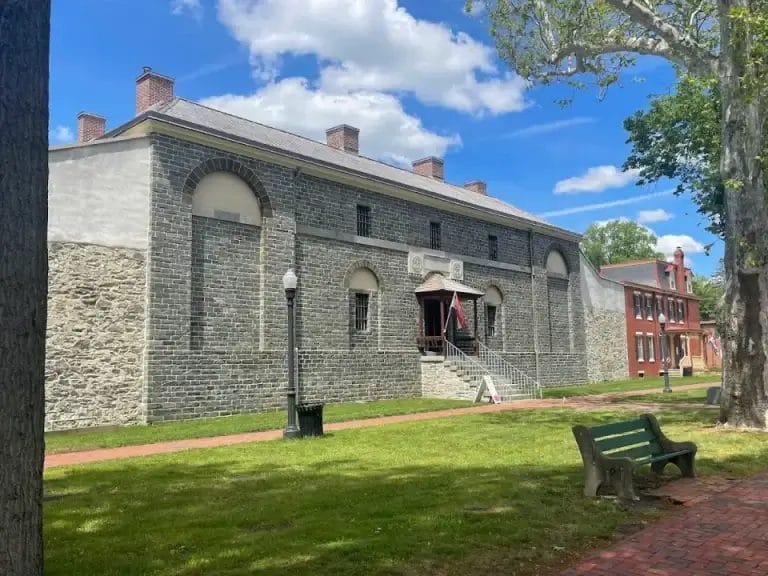
Prison
Burlington County Prison Museum – Haunted Prison in Mount Holly, New Jersey
Mount Holly (New Jersey), New Jersey
The Burlington County Prison Museum stands as a formidable reminder of justice from centuries past....
Explore This Location →
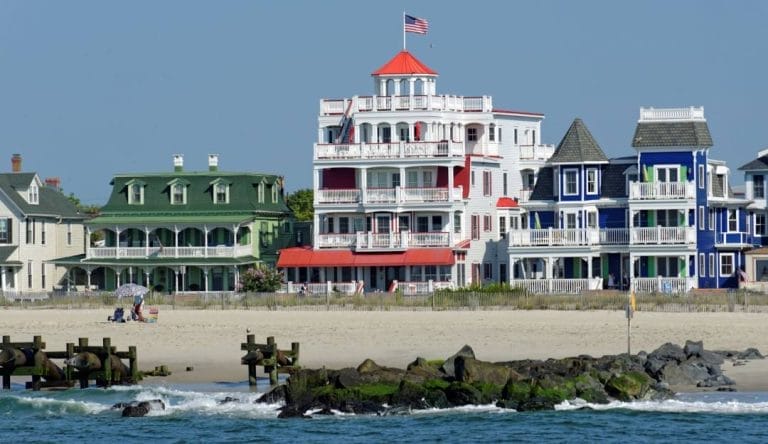
Historic District
Cape May – Haunted Historic District in Cape May, New Jersey
Multiple historic B&Bs and hotels (New Jersey), New Jersey
Cape May stands as America’s oldest seaside resort and hosts more haunted locations per square...
Explore This Location →
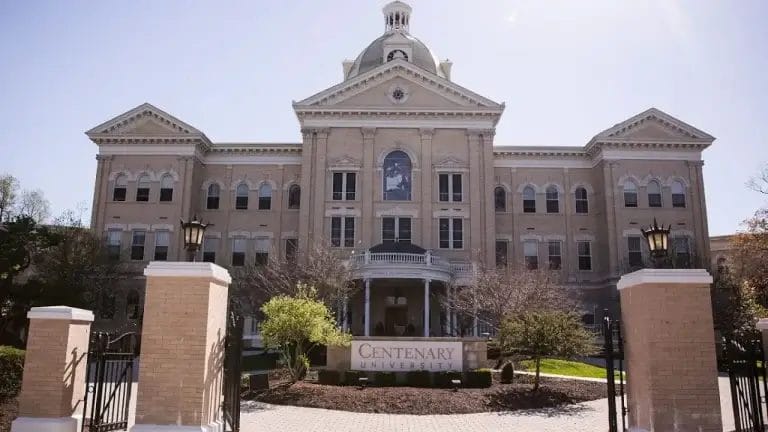
College Building
Centenary University / Brotherton Hall – Haunted College Building in Hackettstown, New Jersey
Hackettstown (New Jersey), New Jersey
Centenary University sits on a sprawling campus in the quiet town of Hackettstown, New Jersey....
Explore This Location →
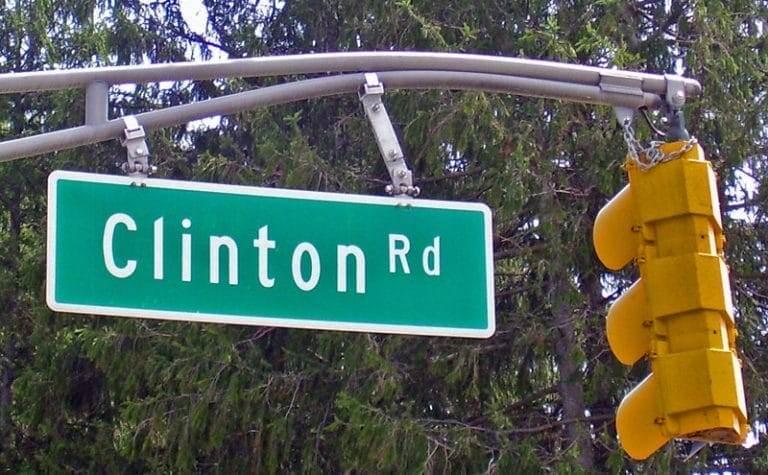
Road
Clinton Road – Haunted Road in West Milford, New Jersey
West Milford (New Jersey), New Jersey
Clinton Road winds through the dense forests of West Milford, New Jersey. This ten-mile stretch...
Explore This Location →
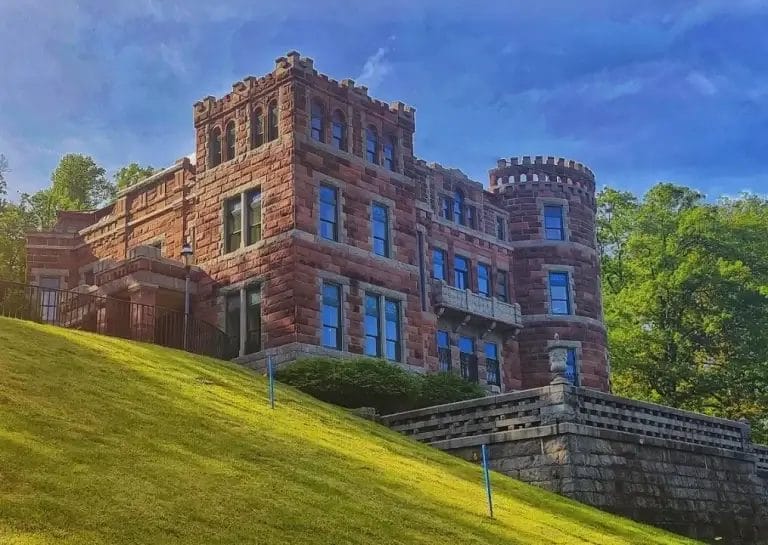
Castle
Lambert Castle – Haunted Castle in Paterson, New Jersey
Paterson (New Jersey), New Jersey
Perched high atop Garret Mountain in Paterson, New Jersey, Lambert Castle commands stunning views of...
Explore This Location →
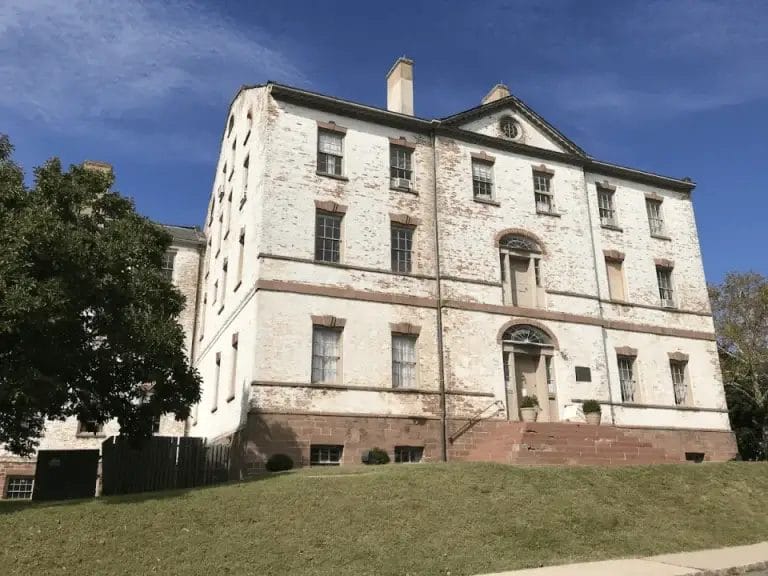
Mansion
Proprietary House – Haunted Mansion in Perth Amboy, New Jersey
Perth Amboy (New Jersey), New Jersey
The Proprietary House stands as New Jersey’s last remaining colonial Governor’s Mansion. Built in the...
Explore This Location →
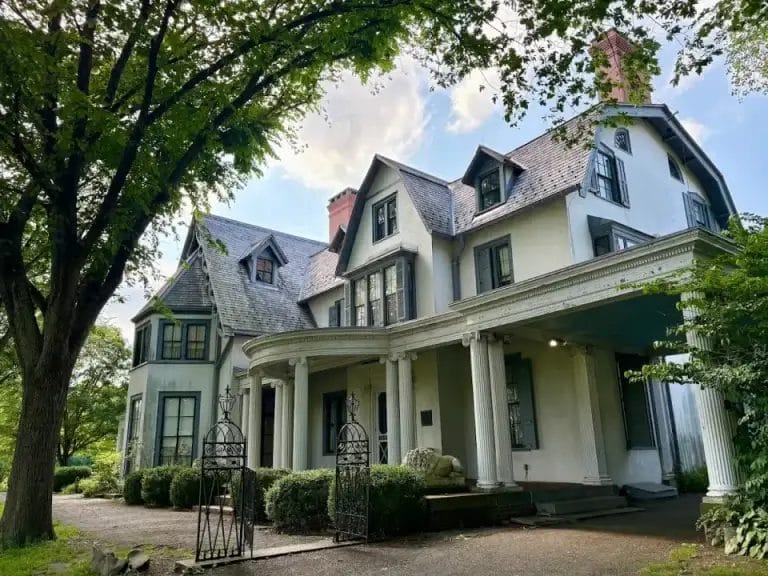
Estate
Ringwood Manor – Haunted Estate in Ringwood, New Jersey
Ringwood (New Jersey), New Jersey
Ringwood Manor stands as one of New Jersey’s most imposing historic estates. The Victorian mansion...
Explore This Location →
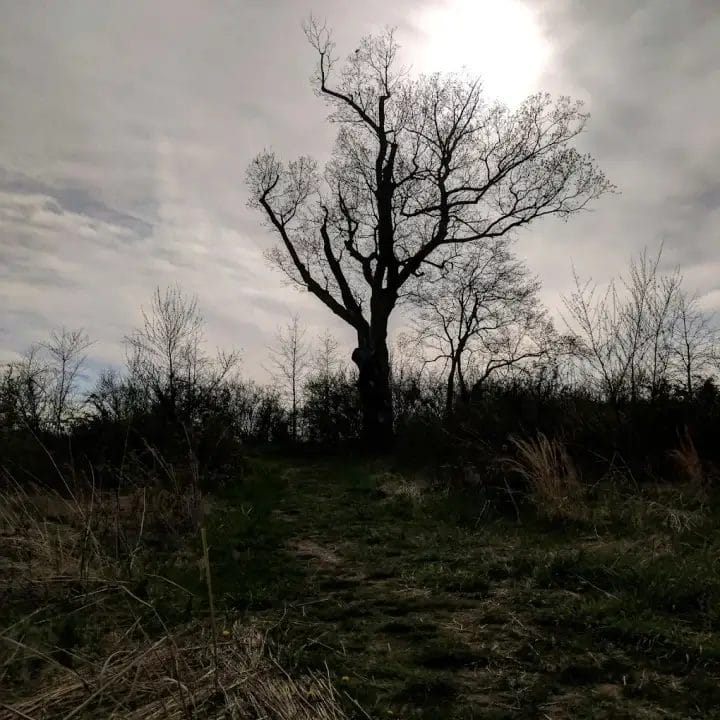
Oak Tree
The Devil’s Tree – Haunted Oak Tree in Bernards Township, New Jersey
Bernards Township (New Jersey), New Jersey
Standing alone in a field off Mountain Road, a massive oak commands attention with its...
Explore This Location →

Road
The Shades of Death Road – Haunted Road in Warren County, New Jersey
Warren County (New Jersey), New Jersey
Driving along Shades of Death Road feels like entering another dimension entirely. This seven-mile stretch...
Explore This Location →
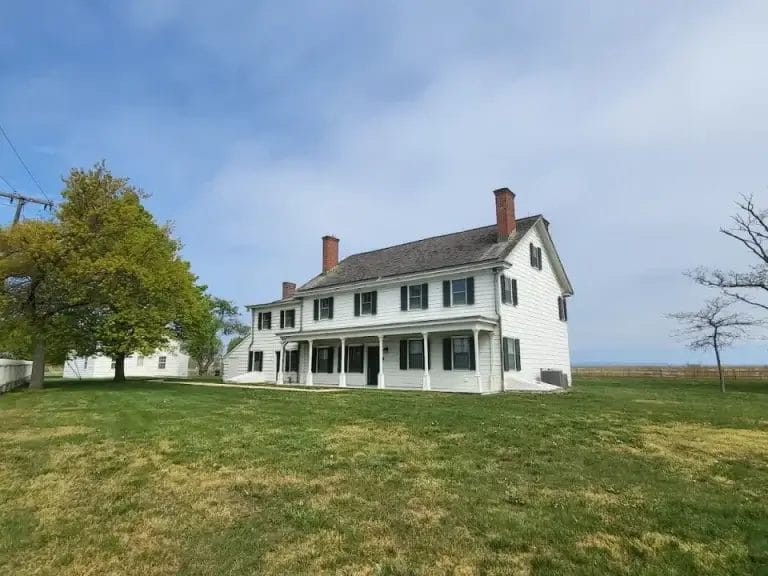
Museum
The Spy House / Seabrook-Wilson House – Haunted Museum in Port Monmouth, New Jersey
Port Monmouth (New Jersey), New Jersey
The Spy House stands as one of New Jersey’s most notorious haunted locations. This weathered...
Explore This Location →
New Jersey occupies a unique position in American supernatural lore. Sandwiched between New York and Philadelphia, the Garden State has absorbed centuries of conflict, immigration, industrialization, and tragedy. From Revolutionary War battlefields where soldiers still march to Pine Barrens cryptid encounters, from Victorian shore resort ghosts to abandoned asylum horrors, New Jersey packs more paranormal activity per square mile than almost any other state.
Why New Jersey Is So Haunted
New Jersey’s supernatural density stems from its layered history. The Lenape people considered many areas sacred, imbuing the land with spiritual significance long before European contact. The Revolutionary War turned the state into a blood-soaked battleground—more engagements occurred here than in any other colony. The Industrial Revolution brought factory disasters, mining accidents, and immigrant worker tragedies. Victorian-era asylums and poorhouses dotted the landscape, warehousing society’s most vulnerable. And the Pine Barrens have harbored mysteries since the first settlers arrived.
The Jersey Devil: New Jersey’s Most Famous Supernatural Resident
No discussion of New Jersey’s paranormal heritage is complete without addressing the Jersey Devil. According to legend, in 1735, a Pine Barrens resident named Jane Leeds—already mother to twelve children—cursed her thirteenth pregnancy, declaring the child could be the devil for all she cared. The baby was born normal but transformed into a winged, hooved creature that flew up the chimney and disappeared into the pines.
For nearly three centuries, encounters have continued. The creature is described as having leathery bat wings, a forked tail, hooves, and a blood-curdling scream. The most famous sighting wave occurred in January 1909, when hundreds of people across the Delaware Valley reported encounters over a single week. Schools closed, factories shut down, and armed posses searched the woods.
Hotspots for Jersey Devil activity include:
- Leeds Point — the alleged birthplace
- Batsto Village — a restored historic town deep in the pines
- Wharton State Forest — countless sightings along remote roads
- The Blue Hole — a mysterious bottomless pond said to be the creature’s lair
Northern New Jersey: Industrial Ghosts and Mountain Mysteries
The Devil’s Tower, Alpine
Rising from the Palisades cliffs overlooking the Hudson River, this stone tower was built in 1910 by Manuel Rionda, a sugar baron, as a memorial to his wife. Local legend claims Rionda’s wife threw herself from the tower’s top after discovering his infidelity. Her ghost allegedly appears at the tower’s base, dressed in white, before walking to the cliff’s edge and vanishing. Others report seeing lights in the tower’s windows despite it being sealed, and the sound of a woman weeping carries across the grounds at night.
Clinton Road, West Milford
Widely considered one of America’s most haunted roads, Clinton Road winds through ten miles of dense forest in Passaic County. The paranormal phenomena reported here would fill volumes:
Ghost Boy at the Bridge: At a specific bridge over a small stream, visitors throw coins into the water. Legend states a boy drowned here, and if you wait at midnight, he’ll throw the coins back—or appear as a reflection in the water below.
Phantom Trucks: Drivers report being chased by a spectral pickup truck that appears from nowhere, tailgates aggressively, then vanishes.
Druid Temple Ruins: Deep in the woods, stone ruins mark what locals call a Druid temple, though it was likely an iron smelter. Satanic rituals allegedly took place here, and visitors report hooded figures, strange chanting, and an overwhelming sense of malevolence.
Cross Castle: The ruins of a castle built in 1905 attracted occultists and vandals until its demolition. The surrounding area remains active, with reports of apparitions, unexplained sounds, and equipment malfunctions.
KKK and Satanist Activity: The road’s isolation made it attractive to hate groups and alleged devil worshippers throughout the 20th century, leaving behind both physical evidence and, some say, spiritual contamination.
Overbrook Asylum, Cedar Grove
The Essex County Hospital Center opened in 1896 and operated until 2007, treating psychiatric patients for over a century. At its peak, Overbrook housed 3,000 patients in conditions that deteriorated dramatically over the decades. In 1917, a cold snap killed 24 patients because the heating system had failed and staff didn’t notice for days.
Before demolition began, paranormal investigators documented extensive activity: shadow figures moving through hallways, voices pleading for help, doors slamming in empty wards, and the sensation of being grabbed by unseen hands. The most disturbing reports came from the tunnels connecting buildings, where patients’ bodies were transported to the morgue. Some of the original structures remain on the property, which has been partially redeveloped.
Lambert Castle, Paterson
This medieval-style castle, built in 1892 by silk manufacturer Catholina Lambert, overlooks the city from Garret Mountain. Lambert’s life was marked by tragedy—he lost several children and his wife within these walls. His ghost is said to roam the picture gallery where he once displayed his art collection, and visitors report cold spots, unexplained footsteps, and the sense of being watched from the tower windows.
The Hermitage, Ho-Ho-Kus
This Gothic Revival house served as headquarters for both American and British forces during the Revolutionary War. Aaron Burr married Theodosia Prevost here in 1782. The house’s many deaths and wartime trauma have resulted in persistent hauntings: soldiers in Continental Army uniforms appear in the parlors, a woman believed to be Theodosia walks the upstairs hallway, and staff members report objects moving when no one is present.
Central New Jersey: Battlefields and Victorian Spirits
The Proprietary House, Perth Amboy
The last surviving Royal Governor’s mansion in America, this Georgian-style home was built in 1764. William Franklin, Benjamin Franklin’s loyalist son, lived here during the Revolution. The building later served as a hotel where guests included Thomas Jefferson and John Adams. Reports of paranormal activity include a Revolutionary-era soldier seen on the grounds, the ghost of a woman in period dress appearing in the windows, and unexplained voices in empty rooms. Staff members have reported feeling hands on their shoulders and hearing footsteps on the stairs at night.
Princeton Battlefield
The Battle of Princeton on January 3, 1777, was a turning point in the Revolutionary War. General Hugh Mercer died here after being bayoneted and clubbed by British soldiers who mistook him for George Washington. His ghost has been seen near the Thomas Clarke House, where he spent his final hours. Visitors report hearing cannon fire, musket shots, and the screams of wounded soldiers. Cold spots appear randomly across the battlefield, and photographs frequently capture unexplained mists and orbs.
Spy House, Port Monmouth
Dating to 1663, the Spy House claims the title of most haunted house in America, with over 30 documented spirits. Its name comes from Revolutionary War activity when patriots would signal ships from its strategic position on Raritan Bay. Among the ghosts reported: a woman who waits at the window for a sailor who never returned, children who play in the attic, a pirate captain who appears in the basement, and a malevolent presence that has pushed visitors down the stairs.
The Old Tennent Church, Manalapan
Built in 1751, this church served as a hospital during the Battle of Monmouth in 1778. Bloodstains allegedly still mark the floor where surgeons amputated limbs without anesthesia. The surrounding cemetery contains the graves of Revolutionary soldiers, and visitors report seeing uniformed specters walking among the headstones. The most famous ghost is a woman in white who appears near a specific grave, believed to be waiting for her husband who never returned from battle.
Ringwood Manor, Ringwood
This ironworks estate spans 300 years of industrial history and supernatural activity. Robert Erskine, who mapped for George Washington, died here in 1780 and is buried on the grounds. His ghost has been seen near his grave and inside the manor. The most active spirit, however, is “the General’s Lady”—believed to be Erskine’s widow—who appears on the third floor and has been photographed multiple times. Other phenomena include phantom footsteps, objects moving on their own, and the sounds of conversations in empty rooms.
Southern New Jersey: Pine Barrens Terror and Shore Hauntings
Batsto Village, Hammonton
This restored ironworks and glassworks community deep in the Pine Barrens operated from 1766 to 1867. The isolation and harsh working conditions led to numerous deaths. Today, visitors report encountering workers in period clothing who vanish when approached, hearing the sounds of hammer on anvil from the silent blacksmith shop, and seeing lights in windows of buildings with no electricity. The mansion is particularly active, with cold spots, shadow figures, and the sense of being followed through its rooms.
The Blue Hole, Winslow
This mysterious body of water in the Pine Barrens defies natural explanation. Despite air temperatures, the water remains a constant 58 degrees Fahrenheit. Local legend claims it’s bottomless, that the Jersey Devil uses it as a lair, and that swimmers who venture out disappear without a trace. The water’s unusual clarity and the absence of typical wildlife add to its eerie reputation. Those who’ve approached report overwhelming feelings of dread and the sense that something is watching from below.
The Flanders Hotel, Ocean City
Built in 1923, this grand Spanish-style hotel dominates the Ocean City skyline. Emily, a former housemaid who died under mysterious circumstances, is the most frequently encountered ghost. She appears in hallways and guest rooms, always dressed in her uniform. Other phenomena include elevators moving to floors without being called, lights flickering in empty rooms, televisions turning on by themselves, and guests reporting someone sitting on their bed while they sleep.
Burlington County Prison Museum, Mount Holly
New Jersey’s oldest prison, operating from 1811 to 1965, now serves as a museum. The conditions inside were brutal—prisoners were held in basement dungeons, sometimes chained to walls for months. At least one execution took place here, and countless inmates died from disease, violence, and neglect. Paranormal teams have documented voices begging for release, cell doors slamming without explanation, and shadow figures moving through the corridors. The basement level, where the worst conditions existed, is particularly active.
Smithville Mansion, Eastampton
This Victorian estate was home to Hezekiah Smith, a railroad and industrial magnate. The grounds include his mansion, workers’ housing, and various outbuildings. The most famous ghost is Agnes, a woman who appears in the mansion’s windows. Workers and visitors report hearing piano music from the empty parlor, footsteps on the upper floors, and the sensation of being watched throughout the property. The nearby Smithville Cemetery adds to the supernatural atmosphere.
The Shore: Haunted Hotels and Beachfront Spirits
The Haunted Mansion, Long Branch
Originally built as a private residence in the 1870s, this Gothic Revival mansion served as a hotel and later a restaurant. The building has accumulated numerous ghosts over its history, including a woman who jumps from the tower (reenacting her suicide), a man in Victorian dress who appears in the dining room, and children who play in the upstairs hallways. Staff members have reported extensive activity including objects flying off shelves, cold spots that move through rooms, and the sound of a party in progress when the building is empty.
Convention Hall, Asbury Park
This iconic boardwalk venue, built in 1930, has hosted performers from the Rolling Stones to Bruce Springsteen. It’s also home to persistent hauntings. Security guards report seeing figures in the empty auditorium, hearing music and applause when no events are scheduled, and encountering a woman in white who walks the upper balcony before vanishing. The steam rooms beneath the building are said to be particularly active, with voices and shadows appearing regularly.
The Columns, Avon-by-the-Sea
This 1883 hotel has served guests for over 140 years, and not all of them have checked out. Room 11 is especially active, with guests reporting a presence that watches them sleep, items moving during the night, and the sensation of someone sitting on the bed. A spectral woman has been seen on the staircase, and staff members have heard conversations in empty hallways.
Abandoned and Restricted Locations
Greystone Park Psychiatric Hospital, Parsippany
Before its demolition in 2015, Greystone was one of America’s most notorious haunted asylums. Opening in 1876, it housed over 7,500 patients at its peak—far beyond its intended capacity. Conditions deteriorated into horror: overcrowding, abuse, experimental treatments, and early death. Paranormal investigators documented extensive activity including full-body apparitions, disembodied screams, moving objects, and physical attacks by unseen forces. Though the main building is gone, some structures remain, and the land is said to retain residual energy from its decades of suffering.
Shades of Death Road, Warren County
The name alone signals something disturbing, and the road’s history justifies the title. Multiple murders have occurred along this isolated stretch, including a woman who killed her husband with a frying pan and a series of deaths in the 1920s and 1930s that were never solved. Nearby Ghost Lake earned its name from the vapors that rise from its surface, creating humanoid shapes. Drivers report apparitions appearing in the road, phantom vehicles, and the overwhelming sense of being watched from the surrounding woods.
The Deserted Village of Feltville, Watchung
Originally a mill town in the 1840s, Feltville became a resort in the 1880s before being abandoned. The remaining buildings, preserved by the county, have an unsettling atmosphere that has earned the area the nickname “the Deserted Village.” Visitors report seeing figures in the windows of empty houses, hearing children’s laughter in the woods, and encountering a woman who walks the main road before disappearing. The church is particularly active, with reports of hymns being sung by invisible congregations.
Jungle Habitat, West Milford
This abandoned safari park operated from 1972 to 1976, allowing visitors to drive through enclosures containing lions, elephants, and other exotic animals. After closing, the animals were removed, but the structures remained, slowly being reclaimed by nature. Visitors to the ruins report animal sounds with no source, shadow figures moving between buildings, and the unsettling feeling of being stalked. Some believe the spirits of animals who died here remain, while others suggest the energy of captivity and suffering has imprinted on the location.
Urban Legends and Cryptids
The White Stag of the Pine Barrens
Hunters and travelers have reported encountering an enormous white deer in the Pine Barrens for over two centuries. Native American legend considered white deer sacred, and killing one brought terrible luck. Those who’ve pursued the white stag report it leading them deep into the woods before vanishing, leaving them lost and disoriented.
The Black Dog of the Ramapos
This spectral hound has been seen throughout the Ramapo Mountains for generations. Described as an enormous black dog with glowing eyes, it appears on lonely roads at night. Some believe it’s a death omen—seeing it means someone close to you will die soon. Others claim it guards something in the mountains, appearing to warn trespassers away from forbidden territory.
The Red-Eyed Creature of Route 9
Drivers along Route 9 in Monmouth County have reported a humanoid figure with glowing red eyes that appears alongside the road. It’s been seen standing in fields, walking along the shoulder, and once reportedly jumped onto a moving car before vanishing. Descriptions vary, but the red eyes remain consistent across decades of sightings.
Planning Your Paranormal Investigation
Best Times to Visit
October brings Halloween events to many locations, including ghost tours of battlefields, historic house investigations, and Pine Barrens expeditions. However, serious investigators often prefer off-season visits when fewer tourists create quieter conditions for documentation.
Recommended Tours
- Ghost Tour of Princeton: Covers battlefield, university, and town hauntings
- Asbury Park Paranormal Tours: Explores the shore’s haunted history
- Pine Barrens Night Tours: Guided expeditions into Jersey Devil territory
- Burlington County Prison Investigations: Overnight access for serious researchers
Legal Considerations
Many of New Jersey’s most haunted locations are on private property, abandoned, or restricted. Trespassing charges are common at places like Clinton Road’s ruins and abandoned asylums. Always obtain permission before investigating, and remember that “abandoned” doesn’t mean “open to the public.”
Safety in the Pine Barrens
The Pine Barrens cover over 1.1 million acres of dense, easy-to-get-lost-in forest. If you’re searching for the Jersey Devil or investigating remote locations, always tell someone your plans, carry a GPS device, bring plenty of water, and stay on marked trails after dark. Cell service is unreliable to nonexistent in many areas.
Explore America’s Most Haunted Places by State
Discover spine-chilling locations, paranormal hotspots, and supernatural encounters across all 50 states. Click any state to begin your journey into the unknown.