
📍 Map of Haunted Places in Ohio
Explore all 14 haunted locations across Ohio. Click any pin to view details.

Mansion
Collingwood Arts Center – Haunted Performance Space in Toledo, Ohio
Toledo (Ohio), Ohio
The Collingwood Arts Center in Toledo is one of Ohio’s most haunted landmarks. Once a...
Explore This Location →
Mansion
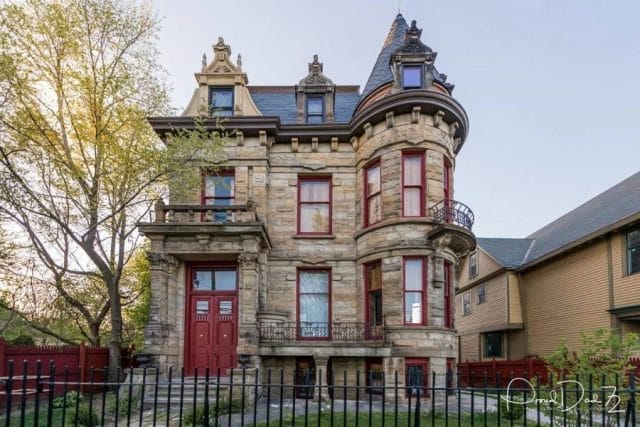
Franklin Castle – Haunted Victorian Mansion in Cleveland, Ohio
Cleveland (Ohio), Ohio
Franklin Castle is one of the most famous haunted houses in Ohio. Built in the...
Explore This Location →

Hotel
Hotel Lafayette – Haunted Hotel in Marietta, Ohio
Marietta (Ohio), Ohio
Hotel Lafayette stands tall along the banks of the Ohio and Muskingum Rivers. Built in...
Explore This Location →

Prison
Licking County Historic Jail – Haunted Jailhouse in Newark, Ohio
Newark (Ohio), Ohio
The Licking County Historic Jail has stood for over a century in Newark, Ohio. Originally...
Explore This Location →

Castle
Loveland Castle – Haunted Castle in Loveland, Ohio
Loveland (Ohio), Ohio
Loveland Castle, also known as Château Laroche, stands like a medieval relic along the Little...
Explore This Location →

Theater
Majestic Theatre – Haunted Theater in Chillicothe, Ohio
Chillicothe (Ohio), Ohio
The Majestic Theatre in Chillicothe is one of the oldest continuously operating theaters in the...
Explore This Location →

Tunnel
Moonville Tunnel – Haunted Railroad Tunnel in McArthur, Ohio
McArthur (Ohio), Ohio
The Moonville Tunnel is an old, abandoned railroad tunnel deep in the woods of southern...
Explore This Location →

Mansion
Mudhouse Mansion – Haunted Abandoned Home in Lancaster, Ohio
Lancaster (Ohio), Ohio
Mudhouse Mansion is one of Ohio’s most talked-about haunted ruins. Built in the 1800s near...
Explore This Location →

Prison
Ohio State Reformatory – Haunted Prison in Mansfield, Ohio
Mansfield (Ohio), Ohio
The Ohio State Reformatory in Mansfield is one of America’s most haunted prisons. Once a...
Explore This Location →

Church
Sedamsville Rectory – Haunted Former Rectory in Cincinnati, Ohio
Cincinnati (Ohio), Ohio
Sedamsville Rectory is one of the most talked-about haunted buildings in Ohio. Built in the...
Explore This Location →
Mansion
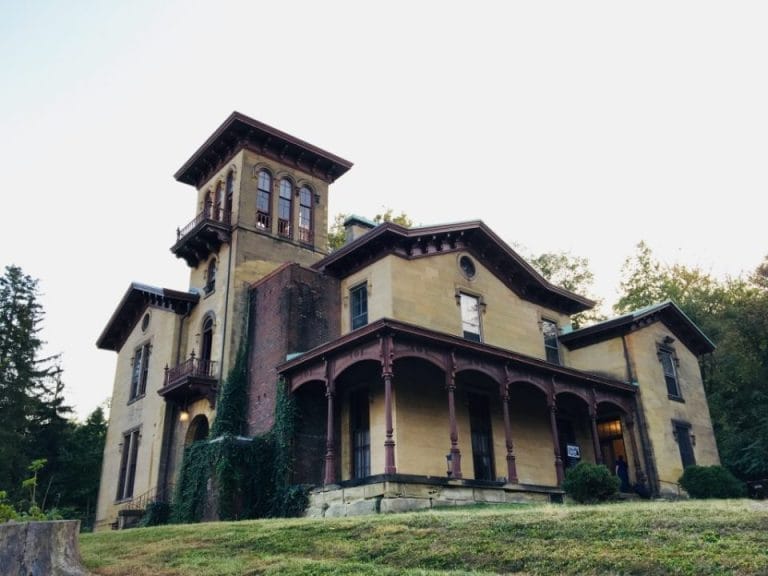
The Anchorage Mansion – Haunted Mansion in Marietta, Ohio
Marietta (Ohio), Ohio
The Anchorage Mansion in Marietta is an eerie 19th-century estate with a past full of...
Explore This Location →

Restaurant
The Buxton Inn – Haunted Historic Inn in Granville, Ohio
Granville (Ohio), Ohio
The Buxton Inn has been welcoming guests since 1812, making it one of the oldest...
Explore This Location →
Asylum
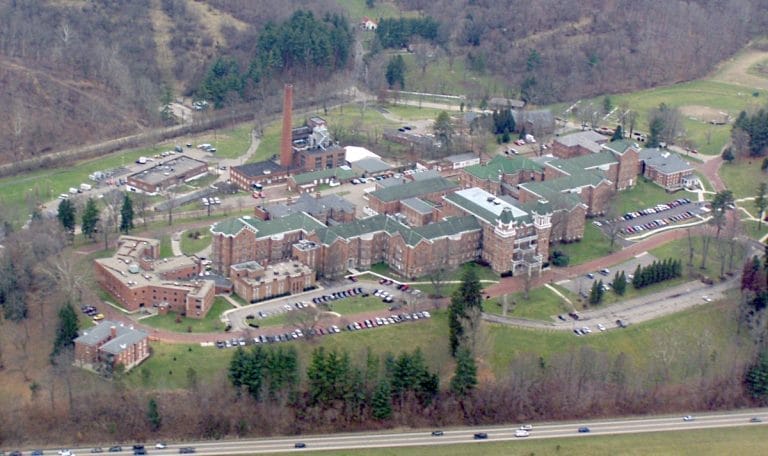
The Ridges – Haunted Asylum in Athens, Ohio
Athens (Ohio), Ohio
The Ridges, once known as the Athens Lunatic Asylum, is one of Ohio’s most chilling...
Explore This Location →

Theater
Twin City Opera House – Haunted Theater in McConnelsville, Ohio
McConnelsville (Ohio), Ohio
The Twin City Opera House is one of Ohio’s oldest and most haunted theaters. Built...
Explore This Location →
Welcome to Ohio, where over 400 documented ghost sightings and centuries of dark history have created one of America’s most paranormally active states. From the towering Gothic fortress of the Ohio State Reformatory—the infamous Shawshank Prison that saved itself from demolition by becoming Hollywood’s perfect haunted location—to the Athens Lunatic Asylum where lobotomies and patient abuse left permanent spiritual scars, to Franklin Castle with its secret passages and murdered family members, Ohio delivers bone-chilling paranormal experiences that rival any state in the nation.
The Buckeye State ranks third in America for documented haunted locations, trailing only Texas and California. Ohio’s supernatural intensity stems from its role as a Native American
burial ground, Underground Railroad hub, Civil War battleground, and home to some of America’s most brutal prisons and asylums. Every region harbors spirits of those who died violently, suffered institutionalization, or simply refuse to leave the places they called home.
Why Ohio Is Among America’s Most Haunted States
Ohio’s paranormal prominence comes from multiple independent sources documenting over 400 recorded ghost sightings by residents. The state consistently ranks in the top five most haunted states, with researchers noting that Ohio experiences more paranormal activity than states twice its size. Nearly every town in Ohio reports at least one haunted location, creating a paranormal density unmatched in the Midwest.
The state’s haunted reputation emerged from layers of tragic history. Ohio served as contested territory between Native American nations and European settlers, with massacres and battles leaving spiritual imprints across the landscape. The Underground Railroad brought desperate freedom-seekers through Ohio, and many who died on their journey to Canada remain tied to safe houses and hiding places. Civil War training camps, hospitals, and battles added more restless spirits.
But Ohio’s darkest paranormal energy comes from its institutional history. The state operated numerous massive asylums, reformatories, and hospitals where thousands died under brutal conditions. The Athens Lunatic Asylum, Ohio State Reformatory, and dozens of similar facilities practiced lobotomies, electroshock therapy, and experimental treatments that left patients tortured in life and restless in death. Ohio’s industrial accidents—train wrecks, factory fires, mine collapses—created mass casualty events whose victims haunt the sites of their deaths.
The Dark History Behind Ohio’s Hauntings
The Ohio State Reformatory: Shawshank’s Haunted Castle
The Ohio State Reformatory in Mansfield stands as Ohio’s most iconic haunted location and one of America’s most paranormally active buildings. Designed by Cleveland architect Levi T. Scofield and constructed between 1886-1910, the massive Victorian Gothic, Richardsonian Romanesque, and Queen Anne structure was nicknamed “Dracula’s Castle” by inmates and locals alike. The reformatory’s imposing architecture was intentionally designed to inspire spiritual rebirth in young offenders, but instead became a monument to suffering, violence, and death.
The facility opened in 1896 as a reformatory for first-time offenders aged 16-21. The grand vision of rehabilitation quickly deteriorated into brutal reality. By the 1970s, the reformatory operated as a maximum-security prison housing the state’s most violent criminals in overcrowded, inhumane conditions. Inmates lived in cells as small as 8-by-5 feet, sometimes four men crammed into spaces designed for one. The East Cell Block—the world’s largest free-standing steel cell block—stands six tiers high with 600 cells that once held 1,200 inmates. The West Cell Block’s five tiers and 350 cells sometimes housed four men each.
The reformatory’s horror intensified in 1930 when the Ohio Penitentiary in Columbus burned, killing hundreds. The 266 surviving inmates—described as “the worst of the worst”—were transferred to Mansfield with no available cell space. Prison officials locked these men in an unventilated West Attic with no windows and a single door. What happened in that locked attic remains unknown, but the smell of smoke still permeates the space, and signatures scrawled on walls by desperate men create an overwhelming sense of suffering.
Violence, murder, riots, and deaths plagued the reformatory throughout its operation. Over 200 people died within its walls, including two guards. Solitary confinement in “The Hole” saw men murdered, others burning themselves to death in their cells, and countless prisoners driven insane by isolation. A juvenile inmate was beaten to death in the basement at the turn of the 20th century. Guard Frank Hanger was brutally murdered by an inmate in the 1940s—his spirit reportedly still shoves visitors as if continuing his guard duties.
The reformatory’s most famous ghost isn’t an inmate but Helen Glattke, wife of Superintendent Arthur Glattke. In 1950, Helen accidentally knocked a loaded revolver off a shelf while reaching for a jewelry box in their on-site apartment. The gun discharged, killing her instantly. Her spirit, associated with the scent of her favorite rose water perfume, appears throughout the building. Nine years later, the stress of running the brutal prison caused Arthur to suffer a fatal heart attack in his office. His ghost manifests through the smell of his cherry pipe tobacco.
The reformatory closed in 1990 following a federal court order declaring conditions inhumane and unfit for human habitation. Scheduled for demolition, the building was saved when Hollywood selected it as the primary filming location for “The Shawshank Redemption” in 1993-1994. The wrecking ball literally stood outside the prison the morning filming began. Director Frank Darabont’s decision to shoot at the reformatory saved the building from destruction, and movie props remain as permanent fixtures.
Today, the Ohio State Reformatory operates as a historic site and paranormal investigation hotspot. Documented phenomena includes: shadowy figures roaming hallways and peeking from cells, disembodied voices and footsteps throughout the building, sounds of chains dropping, growling in The Hole, church bells ringing when no bells exist, phantom smells ranging from roses to tobacco to decay, balls of light captured on camera, physical contact including pulling, pushing, and tugging on visitors’ arms and clothing, overwhelming feelings of sadness, anger, and despair, especially in the East Cell Block and The Hole, and an unexplained “X” that appears on one hallway floor—possibly a warning or fluke of light, nobody knows.
The reformatory has been featured on Ghost Hunters, Ghost Adventures, Ghost Hunters Academy, Paranormal Challenge, Most Terrifying Places in America, and Scariest Places on Earth. MrBeast’s 2019 video “24 Hours in The Most Haunted Place on Earth” brought the location to millions of viewers. The facility hosts 16 annual overnight ghost hunts, public ghost walks, self-guided tours, and the popular “Blood Prison” haunted attraction each October.
The Ridges (Athens Lunatic Asylum): Ohio’s Most Sinister Asylum
The Ridges in Athens, originally known as the Athens Lunatic Asylum, opened in 1874 and operated as a mental health facility until the 1990s. Now owned by Ohio University, the massive complex stands as one of Ohio’s most haunted and historically dark locations. The asylum practiced lobotomies, electroshock therapy, and patient treatments so brutal that “inhumane” barely describes the suffering.
The facility’s most famous ghost is Margaret Schilling, a patient who went missing in December 1978. Her body wasn’t discovered until January 1979—she had died in an unused ward, lying on the floor in a position that left a permanent stain. Her decomposing body created an outline on the concrete that remains visible today despite countless attempts to remove it. The stain shows the shape of a woman lying down, and no amount of cleaning, painting, or resurfacing has eliminated it. Margaret’s spirit haunts the building, particularly the ward where she died.
The Ridges’ reputation for paranormal activity stems from decades of patient abuse, experimental treatments, and deaths. The basement areas experience particularly intense phenomena. Ohio Exploration Society investigators recorded an Electronic Voice Phenomenon (EVP) in the basement asking “Would you help us?”—suggesting trapped spirits seeking rescue from their eternal torment.
Visitors to The Ridges report: ghostly figures wandering empty hallways, strange noises ranging from whispers to screams, cold spots appearing suddenly in specific locations, overwhelming feelings of being watched, phantom smells of decay and disinfectant, disembodied voices calling for help, and doors slamming in locked, empty areas.
The abandoned structures scattered across the grounds feel even more oppressive than the main building. Witnesses report seeing faces in windows, hearing moans and cries emanating from empty buildings, and feeling physically pushed when approaching certain areas. Ohio University students and staff who work in renovated sections of the complex regularly encounter unexplained phenomena.
Franklin Castle: Ohio’s Most Haunted House
Franklin Castle in Cleveland, also known as the Tiedemann House, ranks as Ohio’s most haunted residence. Built in 1881 by German immigrant banker Hannes Tiedemann, the Victorian mansion conceals dark secrets behind its elegant facade. The four-story, 20-room house features secret passageways, hidden rooms, concealed staircases, and architectural oddities that serve no apparent purpose—unless hiding bodies.
The castle’s haunted reputation stems from tragedy and alleged murder. Tiedemann’s 15-year-old daughter Emma died suddenly in 1881, shortly after the family moved in. Within three years, three more of Tiedemann’s children died in the house under mysterious circumstances. His elderly mother also died there. Rumors spread that Tiedemann murdered his daughter, possibly other family members, and even murdered his niece—whose skeleton was allegedly discovered hidden in the walls decades later.
Workers during renovations claim to have found the remains of multiple bodies hidden in secret spaces throughout the house. A child’s skeleton was supposedly discovered bricked up behind a wall in the tower. Human bones were allegedly found in an earthen floor in a hidden room. While these claims remain unverified, they fuel the castle’s sinister reputation.
Franklin Castle’s paranormal activity includes: apparitions of children playing in empty rooms, a woman in black appearing on the grand staircase, sounds of babies crying from walls, organ music playing from a ballroom that no longer contains an organ, chandeliers swinging independently, cold spots and sudden temperature drops, feelings of being watched or followed, physical contact from invisible entities, and the strong smell of flowers with no source.
The castle was investigated on “Paranormal Lockdown” in 2016, marking its first television paranormal investigation. Investigators documented extensive evidence of supernatural activity throughout the mansion. The building’s complexity—with its maze of secret passages and hidden rooms—creates an atmosphere where anything could be lurking around the next corner.
Cincinnati Music Hall: Built on Death
Cincinnati Music Hall, one of the nation’s finest concert halls, sits atop the former grounds of an orphanage and the Cincinnati Lunatic Asylum. Before construction began in 1875, developers found the site occupied by thousands of bodies buried in potter’s fields and asylum cemeteries. Rather than properly relocating all remains, many were simply bulldozed and built over.
During 2016-2017 renovations, construction workers unearthed even more bodies—skeletal remains were found in the concert hall basement, beneath the stage, and throughout the foundation. The discovery confirmed that thousands of bodies remain under the building, their graves forgotten and paved over.
The Music Hall’s paranormal activity reflects this disturbed burial ground: angry whispering in elevators that contains no identifiable words, mysterious singing women’s voices harmonizing throughout empty halls, ghosts wandering backstage and through dressing rooms, cold spots appearing in specific locations during performances, unexplained shadows crossing the stage during rehearsals, and feelings of overwhelming sadness, particularly in basement areas.
Performers and staff report seeing full-body apparitions of asylum patients in hospital gowns, children in orphanage clothing, and figures in 19th-century dress. The spirits range from benign presences to angry entities that don’t appreciate the disturbance of their resting places.
Moonville Tunnel: The Brakeman’s Eternal Watch
Hidden in the woods near McArthur in southeastern Ohio, the Moonville Tunnel stands as an abandoned railway tunnel dating to the mid-1800s. The tunnel served the small mining town of Moonville, which thrived briefly before economic decline and disasters turned it into a ghost town.
Multiple train-related deaths occurred at the tunnel throughout its operational years. The most famous involves a brakeman killed instantly when struck by a train near the tunnel entrance. His spirit—seen carrying a lantern and dressed in railway uniform—walks the trackbed near the tunnel entrance at night, eternally warning of approaching trains.
Other deaths include a head-on train collision inside the tunnel and pedestrians struck while attempting to cross through. The concentrated tragic deaths in one location created intense paranormal activity. Investigators report: strange lights moving through the tunnel with no source, footsteps echoing on the abandoned tracks, voices calling out warnings or asking for help, the sound of approaching trains when no tracks remain operational, and apparitions of railway workers from different eras appearing briefly before vanishing.
The tunnel’s remote location, surrounded by dark forest, amplifies the eerie atmosphere. Visiting after dark requires courage—the brakeman’s lantern has been reported hundreds of times by credible witnesses who found no earthly explanation for the light.
The Ashtabula Train Disaster: Mass Grave of Burning Victims
On December 29, 1876, the #5 Pacific Express carrying approximately 159 passengers and crew attempted to cross a high bridge in Ashtabula. The bridge collapsed catastrophically. Only the first engine made it across. The remaining train cars plunged into the ravine below, killing 92 men, women, and children—many burned alive while trapped in the crushed wreckage.
The victims were buried in a mass grave at Chestnut Grove Cemetery in Ashtabula, marked by a large monument standing in silent vigil. The cemetery experiences significant paranormal activity: spectral sightings of Victorian-era travelers appearing near the monument, unexplained voices captured on audio recordings pleading for help, the smell of smoke appearing suddenly with no source, cold spots surrounding the mass grave marker, and feelings of overwhelming panic and fear near the disaster victims’ burial site.
The bridge site itself—though the bridge no longer exists—reports phantom sounds of the collapsing structure, screams echoing across the ravine, and the ghostly light of the train’s lanterns appearing in the darkness.
Ohio’s Haunted Regions: A Geographic Guide
Northeast Ohio: Prison, Castle, and Disaster Spirits
Cleveland harbors multiple haunted locations beyond Franklin Castle. The city’s industrial history, Lake Erie shipwrecks, and ethnic neighborhood violence created layers of paranormal activity. The Bissman Building in downtown, over 130 years old, ranks among North Central Ohio’s most haunted buildings. SyFy’s Ghost Hunters investigated the location, documenting extensive evidence.
The Palace Theatre downtown experiences encounters including apparitions in period costume, unexplained sounds during dark hours, and ghostly audience members appearing in seats during performances.
Mansfield centers around the Ohio State Reformatory but includes other haunted locations. The town’s historic downtown features buildings where paranormal activity has been documented by local investigators.
Ashtabula remains forever marked by the 1876 train disaster. The cemetery and disaster site continue experiencing unexplained phenomena nearly 150 years later.
Southeast Ohio: Asylum Horror and Tunnel Spirits
Athens revolves around The Ridges (Athens Lunatic Asylum) as its paranormal epicenter. Ohio University students report numerous haunted dormitories and academic buildings, with some attributing the campus’s supernatural activity to the asylum’s proximity and dark history. The university’s location on Native American burial grounds adds another layer.
The surrounding Athens County features numerous other haunted locations including abandoned schoolhouses, historic cemeteries, and the nearby Moonville Tunnel.
Hocking Hills area combines natural beauty with paranormal activity. Old mining towns, forgotten cemeteries, and the Moonville Tunnel make this region attractive for both nature lovers and ghost hunters.
Southwest Ohio: Underground Railroad and Urban Spirits
Cincinnati balances urban sophistication with extensive haunted history. Beyond the Music Hall, the city features:
Eden Park’s Spring House Gazebo, haunted by Imogene Remus, murdered by her crime boss husband in the park. Her ghost appears in a black dress, walking the paths where she died.
The Collingwood Arts Center, a Victorian-era building hosting one of Ohio’s most haunted venues. Staff report encounters with a nun’s ghost and numerous unexplained paranormal phenomena. The center hosts ghost hunts and paranormal events.
Historic buildings throughout Over-the-Rhine district report activity dating to Cincinnati’s role as an Underground Railroad hub and German immigrant center.
Bobby Mackey’s Music World, though technically in Kentucky, attracts Ohio ghost hunters to its intensely haunted honky-tonk bar. Built on a former slaughterhouse, the building’s well reportedly provides a portal to hell.
Dayton features the National Museum of the U.S. Air Force, home to multicultural ghosts including Nazi pilots and Vietnamese children killed by American helicopters during the Vietnam War. The museum’s collection of warplanes reportedly harbors spirits of those who died in them.
Northwest Ohio: Lake Erie Shipwrecks and Island Spirits
Lake Erie Islands harbor spirits of shipwreck victims, sailors, and those who died in island isolation. Johnson’s Island in Sandusky Bay served as a Confederate prisoner of war camp during the Civil War. The cemetery contains 206 Confederate soldiers’ graves, and paranormal investigators report encountering Southern soldiers still guarding their final resting place.
Spirits appear in Confederate uniforms, cold spots surround certain graves, and EVP recordings capture voices with Southern accents speaking in Civil War-era terminology.
Sandusky combines Lake Erie maritime tragedy with industrial history. Multiple buildings in the historic downtown report paranormal activity.
Central Ohio: Capital City Hauntings
Columbus serves as Ohio’s capital and features diverse haunted locations:
Thurber House, built on traces of The Ohio Lunatic Asylum and specifically near the asylum cemetery. After the asylum burned in 1868, the land was divided into residential parcels. Visitors report books flying off shelves, footsteps on the back staircase, and the presence of distressed asylum patient spirits unable to find peace.
The Ohio Theatre, downtown’s elegant performance venue, hosts spirits of past performers and patrons who refuse to leave. The theater’s atmospheric architecture and long history create perfect conditions for hauntings.
Camp Chase Confederate Cemetery contains over 2,000 Confederate prisoners of war who died in the Union prison camp. The cemetery experiences activity including apparitions of Southern soldiers, the sounds of military formations, and unexplained mist appearing among headstones.
Types of Haunted Locations in Ohio
Haunted Prisons and Reformatories
Ohio’s correctional facilities rank among America’s most paranormally active. The combination of violence, despair, overcrowding, and death created permanent spiritual imprints.
Ohio State Reformatory leads the state’s prison hauntings, but other facilities report activity:
Licking County Historic Jail (Newark), opened in 1889, saw violent deaths and suicides throughout its operation. Visitors report eerie cries, spectral figures, and mysterious movements within cells. “The dungeon” area experiences the most aggressive activity, with physical touching, clothes tugging, and heavy chairs being thrown across rooms by unseen forces.
Haunted Asylums and Hospitals
Ohio operated numerous massive mental health facilities where experimental treatments, abuse, and neglect created suffering that transcended death.
The Ridges (Athens) represents the most notorious, but dozens of similar facilities operated statewide. Many former asylum buildings now serve as museums, university buildings, or abandoned structures where paranormal investigators document activity.
Molly Stark Sanatorium (Louisville) treated tuberculosis patients in the early 20th century. The facility, located in what’s now Molly Stark Park, saw many patients die in agony from the disease. Their spirits reportedly wail in pain, reliving their final moments. Visitors report breathing difficulties, coughing fits, and feelings of suffocation near the former sanatorium site.
Haunted Theaters and Opera Houses
Ohio’s historic theaters preserve spirits of performers, patrons, and tragic deaths.
Majestic Theatre (Chillicothe), America’s oldest continuously operating theater built in 1853, features multiple ghosts. A little girl’s presence appears regularly, captured on audio recordings. Visitors report an unsettling presence in hallways, and a man in a suit walks up aisles toward the stage. The theater uses ghost hunting as a fundraising tool for renovations.
Twin City Opera House (McConnelsville), built in 1892, hosts several ghostly legends including a janitor and a little girl. Shadow figures watch from seats and hallways. The basement harbors “Dark Shadow Masses” that growl, throw stones, and drastically drop temperatures. DVR cameras captured “Charlie,” one of the most infamous entities, in 2009.
Canton Palace Theatre offers chances for spiritual encounters during films, concerts, and events. The majestic marquee burns bright 60 feet above Market Avenue, welcoming visitors to a building where multiple ghosts reside.
Haunted Hotels and Inns
Ohio’s historic accommodations blend comfort with supernatural experiences.
Buxton Inn (Granville), built in 1812, ranks as Ohio’s oldest continuously operating inn. Guests report seeing a former innkeeper’s spirit and a woman in blue wandering historic halls. The inn embraces its haunted reputation while maintaining its reputation for hospitality.
Golden Lamb Inn (Lebanon), operating since 1803, hosted Presidents, statesmen, and travelers for over 200 years. Multiple spirits roam the historic building, with guests reporting Victorian-era apparitions, unexplained sounds, and the feeling of sharing rooms with unseen occupants.
Haunted Restaurants and Bars
Ohio’s dining establishments serve food alongside paranormal experiences.
The Granville Inn features shadow people, a poltergeist in the kitchen, ghostly ladies in the basement, and an unusual room that makes visitors dizzy. The entrance to an old tunnel adds to the building’s mysterious atmosphere. Despite the haunting, the food remains excellent.
Various Columbus bars and restaurants report activity, with several allegedly built over Native American burial grounds. Piano music playing with no source, people being pushed when alone, and objects falling randomly characterize these hauntings.
Haunted Cemeteries and Burial Grounds
Ohio’s cemeteries range from Native American burial grounds to Victorian graveyards to modern memorial parks, each contributing supernatural energy.
Chestnut Grove Cemetery (Ashtabula) contains the mass grave from the 1876 train disaster. The monument stands as a focal point for paranormal activity.
Camp Chase Confederate Cemetery (Columbus) preserves over 2,000 Confederate graves from the Union prison camp. The cemetery experiences military-themed paranormal activity.
Woodland Cemetery (Dayton) serves as the final resting place for inventors, industrialists, and thousands of early settlers. The Victorian monuments and mausoleums create atmospheric settings for encounters with spirits from Dayton’s industrial golden age.
Haunted Schools and Colleges
Ohio’s educational institutions preserve tragic histories that created lingering spirits.
Pike Christian Academy, a former orphanage, harbors spirits of multiple orphan children. One child in particular wanders the grounds at night, while others are heard laughing and playing throughout the building. Witnesses report seeing children’s faces in windows when the building stands empty.
Collinwood School Fire Site (Cleveland) marks one of Ohio’s worst tragedies. On March 4, 1908, a fire at Collinwood Elementary School killed 172 students, two teachers, and one rescue worker. Neighbors report a mysterious light moving through second-story windows of buildings near the site. Cold spots appear suddenly, and witnesses hear children’s screams echoing through empty halls.
Miami University (Oxford) features Peabody Hall, haunted by Mrs. Peabody, who mercilessly haunts anyone she believes has insulted her or her portrait hanging in the hall.
Haunted Ghost Towns and Abandoned Places
Ohio harbors numerous abandoned settlements and structures where former residents refuse to leave.
Boston Mills (Cuyahoga Valley) saw residents mysteriously ordered by the U.S. government to evacuate in the early 1970s. Whether Satanic activity, government conspiracy, or mutated citizens caused the evacuation remains unclear, but the abandoned town experiences significant paranormal activity.
Moonville Ghost Town (Vinton County) surrounds the haunted tunnel. The entire abandoned mining town harbors spirits of miners, their families, and railway workers who died in accidents.
Haunted Bridges
Ohio’s bridges, particularly older structures, harbor tragic stories and restless spirits.
Cry Baby Bridge (Salem) gained notoriety from teen suicides and cult activity during the 1970s. The most famous story involves a young woman throwing her baby into the water below. Visitors report hearing an infant’s cries and seeing a woman’s apparition on the bridge.
Screaming Bridge (Marysville) allegedly harbors the spirit of a woman who jumped to her death. Her screams echo across the ravine on certain nights.
Haunted Parks
Ohio’s parks combine natural beauty with paranormal activity.
Eden Park (Cincinnati) features the Spring House Gazebo where Imogene Remus was murdered. Visitors see her ghost in a black dress, and the beautiful Victorian gazebo creates an atmospheric backdrop for the tragic haunting.
Molly Stark Park (Louisville) sits on the former Molly Stark Sanatorium grounds. The park’s natural beauty contrasts with the suffering that occurred when it housed tuberculosis patients.
Visiting Ohio’s Haunted Locations
Ghost Tours and Paranormal Investigations
Ohio offers extensive ghost tour options in every major city and many small towns.
Ohio State Reformatory Ghost Tours operate year-round with multiple options: guided ghost walks through dark halls and corridors, exploring the most active paranormal hotspots during two-hour tours; overnight investigations providing full access to the building with paranormal equipment; self-guided tours allowing visitors to explore at their own pace; and Hollywood tours focusing on Shawshank Redemption filming locations.
The reformatory hosts ParaPsyCon, a weekend paranormal and psychic convention each May, bringing together investigators, mediums, and enthusiasts. The INKcarceration Music & Tattoo Festival in July combines rock music with the reformatory’s Gothic atmosphere. “Blood Prison” haunted attraction runs September-October, transforming the real prison into an intense Halloween experience.
Cincinnati Ghost Tours explore Music Hall, Over-the-Rhine historic district, Eden Park, and haunted bars and restaurants. Tours combine historical facts with documented paranormal accounts.
Cleveland Ghost Tours feature Franklin Castle (when accessible), Bissman Building, Palace Theatre, and locations connected to Eliot Ness and Cleveland’s gangster era.
Athens Ghost Tours focus on The Ridges and Ohio University haunted locations. Student guides share firsthand experiences with campus hauntings.
Columbus Ghost Tours cover Thurber House, the Ohio Theatre, Camp Chase Cemetery, and downtown historic buildings.
Best Times to Visit
Ohio’s haunted locations operate year-round, but certain seasons offer enhanced experiences:
October brings peak paranormal tourism season. Halloween events, extended ghost tour schedules, and special paranormal programming occur throughout the state. The Ohio State Reformatory’s “Blood Prison” attraction runs throughout October.
May features ParaPsyCon at the Ohio State Reformatory, attracting paranormal investigators and psychics from across the country.
July brings INKcarceration Festival, combining music with the reformatory’s haunted atmosphere.
Winter (December-February) reduces tourist crowds at haunted locations, creating more intimate paranormal experiences. Snow adds atmospheric beauty to cemetery investigations and Gothic architecture.
Fall (September-November) provides ideal weather for outdoor locations and cemetery investigations. Falling leaves and shorter days create perfect conditions for ghost hunting.
Photography and Evidence Collection
Many Ohio haunted locations welcome paranormal investigators:
Always request permission before using recording equipment or paranormal investigation tools. Some locations require advance reservations for investigations.
Respect the history and spirits. Ohio’s haunted locations often memorialize real tragedies, brutal institutional abuse, and violent deaths. Approach investigations with empathy and dignity.
Document thoroughly. Ohio’s paranormal activity includes visual apparitions, audio phenomena, electromagnetic fluctuations, and temperature changes. Bring varied equipment to capture different types of evidence.
Join organized investigations at locations like the Ohio State Reformatory for professional guidance and equipment. Many locations offer investigation classes teaching proper techniques.
Weather considerations: Ohio’s climate varies dramatically. Summer heat and humidity can drain batteries and affect electronics. Winter cold requires appropriate clothing for extended investigations in unheated historic buildings.
Safety and Respect
Paranormal tourism in Ohio requires awareness of safety and ethical considerations:
Never trespass on abandoned properties. Many locations like The Ridges are on university property with restricted access. Boston Mills and other abandoned towns are on private land.
Structural hazards abound in historic buildings. Floors may collapse, ceilings crumble, and hidden openings pose fall dangers. Stay on designated paths during tours.
Respect Native American sites. Many Ohio locations sit on former Native American burial grounds or settlement sites. Approach these with cultural sensitivity and awareness.
Emotional preparation: Ohio’s most haunted locations witnessed brutal suffering, institutional abuse, and tragic deaths. The emotional weight can be overwhelming. Have plans for leaving if experiences become too intense.
Group safety: Never investigate alone, especially at remote locations like Moonville Tunnel. Bring fully charged phones, flashlights, and inform others of your location.
The Spirit of Ohio Continues
Ohio’s paranormal landscape reflects the state’s complex history as a frontier borderland, Underground Railroad passage, Civil War battleground, industrial powerhouse, and home to massive institutional facilities. The 400+ documented ghost sightings represent only encounters where witnesses came forward. Countless more spirits haunt locations undiscovered or unreported by paranormal investigators.
The Ohio State Reformatory’s transformation from condemned building to internationally famous haunted location demonstrates how paranormal tourism can preserve historic structures. Without Hollywood’s interest in filming The Shawshank Redemption, the Gothic fortress would have been demolished in 1991. Instead, it stands as Ohio’s premier paranormal destination, attracting investigators and movie fans from around the world.
Whether you’re conducting overnight investigations in the reformatory’s East Cell Block, searching for Margaret Schilling’s ghost at The Ridges, exploring Franklin Castle’s secret passages, witnessing the brakeman’s lantern at Moonville Tunnel, or paying respects at the Ashtabula train disaster mass grave, Ohio delivers authentic paranormal experiences that connect visitors with real history and genuine tragedy.
From rioting inmates who died fighting in overcrowded cells to asylum patients who suffered lobotomies and experimental treatments, from children who burned in the Collinwood School fire to passengers who died screaming in the Ashtabula train wreck, from Confederate soldiers who perished in Union prison camps to Underground Railroad freedom-seekers who died steps from freedom, Ohio’s spirits represent real people whose suffering transcended death.
As you explore Ohio’s haunted landscape, remember: these Gothic prisons, crumbling asylums, Victorian theaters, and abandoned tunnels aren’t just atmospheric backdrops for ghost stories. They’re monuments to real human suffering, courage, tragedy, and the mysteries that remain after death. The spirits who haunt these locations deserve respect, acknowledgment, and remembrance.
Welcome to Ohio—where 400+ documented ghost sightings await investigation, where The Shawshank Redemption saved America’s most haunted reformatory from demolition, where asylum spirits still seek help decades after their deaths, and where every region harbors supernatural experiences that will fundamentally change your understanding of what exists beyond the living world.
Explore America’s Most Haunted Places by State
Discover spine-chilling locations, paranormal hotspots, and supernatural encounters across all 50 states. Click any state to begin your journey into the unknown.