
📍 Map of Haunted Places in Pennsylvania
Explore all 13 haunted locations across Pennsylvania. Click any pin to view details.

Brewery
Bube’s Brewery – Haunted Brewery in Mount Joy, Pennsylvania
Mount Joy (Pennsylvania), Pennsylvania
Bube’s Brewery is a 19th-century brewery with a dark charm hiding beneath its bubbly surface....
Explore This Location →
Battlefield
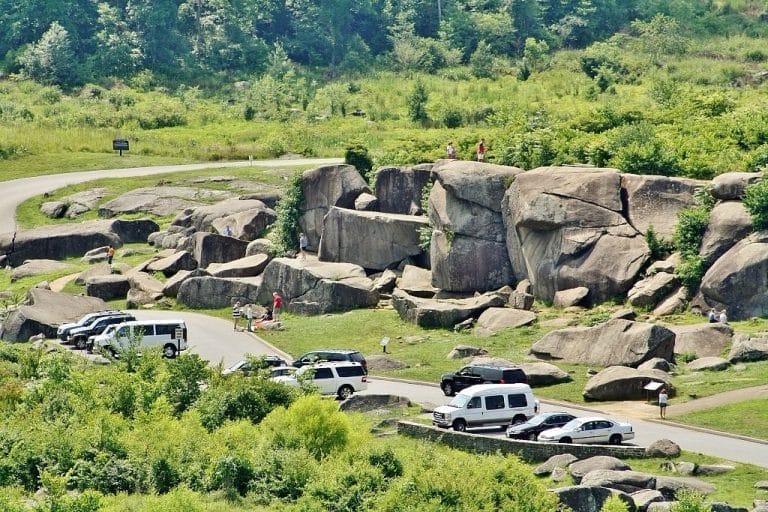
Devil’s Den – Haunted Battlefield Landmark in Gettysburg, Pennsylvania
Gettysburg (Pennsylvania), Pennsylvania
Devil’s Den is one of Gettysburg’s most eerie and blood-soaked battle sites. It was a...
Explore This Location →

Prison
Eastern State Penitentiary – Haunted Prison in Philadelphia, Pennsylvania
Philadelphia (Pennsylvania), Pennsylvania
Eastern State Penitentiary is one of the most famous haunted prisons in America. Built in...
Explore This Location →

Battlefield
Gettysburg Battlefield – Haunted War Site in Gettysburg, Pennsylvania
Gettysburg (Pennsylvania), Pennsylvania
Gettysburg Battlefield is one of the bloodiest battlefields in American history.Over 50,000 soldiers were killed,...
Explore This Location →
Castle
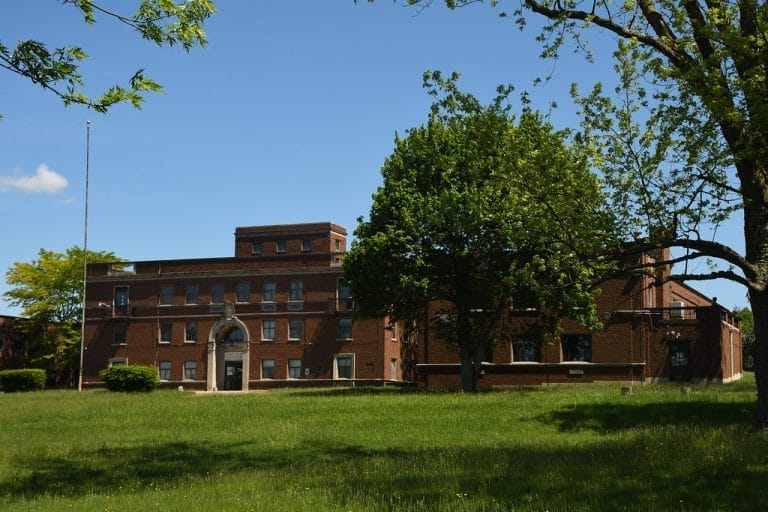
Hill View Manor – Haunted Former Poorhouse in New Castle, Pennsylvania
New Castle (Pennsylvania), Pennsylvania
Hill View Manor stands as one of Pennsylvania’s most talked-about haunted locations. Originally a place...
Explore This Location →

Hotel
Historic Hotel Bethlehem – Haunted Hotel in Bethlehem, Pennsylvania
Bethlehem (Pennsylvania), Pennsylvania
The Historic Hotel Bethlehem is a charming hotel with a dark twist. It’s one of...
Explore This Location →

Hotel
Jean Bonnet Tavern – Haunted Colonial Tavern in Bedford, Pennsylvania
Bedford (Pennsylvania), Pennsylvania
The Jean Bonnet Tavern is a centuries-old inn and tavern that sits along the old...
Explore This Location →

Theater
Mishler Theatre – Haunted Historic Theatre in Altoona, Pennsylvania
Altoona (Pennsylvania), Pennsylvania
The Mishler Theatre in Altoona is more than just a stage for live performances. Built...
Explore This Location →
Asylum
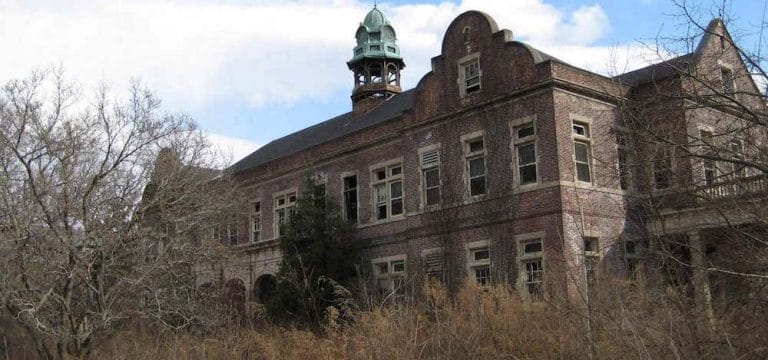
Pennhurst Asylum – Haunted Abandoned Asylum in Spring City, Pennsylvania
Spring City (Pennsylvania), Pennsylvania
Pennhurst Asylum was once a state-run institution for people with mental and physical disabilities. It...
Explore This Location →

Home
Smurl House – Haunted Duplex in West Pittston, Pennsylvania
West Pittston (Pennsylvania), Pennsylvania
The Smurl House gained national attention in the 1980s as one of the most terrifying...
Explore This Location →

Hotel
The Farnsworth House Inn – Haunted Hotel in Gettysburg, Pennsylvania
Gettysburg (Pennsylvania), Pennsylvania
The Farnsworth House Inn stands as one of Gettysburg’s most haunted locations. Built before the...
Explore This Location →

Hotel
The Inn at Jim Thorpe – Haunted Hotel in Jim Thorpe, Pennsylvania
Jim Thorpe (Pennsylvania), Pennsylvania
The Inn at Jim Thorpe is a charming historic hotel nestled in the heart of...
Explore This Location →

Bridge
Van Sant Covered Bridge – Haunted Bridge in New Hope, Pennsylvania
New Hope (Pennsylvania), Pennsylvania
The Van Sant Covered Bridge, also called “Crybaby Bridge,” is one of the most talked-about...
Explore This Location →
Welcome to Pennsylvania, where over 300 reported haunted locations and centuries of bloodshed have created one of America’s most paranormally intense states. From the hallowed ground of Gettysburg—where 51,000 casualties in three days left the battlefield perpetually haunted by phantom regiments and restless soldiers—to Eastern State Penitentiary where 85,000 inmates endured torture so brutal their screams still echo through crumbling cellblocks, to Fort Mifflin where Revolutionary War defenders eternally guard their posts, Pennsylvania delivers supernatural experiences rooted in America’s darkest chapters.
The Keystone State’s paranormal prominence stems from its pivotal role in American history. As the birthplace of the nation, Pennsylvania witnessed the Revolutionary War, served as the site of the Civil War’s bloodiest battle, operated some of America’s most notorious prisons and asylums, and harbored countless industrial tragedies. Every region harbors spirits of those who fought, suffered, and died on Pennsylvania soil—and many refuse to leave.
Why Pennsylvania Is Among America’s Most Haunted States
Pennsylvania consistently ranks in the top 10 most haunted states with over 300 documented haunted locations reported across the Commonwealth. The state’s paranormal intensity emerges from its unique position at the crossroads of American history. Founded by William Penn in 1681, Pennsylvania became the birthplace of American independence, hosting the Continental Congress, the signing of the Declaration of Independence, and the drafting of the Constitution.
But Pennsylvania’s history isn’t just about founding documents and philosophical ideals. The state witnessed brutal warfare spanning three centuries. Native American conflicts, the French and Indian War, the Revolutionary War, and the Civil War left tens of thousands dead on Pennsylvania soil. The Battle of Gettysburg alone—the war’s turning point—saw 51,000 casualties in just three days, creating the most concentrated paranormal activity of any battlefield in America.
Beyond battlefields, Pennsylvania operated massive institutional complexes where suffering transcended death. Eastern State Penitentiary pioneered the “separate system” of solitary confinement, driving inmates insane through isolation and employing tortures including the “Mad Chair” (prisoners strapped motionless for days), the “Iron Gag” (a device that sliced tongues with every movement), and the “Water Bath” (inmates dunked in ice water then hung outside in winter). Pennhurst State School and Hospital subjected disabled patients to abuse so horrific that federal courts eventually shut it down. These institutions’ cruelty created permanent spiritual scars.
Pennsylvania’s industrial history added more layers of tragedy. Coal mining disasters, factory accidents, and transportation catastrophes claimed thousands of lives. The spirits of miners crushed in cave-ins, workers burned in factory fires, and passengers killed in train wrecks haunt the sites where they died violently.
The Violent History Behind Pennsylvania’s Hauntings
Gettysburg: America’s Most Haunted Battlefield
Gettysburg stands as the epicenter of Pennsylvania’s paranormal activity and arguably America’s most haunted location. From July 1-3, 1863, Union and Confederate forces clashed in the war’s deadliest battle. The Union Army suffered 23,000 casualties while the Confederates lost over 28,000 men—a combined 51,000 killed, wounded, or missing in just 72 hours of hell.
The battle’s horrific nature created conditions perfect for hauntings. Bodies lay unburied for days and weeks in the July heat, rotting where they fell. Some corpses were never recovered, simply thrown into rock crevices or shallow graves that would later be disturbed. Field hospitals operated in barns, houses, and churches where surgeons amputated limbs by the hundreds, creating piles of severed arms and legs. The wounded’s screams filled the town for weeks as thousands died from injuries and infections.
What makes Gettysburg’s haunting particularly intense is that supernatural activity reportedly began before the first shot. According to legend, George Washington’s ghost appeared to Union soldiers marching toward the battlefield, leading them into position. This supernatural connection to America’s founding father creates a unique spiritual energy that permeates the site.
Devil’s Den, a boulder-strewn area 500 yards west of Little Round Top, experienced brutal combat on July 2. Confederate sharpshooters used the massive rocks for cover while Union forces attempted to dislodge them. Bodies fell among the boulders and into crevices, with some never recovered. The area’s paranormal activity dates back centuries—Native American chiefs’ spirits were reportedly seen here by early settlers, suggesting the ground held spiritual significance long before the Civil War.
The most famous Devil’s Den ghost is an unkempt man with long gray hair, dirty torn buckskin clothing, a large floppy hat, and no shoes. He appears to visitors, points at the rocks, asks why people are looking at them, then vanishes when they turn away. Multiple witnesses have photographed a figure matching this description, only to have him disappear before they can approach. Some believe he’s a Confederate sharpshooter still defending his position; others think he’s an earlier spirit drawn to the battle’s energy.
Little Round Top, the Union Army’s crucial defensive position, experiences regular paranormal encounters. During filming of the movie “Gettysburg,” Civil War re-enactors serving as extras reported a man in Union uniform passing them ammunition. They assumed he worked on the film until they examined the ammunition—real musket rounds, not blanks. The mysterious soldier had vanished, never to be identified by the film crew.
Phantom regiments represent Gettysburg’s most spectacular paranormal phenomenon. Witnesses report entire units of soldiers—dozens or even hundreds—marching across fields, appearing in formation, engaging in battle, then disappearing. These phantom armies appear on the anniversary of battles and random dates throughout the year. The sounds of drum and fife music, cannon fire, rifle shots, men shouting orders, and horses galloping accompany these spectral displays.
The Farnsworth House Inn, built circa 1810, served as shelter for Confederate sharpshooters during the battle and a makeshift hospital afterward. The building bears over 100 bullet holes in its brick walls—physical evidence of the battle’s fury. The inn harbors multiple spirits including: Confederate soldiers still patrolling their posts, unwilling to abandon military duty; an eight-year-old boy whose identity remains unknown; a former midwife who died in the house; and various wounded soldiers who died during the building’s use as a hospital.
Guests report heavy breathing in empty rooms, the strong scent of cigars with no source, objects moving independently, sudden temperature drops, and apparitions in Civil War-era clothing. The inn operates as a bed and breakfast, allowing brave visitors to sleep where Confederate sharpshooters once waited to kill Union soldiers.
The Jennie Wade House preserves the only civilian death during the battle. Twenty-year-old Jennie Wade was kneading dough for bread to feed Union soldiers when a Confederate bullet pierced two doors and struck her dead. Her spirit remains in the house, with visitors hearing the sound of dough being kneaded, smelling freshly baked bread when the ovens are cold, and seeing Jennie’s apparition in period dress continuing her final task.
The Quality Inn at General Lee’s Headquarters occupies the 1863 building where Confederate General Robert E. Lee established his command post. Staff and guests report: phantom gunshots hitting the building’s exterior, the front door opening independently, lights flickering on and off without cause, a 75-pound laundry cart moving across floors with no one near it, drum and fife music playing from empty areas, and footsteps pacing the attic where no living people walk.
The entire 6,000-acre battlefield, now preserved as Gettysburg National Military Park, experiences paranormal activity. Visitors report encounters throughout the park including Cemetery Ridge where Pickett’s Charge failed catastrophically, The Angle where hand-to-hand combat raged, The Wheatfield which changed hands six times in brutal fighting, and countless other locations where men died by the thousands.
Eastern State Penitentiary: America’s Most Historic Prison
Eastern State Penitentiary in Philadelphia ranks as one of America’s most haunted prisons and a pioneering institution that revolutionized incarceration—for better and worse. Opened in 1829, the massive Gothic Revival fortress was the most famous and expensive prison in the world, featuring revolutionary amenities including running water and central heating decades before the White House had them.
But Eastern State’s architectural innovation concealed brutal reality. The prison pioneered the “separate system” or “Pennsylvania System” of total solitary confinement, designed to inspire penitence through isolation. Inmates lived alone in individual cells, exercised alone in individual yards, and had no contact with other prisoners. They wore hoods when moved through the prison to prevent seeing other inmates or being seen.
The psychological torture of complete isolation drove many inmates insane. Guards reported prisoners talking to themselves, screaming at walls, and losing grip on reality. But psychological torture was just the beginning. Eastern State employed physical tortures designed to break inmates who violated rules:
The Mad Chair: Prisoners were strapped into a chair so tightly they couldn’t move any muscle. They remained bound for days, sometimes weeks, without being released. Blood circulation stopped, causing tissue death. Victims lost the ability to walk and some died from the treatment.
The Iron Gag: A metal device was inserted into the prisoner’s mouth, with a chain attached to his wrists bound behind his back. Any movement of the arms—even slight adjustments—pulled the gag, which had a sharp metal piece that cut the tongue. Prisoners died from blood loss after their tongues were severed by repeated cuts.
The Water Bath: In winter, guards dunked prisoners in ice water, then hung them outside on the prison walls. Many froze to death. Others lost limbs to frostbite.
The Hole: Complete darkness solitary confinement in the basement, where prisoners existed without light, sometimes for months. Many emerged blind or insane.
Over 85,000 inmates passed through Eastern State during its 142 years of operation (1829-1971). Notable prisoners included Al Capone, who allegedly enjoyed luxuries in his cell but claimed to be haunted by James Clark, a victim of the St. Valentine’s Day Massacre. Capone reported Clark’s ghost tormenting him, saying “Jimmy, I’m sorry!” in response to phantom attacks. Capone’s cell (C-48) experiences paranormal activity including his apparition pacing the cell and unexplained sounds.
Eastern State’s documented paranormal phenomena includes: disembodied screams and moans echoing through cellblocks, shadowy figures moving along catwalks and through cells, ghostly faces appearing in cell windows, footsteps in empty corridors, particularly in Cell Block 12, a guard’s silhouette appearing in watchtowers with no one present, phantom inmates shuffling in chains, cold spots appearing suddenly in specific cells, the feeling of being watched throughout the building, physical contact—being touched, pushed, or grabbed by unseen hands, and overwhelming feelings of despair and hopelessness, especially in The Hole.
Cell Block 12 experiences the most intense activity. Visitors and staff report feeling an oppressive presence, seeing shadow figures darting between cells, and hearing whispered conversations in cells confirmed to be empty. Some paranormal investigators refuse to enter Cell Block 12 alone after experiencing violent encounters.
The prison has been featured on Ghost Adventures, Ghost Hunters, Most Terrifying Places in America, and numerous other paranormal programs. The complex now operates as a National Historic Landmark offering daytime tours, summer twilight tours, and special Halloween programming. The “Halloween Nights” haunted attraction transforms the already-terrifying prison into an immersive horror experience.
Fort Mifflin: Revolutionary War Spirits
Fort Mifflin on the Delaware River in Philadelphia defended the young nation during the Revolutionary War’s pivotal 1777 Siege of Fort Mifflin. British forces bombarded the fort with over 1,000 cannon shots daily for weeks. The 400 American defenders held out against overwhelming odds, suffering horrible casualties before finally evacuating. The fort’s strategic location made it vital, and it continued serving military purposes through the Civil War and both World Wars.
Fort Mifflin ranks among Pennsylvania’s most haunted military installations. The Revolutionary War defenders’ spirits remain on eternal duty, refusing to abandon their posts even in death. Documented paranormal activity includes:
The Screaming Woman: Elizabeth Pratt, wife of fort commander Captain William Pratt, died during childbirth at the fort. Her agonized screams echo across the parade ground, particularly near the former hospital building. Visitors report hearing a woman screaming in pain with no source visible.
The Faceless Man: Believed to be British General William Howe, this apparition appears throughout the fort but particularly near the officer’s quarters. Witnesses describe a figure in 18th-century military dress, but when they look at his face, there are no features—just smooth, empty skin.
The Lamplighter: A spectral figure carrying a lantern walks the ramparts at night, checking fortifications as guards did during the fort’s active years. The light moves along walls with no person visible carrying it.
Physical encounters are common at Fort Mifflin. Visitors report being grabbed, pushed, held by invisible hands, having their clothing tugged, and feeling unable to move in certain areas. The casemates (vaulted chambers built into the fort’s walls) experience particularly intense activity, with some visitors fleeing after encountering aggressive spirits.
The fort’s largely unchanged condition since the Revolutionary War heightens its haunted atmosphere. Walking through Fort Mifflin feels like stepping into 1777, and the spirits seem to respond to visitors as if they’re contemporaries—either allies to be protected or enemies to be driven away.
Pennhurst State School and Hospital: Asylum of Horrors
Pennhurst State School and Hospital in Spring City operated from 1908-1987 as an institution for people with intellectual disabilities and physical disabilities. What was supposed to be a “model” facility became a nightmare of overcrowding, abuse, neglect, and human rights violations so severe that federal courts eventually forced its closure.
At its peak, Pennhurst housed over 3,000 residents in facilities designed for 500. The overcrowding created brutal conditions: patients lived in their own filth, often naked because staff didn’t bother to clothe them; minimal food and medical care led to malnutrition and preventable deaths; violent patients were mixed with gentle ones, leading to attacks; physical and sexual abuse by staff was documented repeatedly; and isolation rooms imprisoned patients for months or years.
A 1968 NBC television exposé titled “Suffer the Little Children” revealed Pennhurst’s horrors to America. Reporter Bill Baldini filmed patients living in inhuman conditions, staff abusing residents, and administrators denying basic human rights. The broadcast led to a federal lawsuit, and in 1977, Judge Raymond Broderick ruled that Pennhurst violated residents’ constitutional rights. The facility finally closed in 1987.
Pennhurst’s paranormal activity reflects the suffering that occurred there. The abandoned buildings harbor spirits of patients who died in the institution, including:
The Mayflower Building: The most haunted structure, this dormitory housed the most severely disabled patients under the worst conditions. Visitors report seeing patients peering from windows, hearing moaning and crying, and feeling overwhelming sadness. Shadow figures move through hallways, and some investigators report being touched or pushed by unseen forces.
The Administration Building: Staff offices and the superintendent’s residence experience poltergeist activity including objects moving independently, doors slamming, and phantom footsteps in empty rooms.
The Tunnels: Underground passages connecting buildings allow spirits to move between structures. The tunnels feel oppressive, and many investigators report feelings of being followed, sudden temperature drops, and seeing shadow figures in the darkness.
Pennhurst has been featured on Ghost Adventures, Ghost Hunters, Paranormal Lockdown, and BuzzFeed Unsolved. The site now operates as a haunted attraction and offers paranormal investigations. Many professional teams consider Pennhurst among America’s most actively haunted locations, with documentation of EVPs, shadow figures, physical encounters, and electronic anomalies.
Pennsylvania’s Haunted Regions: A Geographic Guide
Southeast Pennsylvania: Birthplace of the Nation
Philadelphia, America’s first capital, harbors centuries of supernatural activity. Beyond Eastern State Penitentiary and Fort Mifflin, the city features:
Betsy Ross House: The seamstress who created America’s first flag lived and died in this 1740 house. Her spirit is frequently seen in the building, and visitors report the sound of her sewing and footsteps on the stairs.
American Philosophical Society Library: Benjamin Franklin’s ghost allegedly haunts the library he helped found. Staff and visitors report seeing a figure matching Franklin’s description examining books and documents.
Bishop White House: The colonial-era residence harbors multiple ghosts including an elderly housekeeper on the first floor, a meowing cat, and a tall thin man on the third floor.
Leverington Cemetery: Listed as one of Northwest Philadelphia’s most actively documented locations for orbs and apparitions, this historic burial ground experiences regular paranormal activity.
South Central Pennsylvania: Gettysburg and Beyond
Gettysburg dominates the region’s paranormal landscape, but nearby locations contribute additional hauntings:
Gettysburg College: The “Blue Boy” entity haunts Stevens Hall, achieving celebrity status after appearing in the 1995 History Channel documentary “Ghosts of Gettysburg.” The spirit of a young boy appears in blue-tinged light, giving him his nickname.
Cashtown Inn: This 1797 building served as Confederate headquarters before the battle. Spirits of Confederate officers still occupy rooms, and guests report period-dressed apparitions, phantom conversations, and Civil War-era music.
Sachs Covered Bridge: Built in 1852, the bridge allegedly harbors the spirits of Confederate and Union soldiers. Witnesses report seeing uniformed ghosts on the bridge, hearing horses crossing, and experiencing sudden cold spots.
Northeast Pennsylvania: Coal Mining Spirits
Eckley Miners’ Village: This preserved 19th-century mining town harbors spirits of miners who died in accidents and black lung disease. The company town’s harsh conditions created suffering that transcended death.
Jim Thorpe (formerly Mauch Chunk): The town’s Victorian mansions and historic district experience paranormal activity related to coal baron families, miners, and the Molly Maguires—Irish miners executed for labor organizing.
Western Pennsylvania: Steel City Spirits
Pittsburgh combines industrial tragedy with urban hauntings:
Allegheny County Jail: The Gothic Revival fortress, opened in 1886, witnessed executions, riots, and deaths from disease. The jail’s “dungeon” cells and death row experience intense paranormal activity.
William Penn Hotel: Pittsburgh’s grand hotel, opened in 1916, harbors multiple spirits including a woman who jumped from an upper floor and guests who checked in but never checked out.
Carnegie Library: Andrew Carnegie’s cultural gift to Pittsburgh allegedly harbors the steel magnate’s ghost, still overseeing the institution he created.
Northwest Pennsylvania: Lake Erie Mysteries
Erie: The city’s lakefront location creates unique hauntings combining maritime disasters with urban spirits.
Presque Isle Lighthouse: Keepers’ ghosts maintain eternal watch over Lake Erie, and visitors report seeing the light operational when it’s officially dark.
Central Pennsylvania: Capital Region Hauntings
Harrisburg: The state capital features haunted government buildings, Victorian mansions, and historic districts experiencing paranormal activity.
Types of Haunted Locations in Pennsylvania
Haunted Battlefields
Pennsylvania’s battlefields represent concentrated paranormal activity where thousands died violently in short periods.
Gettysburg dominates but other battlefields include:
Brandywine Battlefield: The September 11, 1777 battle saw George Washington’s forces defeated by British and Hessian troops. The battlefield experiences phantom armies, cannon sounds, and spirits of fallen soldiers.
Fort Necessity: George Washington’s 1754 defeat in the French and Indian War left spirits of British, French, and Native American warriors.
Haunted Prisons
Pennsylvania pioneered American prison reform, but its institutions practiced brutal methods creating permanent spiritual scars.
Eastern State Penitentiary leads the state’s haunted prisons, joined by the Allegheny County Jail in Pittsburgh and various county lockups experiencing paranormal activity.
Haunted Asylums and Hospitals
Pennsylvania operated massive institutions where suffering and death created intense spiritual activity.
Pennhurst represents the most notorious, but Hillview Manor in New Castle (former poorhouse and hospital) experiences similar phenomena. Visitors report seeing patients in windows, hearing voices, and encountering “Jeffrey,” a young boy whose appearance allegedly portends death.
Haunted Hotels and Inns
Pennsylvania’s historic accommodations blend hospitality with hauntings.
Farnsworth House Inn (Gettysburg) allows guests to sleep where Confederate soldiers died.
Hotel Bethlehem (Bethlehem): Built in 1741, the hotel harbors friendly ghosts including an 1800s stage star who sings and dances in the lobby, a welcoming tour guide in the boiler room, and a former landlady who appears without shoes or stockings.
Jean Bonnet Tavern (Bedford): Welcoming travelers since 1762, the tavern combines excellent food with paranormal activity spanning over 250 years.
Haunted Theaters
Mishler Theatre (Altoona): Isaac Mishler, the theater’s founder, allegedly haunts the venue he built. A teenage girl’s testimony brought the haunting to public attention.
Various opera houses and theaters across Pennsylvania report spirits of performers who never took final bows and audience members who refuse to leave.
Haunted Military Forts
Fort Mifflin leads Pennsylvania’s haunted military installations, joined by:
Fort LeBoeuf (Waterford): This French and Indian War fort experiences paranormal activity from three centuries of military conflicts.
Haunted Historic Houses
Many colonial-era homes throughout Pennsylvania harbor spirits of original residents, Revolutionary War soldiers, and those who died within their walls.
Visiting Pennsylvania’s Haunted Locations
Ghost Tours and Paranormal Investigations
Pennsylvania offers extensive paranormal tourism infrastructure:
Gettysburg Ghost Tours: Multiple companies operate nightly walking tours through the town and battlefield. Tours include Devil’s Den, Little Round Top, the Farnsworth House, Jennie Wade House, and numerous other documented locations. Battlefield tours offer access to areas restricted after dark for maximum paranormal potential.
Eastern State Penitentiary: Daytime historic tours run year-round, providing complete access to cell blocks, guard towers, and Al Capone’s cell. Summer Twilight Tours extend into evening hours. Halloween Nights (September-November) transforms the prison into an immersive haunted attraction combining historical tours with theatrical scares.
Philadelphia Ghost Tours: Explore Eastern State, Fort Mifflin, Betsy Ross House, and historic districts with professional guides sharing documented paranormal accounts.
Lancaster Ghost Tours: Candlelight walking tours through haunted Strasburg and Lancaster County, featuring ghost stories, haunted houses, and spooky cemeteries.
New Hope Ghost Tours: Follow lantern light searching for phantom hitchhikers and Aaron Burr’s ghost in this Delaware River town.
Pittsburgh Ghost Tours: Explore Allegheny County Jail, William Penn Hotel, and locations showcasing Steel City’s dark past.
Best Times to Visit
July 1-3: Gettysburg battle anniversary produces heightened paranormal activity. The battlefield experiences increased reports of phantom regiments, soldier apparitions, and Civil War sounds.
October: Halloween season brings peak paranormal tourism. Eastern State’s Halloween Nights attraction runs September-November. Many haunted locations offer special programming and extended hours.
November 19: Anniversary of Lincoln’s Gettysburg Address brings commemorative events and reportedly increased spiritual activity at related locations.
Winter (December-February): Reduced tourism creates intimate paranormal experiences. Snow adds atmospheric beauty to battlefield investigations.
Photography and Evidence Collection
Pennsylvania’s haunted locations welcome paranormal investigators with varying levels of access:
Gettysburg National Military Park: Photography is permitted throughout the battlefield. Overnight access is restricted, but ghost tours provide evening access to key locations. Bring cameras, audio recorders, and EMF detectors.
Eastern State Penitentiary: Photography encouraged during tours. Overnight paranormal investigations available by reservation. Professional investigation equipment provided or bring your own.
Private locations like Pennhurst: Offer structured paranormal investigations with equipment and guidance. Reservations required well in advance due to high demand.
Safety and Respect
Respect the sacred ground: Gettysburg is hallowed ground where 51,000 Americans were casualties. Treat the battlefield with reverence appropriate to a national cemetery.
Follow regulations: National Park Service rules restrict access to certain battlefield areas after dark. Respect these regulations while on public land.
Structural hazards: Many haunted locations like Eastern State and Pennhurst contain deteriorating buildings. Stay on designated paths and follow safety guidelines.
Emotional preparation: Gettysburg’s intensity affects many visitors. The combination of historical knowledge and paranormal encounters can be overwhelming. Have plans for leaving if experiences become too intense.
The Spirit of Pennsylvania Continues
Pennsylvania’s paranormal landscape reflects its role as birthplace of American independence and site of the nation’s bloodiest conflicts. The 300+ documented haunted locations represent only encounters where witnesses came forward. Countless more spirits haunt Pennsylvania’s battlefields, prisons, asylums, and historic sites.
From Confederate and Union soldiers eternally fighting at Gettysburg to inmates suffering endless torment in Eastern State Penitentiary’s isolation cells, from Revolutionary War defenders eternally guarding Fort Mifflin to disabled patients trapped in Pennhurst’s abandoned buildings, Pennsylvania’s spirits represent real people whose suffering transcended death.
Welcome to Pennsylvania—where 51,000 casualties in three days created America’s most haunted battlefield, where revolutionary prison design became a model of torture, where the birthplace of independence harbors centuries of restless spirits, and where the weight of history creates paranormal encounters that will forever change your understanding of what exists beyond death.
Explore America’s Most Haunted Places by State
Discover spine-chilling locations, paranormal hotspots, and supernatural encounters across all 50 states. Click any state to begin your journey into the unknown.