
📍 Map of Haunted Places in Texas
Explore all 15 haunted locations across Texas. Click any pin to view details.

Road
Bragg Road – Haunted Forest Path in Saratoga, Texas
Saratoga (Texas), Texas
Bragg Road, also known as Ghost Road, is a lonely dirt path stretching through the...
Explore This Location →

Hotel
Hotel Galvez – Haunted Hotel in Galveston, Texas
Galveston (Texas), Texas
Hotel Galvez is a grand old hotel that has stood on the Galveston seawall since...
Explore This Location →

Hotel
Jefferson Hotel – Haunted Hotel in Jefferson, Texas
Jefferson (Texas), Texas
The Jefferson Hotel is one of Texas’s oldest and most haunted hotels. Built in the...
Explore This Location →

Restaurant
La Carafe – Haunted Bar in Houston, Texas
Houston (Texas), Texas
La Carafe is Houston’s oldest bar, tucked away in the historic Market Square District. It’s...
Explore This Location →

Large Region
Marfa Lights – Haunted Desert Mystery in Marfa, Texas
Marfa (Texas), Texas
Deep in the desert near Marfa, Texas, strange glowing orbs appear without warning. Locals call...
Explore This Location →

Hotel
Miss Molly’s Hotel – Haunted Hotel in Fort Worth, Texas
Fort Worth (Texas), Texas
Miss Molly’s Hotel sits in the heart of the Fort Worth Stockyards. Built during the...
Explore This Location →

Prison
Old Lavaca County Jail – Haunted Jail in Hallettsville, Texas
Hallettsville (Texas), Texas
The Old Lavaca County Jail in Hallettsville is a chilling piece of Texas history. Built...
Explore This Location →

Fort
Presidio La Bahía – Haunted Spanish Fort in Goliad, Texas
Goliad (Texas), Texas
Presidio La Bahía is a historic Spanish fort located in Goliad, Texas. Built in the...
Explore This Location →

Warehouse
Spaghetti Warehouse – Haunted Restaurant in Houston, Texas
Houston (Texas), Texas
The Spaghetti Warehouse in downtown Houston is more than just a place for pasta. Locals...
Explore This Location →

Mission
The Alamo – Haunted Historic Mission in San Antonio, Texas
San Antonio (Texas), Texas
The Alamo is one of the most famous historical landmarks in the United States. It...
Explore This Location →

Hotel
The Baker Hotel – Haunted Hotel in Mineral Wells, Texas
Mineral Wells (Texas), Texas
The Baker Hotel is one of Texas’s most talked-about haunted buildings. Built in the 1920s...
Explore This Location →
Hotel
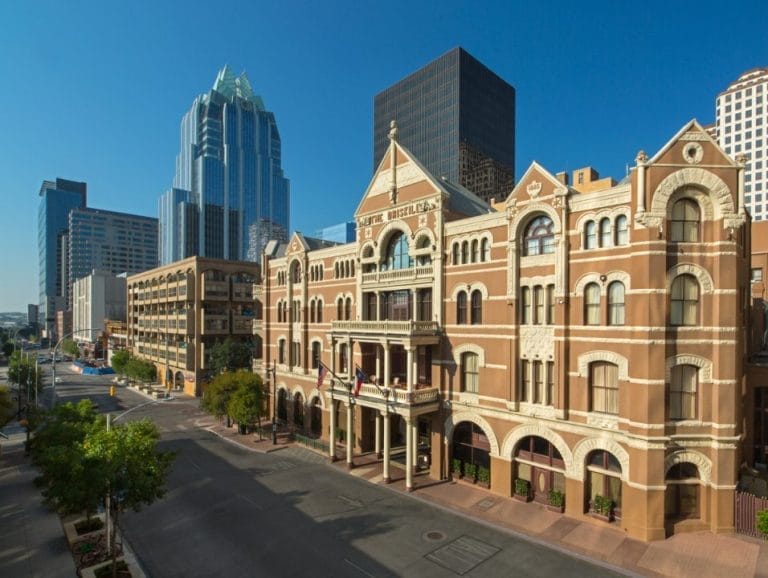
The Driskill Hotel – Haunted Hotel in Austin, Texas
Austin (Texas), Texas
The Driskill Hotel is one of the oldest and most iconic buildings in Austin. Built...
Explore This Location →

Hotel
The Menger Hotel – Haunted Hotel in San Antonio, Texas
San Antonio (Texas), Texas
The Menger Hotel is one of the oldest and most famous hotels in Texas. Built...
Explore This Location →

Large Region
Woman Hollering Creek – Haunted Stream in San Antonio, Texas
San Antonio (Texas), Texas
Woman Hollering Creek might look like any quiet stream near San Antonio, but locals believe...
Explore This Location →

Hospital
Yorktown Memorial Hospital – Haunted Abandoned Hospital in Yorktown, Texas
Yorktown (Texas), Texas
Yorktown Memorial Hospital sits in quiet ruin, yet its past screams loudly. Built as a...
Explore This Location →
Welcome to Texas, officially the most haunted state in America. With over 7,641 documented ghost sightings, 13,710 cemeteries, 558 ghost towns, and a staggering 5.15% chance of witnessing paranormal activity—the highest in the nation—the Lone Star State reigns supreme in supernatural encounters. From the blood-soaked grounds of the Alamo where 189 defenders made their last stand, to Hill House in Mineral Wells (ranked America’s second-most haunted location), to the mysterious Marfa Lights that have baffled scientists for over a century, Texas delivers an unmatched paranormal experience.
Everything’s bigger in Texas, including its ghosts. The state’s violent frontier history, catastrophic disasters, and centuries of bloodshed created a supernatural landscape where Spanish conquistadors, Comanche warriors, outlaws, soldiers, and settlers refuse to leave the places they called home—or where they met their tragic ends.
Why Texas Is America’s Most Haunted State
Multiple independent studies have crowned Texas the most haunted state in America. According to ActionNetwork.com’s 2024 analysis of over 1.8 million paranormal reports, Texas emerged as the clear winner with 7,641 reported sightings and an impressive 558 ghost towns—more than any other state. BonusFinder’s comprehensive study gave Texas a perfect 9.8 out of 10 haunting score, analyzing cemeteries, ghost sightings, haunted locations, and paranormal investigators per capita.
The numbers speak for themselves: Texas leads the nation with 247.7 ghost sightings per 100,000 people, giving residents and visitors a 5.15% chance of encountering supernatural activity—approximately one in every 4,168 Texans. California came in second with 7,284 sightings but couldn’t match Texas’s intensity of paranormal phenomena. West Virginia, Maine, and Kentucky rounded out the top five, but none approached the sheer volume and diversity of Texas’s ghostly activity.
Texas’s paranormal dominance stems from its unique historical tapestry. The state witnessed centuries of warfare between Spanish conquistadors, French colonizers, Mexican forces, Texian revolutionaries, Confederate soldiers, and Comanche warriors. Frontier violence, oil boom tragedies, deadly hurricanes, and the transformation of boom towns into ghost towns created layers of supernatural energy across 268,000 square miles.
The Violent History Behind Texas’s Hauntings
The Battle of the Alamo: Texas’s Most Haunted Battleground
The Alamo stands as the epicenter of Texas’s paranormal activity and the most haunted location in the state. On March 6, 1836, after a brutal 13-day siege, Mexican General Antonio Lopez de Santa Anna’s force of up to 6,000 soldiers overwhelmed the 189 Texian defenders. The battle was horrifically violent—Santa Anna ordered no prisoners taken, and nearly all defenders were killed. Between 400-600 Mexican soldiers also died, approximately one-third of the attacking force.
The Alamo’s ground holds even darker history. Before becoming a fortress, the site served as Mission San Antonio de Valero, founded in 1718. Between 1724 and 1793, the grounds operated as San Antonio’s cemetery, with approximately 1,000 bodies buried there. Construction workers still unearth skulls and bones during excavation projects.
The first paranormal sighting occurred just weeks after the battle. When Santa Anna left 1,000 soldiers in San Antonio to control the area, he ordered them to demolish the Alamo church. As soldiers approached with torches, six ghostly figures materialized at the entrance, wielding flaming sabers and shouting “Do not touch the Alamo! Do not touch these walls!” The terrified soldiers fled and refused to return despite threats. Many believe these spirits were Franciscan monks protecting the sacred mission, while others claim they were Alamo defenders.
The Alamo’s ghosts include: James “Jim” Bowie, seen at the nearby Menger Hotel (built in 1859 on the battlefield) rather than the Alamo itself since his death room was demolished in 1871; Davy Crockett, whose spirit allegedly wanders the grounds where he made his final stand; General Manuel Fernandez de Castrillon, the sorrowful Mexican officer who opposed Santa Anna’s execution order and is seen pacing with hands behind his back and head bowed in regret; a blonde-haired boy, approximately 10-12 years old, who appears in the gift shop window—possibly a child who survived the battle but lost his family; a man and young boy who leap hand-in-hand from the chapel roof in an endless loop, witnessed by Santa Anna’s troops during the siege; and the “Lady in Grey,” a grieving woman who lost her husband in the battle and stands near the chapel gazing mournfully at the ruins.
Modern witnesses report phantom gunfire, disembodied screams, shadowy figures emerging from walls, unexplained cold spots, and overwhelming feelings of sadness and dread. The grounds beneath River Center Marriott, where Texian defenders’ bodies were burned, experience intense activity including books flying off shelves and perpetually cold corners. Market Square’s playground sits atop the mass grave of Mexican soldiers, and visitors report breathing difficulties, sudden sadness, and feelings of anger—the spirits allegedly absorb negative emotions.
Even actor John Wayne’s ghost has been reported at the Alamo. After directing and starring in the 1960 film “The Alamo,” Wayne’s spirit was repeatedly seen walking the grounds and talking with other spirits. A psychic confirmed that Wayne visits the site at least once monthly, having left part of himself at the location through his deep connection to the story.
Hill House, Mineral Wells: America’s Second-Most Haunted Location
Hill House in Mineral Wells ranks as America’s second-most haunted location and Texas’s most terrifying haunted house. Built in 1880 by one of Mineral Wells’ founding families, the Victorian mansion sits just 125 feet from the infamous Baker Hotel, casting its shadow over East Mountain.
The house’s dark history includes serving as a makeshift hospital from 1880 to 1929, then transforming into a haven for illegal activity during Prohibition. Operating as a brothel and speakeasy for wealthy Baker Hotel visitors, the house hosted bootlegging, prostitution, gambling, and allegedly occult rituals. The property’s connection to Native American and outlaw battles on East Mountain adds another layer to its supernatural energy.
Current owners Katherine and Eddie Estes purchased the property in 2017 and immediately encountered overwhelming paranormal activity. Katherine refuses to sleep in the house after being physically attacked by spirits. “If you die in this home, you never leave,” she states, explaining the house’s permanent residents.
The paranormal phenomena at Hill House include: “Toby,” a demonic entity responsible for scratches, bite marks, burn marks, and patterns carved into visitors’ faces—multiple guests have been injured severely enough to require medical attention; “Dr. Yeager,” who haunts his former room and has pulled guests from beds and scratched them until blood soaked through clothing; “Joshua,” a young boy whose playful voice echoes through halls, especially near the staircase; Audio Voice Phenomena (AVP), where spirits speak directly into visitors’ ears rather than through recording equipment, terrifying even professional paranormal investigators.
Approximately 50% of overnight visitors flee before morning, including experienced paranormal research teams. Security footage captures objects moving independently, doors rattling with no one present, and shadow figures crossing rooms. The second floor holds the most intense activity, with footsteps pacing the hallway and the sensation of being watched. Many investigators report physical assaults—unseen hands touching shoulders, pulling hair, pushing, and violent scratching.
The house has been investigated by Ghost Adventures, Haunted Collector, Deep South Paranormal, TAPS, Paranormal Files, Portals to Hell, and numerous other teams. Jack Osbourne, co-host of Travel Channel’s “Portals To Hell,” stated: “It’s probably the one place that I would say, if there was a demonic presence it would be [there].”
The Marfa Lights: Texas’s Unexplained Phenomenon
For over 140 years, mysterious lights have appeared in the night sky near Marfa in West Texas. First reported by cowhand Robert Reed Ellison in 1883, these glowing orbs change colors, split apart, merge together, disappear and reappear, and move in patterns that defy scientific explanation.
The lights appear randomly throughout the year, visible from an official viewing area nine miles east of Marfa on U.S. Route 67. Scientists have proposed theories ranging from atmospheric reflections to electrostatic discharges, but none fully explain the phenomena. Local legend attributes the lights to the restless spirits of Spanish conquistadors, Comanche warriors, or lost travelers who perished in the harsh desert.
The Marfa Lights gained national attention when the U.S. government investigated during World War II, concerned they might be enemy signals. No mundane explanation was found. The phenomenon continues drawing researchers, skeptics, and paranormal enthusiasts seeking to witness one of America’s most enduring mysteries.
Ghost Towns: 558 Abandoned Settlements
Texas leads the nation with 558 documented ghost towns—more than any other state. The oil boom, railroad expansion, and frontier settlement created hundreds of thriving communities that became ghost towns when resources depleted, railroads bypassed them, or disasters struck.
These abandoned settlements harbor the spirits of miners, railroad workers, outlaws, and families who refused to leave when the living departed. Towns like Terlingua (abandoned mercury mining town), Thurber (deserted coal mining community), and Independence (birthplace of Texas independence) stand as monuments to dreams that died hard on the Texas frontier.
San Antonio: The Ghost Capital
San Antonio ranks among America’s most haunted cities, second only to New Orleans. The city’s 300-year history includes Spanish colonization, Mexican rule, the Texas Revolution, Civil War battles, and frontier violence. Every street corner holds stories of tragedy, murder, and supernatural phenomena.
Beyond the Alamo, San Antonio’s haunted locations include: Victoria’s Black Swan Inn, built on land inhabited by Native Americans since 5000 B.C., where Indian spirits and soldiers from the 1842 Battle of Salado still roam; Menger Hotel (1859), where Sallie White, an abused chambermaid, continues tending rooms, and Teddy Roosevelt’s Rough Riders march phantom drills; San Fernando Cathedral, one of America’s oldest cathedrals, where spirits of those buried in the crypt haunt worshippers; Gunter Hotel and St. Anthony Hotel, both hosting multiple documented apparitions and unexplained phenomena.
The city’s extensive tunnel system beneath downtown streets harbors numerous spirits. Ghost tours regularly encounter shadow figures, disembodied voices, and unexplained cold spots in these underground passages.
Galveston: Island of Sorrow
Galveston’s paranormal intensity stems from the catastrophic 1900 hurricane that killed between 6,000-12,000 people—the deadliest natural disaster in U.S. history. The storm surge washed entire city blocks into the Gulf of Mexico, and thousands of bodies were never recovered.
The Seawall Walmart occupies ground where St. Mary’s Orphanage stood. On September 8, 1900, 93 children and 10 nuns perished when the storm surge destroyed the orphanage. Shoppers and employees report children’s laughter, small handprints appearing on glass, toys moving independently, and overwhelming feelings of sadness near the building’s location.
Hotel Galvez & Spa harbors the “Bride in Distress,” a woman who hanged herself in Room 501 after believing her fiancé died at sea. Her spirit haunts the fifth floor, and guests report seeing her apparition, hearing sobbing, and experiencing unexplained malfunctions in electronics. The hotel embraces its haunted reputation, offering ghost tours and special paranormal investigation packages.
Other Galveston haunted locations include: Tremont House (spirits of Civil War soldiers and yellow fever victims), Bishop’s Palace (Victorian mansion with multiple resident ghosts), Ashton Villa (former slave quarters experiencing intense activity), and the Strand Historic District (numerous buildings report paranormal phenomena).
Houston: Bayou City Spirits
Houston’s paranormal landscape includes locations ranging from elegant hotels to abandoned hospitals. The Rice Hotel, where President John F. Kennedy spent his final night before assassination in Dallas, experiences intense activity in JFK’s former room. Guests report cold spots, rattling doors and beds, orbs of light, and overwhelming feelings of presence. Ghost dancers appeared in the ballroom before its 2010 renovation into Rice Lofts, and spirits now dance on the rooftop.
Hermann Park transforms from a peaceful running trail by day to a paranormal hotspot at night. The extensive park harbors restless spirits, with reports of shadow figures, disembodied voices, and feelings of being followed intensifying after dark.
Downtown Houston’s ghost tours include: Julia Ideson Building (ghostly librarian spotted among the stacks), Alley Theatre (spirits of former performers), and La Carafe (Houston’s oldest bar, built in 1860s, with multiple resident ghosts and documented poltergeist activity).
Fort Worth Stockyards: Cowboy Ghosts
The historic Fort Worth Stockyards, once the center of the cattle industry, harbors spirits of cowboys, cattle drivers, and livestock workers. “The Ghost of the Stockyards,” a former cattle driver, wanders the area in period clothing, sharing stories of the old days with startled visitors.
During the stockyards’ heyday, the brutal work claimed many lives—workers trampled by cattle, shootouts between cowboys, and disease outbreaks created a concentration of violent deaths. The spirits remain attached to the place where they spent their hardest years, eternally reliving their dangerous work.
Texas’s Haunted Regions: A Geographic Guide
North Texas: Urban Legends and Historic Hauntings
Dallas combines modern metropolis energy with historic hauntings. White Rock Lake’s “Lady of the Lake” is Dallas’s most famous ghost—a young woman in a wet evening gown who appears near the lake, asking drivers for rides home before vanishing from moving vehicles. The legend dates back to the 1930s, with hundreds of documented encounters.
McKinney’s historic downtown features nearly every building with paranormal activity. Ghost investigations document extensive evidence of spirits in former saloons, hotels, and commercial buildings dating to the town’s 1840s founding.
Old Alton Bridge, also known as “Goatman’s Bridge,” near Denton harbors dark energy. Built in 1884, the iron truss bridge gained infamy in 1938 when an African American goat farmer named Oscar Washburn was lynched by the Ku Klux Klan. His body disappeared from the noose mid-hanging, and witnesses claim a half-man, half-goat creature—the Goatman—now terrorizes bridge visitors. The bridge experiences intense paranormal activity including phantom headlights, disembodied voices, and violent attacks on investigators.
Adolphus Hotel in Dallas, built in 1912, hosts multiple spirits including a lonely bride who died on her wedding day and a mischievous child ghost who rides the elevators.
Ranch 111 near McKinney offers ghost hunts on property where Confederate soldiers camped. Visitors encounter Civil War spirits still reliving battles.
East Texas: Piney Woods Spirits
The dense forests of East Texas harbor spirits of lumber workers, early settlers, and those who disappeared into the wilderness never to return. Small towns like Jefferson maintain extensive haunted histories with multiple documented locations per capita.
Jefferson, Texas’s most haunted small town, features the Jefferson Hotel (spirits of Civil War soldiers and a woman in Victorian dress), Grove (a restored historic home with resident ghosts), and haunted shops throughout the downtown historic district.
Old Jail Museum in Albany preserves a jailhouse where infamous outlaws and desperate criminals met their fate. Visitors experience strange sounds, flickering lights, and the sensation of being touched by unseen forces. The spirits of executed prisoners remain trapped in their former cells.
West Texas: Desert Phantoms
The vast emptiness of West Texas amplifies paranormal activity. Isolation, harsh conditions, and violent frontier conflicts created spirits attached to remote locations miles from civilization.
Terlingua Ghost Town, abandoned after the mercury mines closed, harbors miners who died in cave-ins and from mercury poisoning. The empty buildings and mine shafts experience activity ranging from phantom mining sounds to full-body apparitions.
Fort Davis National Historic Site preserves a U.S. Army post active from 1854-1891. Buffalo Soldiers and other troops stationed here report to eternal duty, with visitors encountering soldiers in period uniforms who vanish when approached.
Big Bend National Park encompasses vast desert wilderness where travelers disappeared without trace. Park rangers report unexplained lights, phantom voices calling from darkness, and the feeling of being watched in remote areas.
Central Texas: Hill Country Horrors
The Texas Hill Country’s limestone caves, springs, and rivers create concentrated paranormal energy. German immigrant communities, Comanche conflicts, and frontier settlements left spiritual imprints across the region.
Austin’s haunted locations include: Driskill Hotel (founded 1886 by Colonel Jesse Driskill, hosts multiple spirits including the colonel himself, a bride who fell to her death on the grand staircase, and a young girl who died in a fall); Texas State Capitol (the “Lady in Red” and murdered state representative Robert Love haunt the building); Oakwood Cemetery (grave robbing, Victorian monuments, and thousands of Civil War dead create intense activity).
Gruene Historic District near New Braunfels maintains spirits in former dance halls, cotton gins, and mercantile buildings. The Gruene Mansion Inn offers paranormal overnight packages.
Jacob’s Well near Wimberley, a deep artesian spring, has claimed multiple divers’ lives. The spirits of those who drowned in the underwater cave system reportedly appear near the spring opening.
South Texas: Border Spirits
South Texas’s proximity to Mexico creates a unique paranormal landscape blending Anglo, Hispanic, and Native American supernatural traditions. La Llorona (the Weeping Woman) legends merge with historical hauntings from the U.S.-Mexico War and border conflicts.
Laredo’s historic San Agustin Plaza harbors Spanish colonial spirits dating to the city’s 1755 founding. Ghost tours encounter conquistadors, Mexican soldiers, and Anglo settlers who shaped the border region.
Brownsville’s Stillman House Museum preserves artifacts from the U.S.-Mexico War and experiences intense paranormal activity. Confederate and Union soldiers fought over the Rio Grande Valley, and their spirits remain engaged in eternal conflict.
King Ranch, one of the world’s largest ranches spanning 825,000 acres, reports phantom cowboys, ghostly cattle drives, and spirits of vaqueros who worked the land for generations.
Coastal Texas: Hurricane Spirits
Texas’s Gulf Coast witnessed numerous devastating hurricanes, shipwrecks, and pirate activity. These maritime disasters created concentrated paranormal energy along the coastline.
Port Aransas harbors spirits of shipwreck victims, drowned sailors, and fishermen lost at sea. The town’s fishing piers experience activity including phantom footsteps, whispered warnings, and apparitions of men in maritime clothing.
Corpus Christi’s Old Nueces County Courthouse features the “Woman in White” and spirits of those who died in the 1900 hurricane. Heritage Park preserves historic homes including the Sidbury House, Grande-Grossman House, and others with documented paranormal residents.
Types of Haunted Locations in Texas
Haunted Hotels and Inns
Texas’s historic hotels blend luxury accommodations with genuine supernatural encounters. Many embrace their haunted reputations, offering ghost tours and paranormal investigation packages.
Driskill Hotel (Austin) ranks among America’s most haunted hotels. Colonel Driskill’s spirit walks the halls he built, a bride who fell from the staircase repeats her fatal tumble, and a young girl bounces her ball through corridors. The hotel’s Victorian opulence provides elegant surroundings for ghost encounters, and staff members readily share paranormal experiences.
Menger Hotel (San Antonio), built on the Alamo battlefield, houses Sallie White’s spirit. The abused chambermaid was murdered by her husband in 1876, and she continues making beds and cleaning rooms. Guests report bedcovers pulled off during sleep, furniture rearranged overnight, and Sallie’s apparition in Victorian servant dress. Teddy Roosevelt’s Rough Riders conduct phantom training exercises in the hotel bar where Roosevelt recruited them.
Hotel Galvez (Galveston) offers paranormal packages including overnight investigations of Room 501 and the fifth floor where the “Bride in Distress” resides. The hotel’s elegant Gilded Age architecture creates atmospheric settings for encounters with multiple spirits.
Jefferson Hotel (Jefferson) contains so many spirits that staff members distinguish between them by location and behavior patterns. The Victorian hotel preserves period furnishings, creating an authentic backdrop for its numerous resident ghosts.
Haunted Restaurants and Bars
Texas’s dining establishments serve food alongside supernatural experiences. Many locations occupy buildings with violent histories or sit atop forgotten burial grounds.
La Carafe (Houston), built in the 1860s, ranks as Houston’s oldest bar and most haunted drinking establishment. The building survived the Civil War, yellow fever epidemics, and Galveston’s 1900 hurricane refugees. Bartenders and patrons encounter shadow figures, glasses moving independently, phantom conversations, and overwhelming cold spots.
Iron Cactus (Austin) occupies the Littlefield Building’s basement, constructed atop a Native American burial ground. Employees report kitchen equipment activating independently, ingredients disappearing and reappearing, and the presence of Native American spirits protecting their sacred ground.
Stockyards Steakhouse (Fort Worth) serves guests and ghosts in a building dating to the cattle drive era. Former cowboys join modern diners, with staff reporting additional place settings appearing at empty tables and whispered conversations in Old West slang.
Haunted Theaters and Opera Houses
Texas’s entertainment venues preserve spirits of performers who refuse to take final bows.
Majestic Theatre (San Antonio), built in 1929, hosts numerous spirits including “The Lady in Red” seen in the balcony and backstage areas. The ornate Spanish-Mediterranean architecture creates dramatic settings for theatrical ghosts.
Paramount Theatre (Austin) harbors spirits of vaudeville performers, silent film stars, and patrons from its 1915 opening. The resident ghost occasionally operates the theater organ, and employees encounter apparitions in period clothing throughout the building.
Aztec Theatre (San Antonio), built in 1926 with exotic Mesoamerican Revival architecture, experiences activity including disembodied applause from empty seats, phantom orchestra music, and the spirit of a woman in 1920s flapper dress.
Haunted Missions and Churches
Texas’s Spanish colonial missions combine religious significance with paranormal activity. The 18th-century structures witnessed cultural conflicts, disease outbreaks, and forced conversions creating lingering spiritual energy.
Mission San Jose (San Antonio), the “Queen of the Missions,” harbors spirits of Franciscan monks and Coahuiltecan natives who lived and died within its walls. The mission’s Rosa’s Window preserves the tragic love story of Rosa and her fiancé Juan, whose spirits reportedly meet at the window during full moons.
Mission Concepcion (San Antonio), the oldest unrestored stone church in America, maintains active paranormal phenomena including phantom chanting in Latin, shadowy figures in monk robes, and the scent of incense in closed areas.
San Fernando Cathedral (San Antonio) contains the crypt holding remains of Alamo defenders—or so the church claims. The spirits of those buried beneath the cathedral floor reportedly rise during services, and parishioners encounter colonial-era apparitions throughout the 279-year-old structure.
Haunted Cemeteries and Burial Grounds
Texas cemeteries range from Spanish colonial churchyards to forgotten pioneer graveyards, each contributing to the state’s paranormal landscape.
Oakwood Cemetery (Austin), established in 1839, serves as final resting place for Texas governors, Confederate generals, and thousands of early settlers. The cemetery experienced grave robbing in the 1800s, disturbing the dead and creating intense paranormal activity. Visitors encounter Victorian-era apparitions, hear Civil War battle sounds, and photograph numerous orbs and shadow figures.
Concordia Cemetery (El Paso) contains 65,000 graves including outlaws, gunfighters, and Chinese railroad workers. The cemetery’s segregated sections (Mexican, Jewish, Chinese, and Anglo) reflect El Paso’s diverse frontier history. Each section harbors distinct spirits, and the cemetery hosts regular ghost tours documenting extensive paranormal evidence.
Evergreen Cemetery (Paris) features the “Lady in Blue,” a weeping woman seen near graves of children who died in the 1800s. The cemetery’s Victorian monuments and mausoleums create atmospheric settings for encounters with numerous spirits.
Haunted Prisons and Jails
Texas’s correctional facilities combine violence, despair, and death into concentrated paranormal hotspots.
Old Jail Museum (Albany) preserves cells where outlaws awaited execution. The spirits of executed prisoners remain in their cells, and visitors experience physical contact, disembodied voices, and overwhelming feelings of anger and despair.
Old County Jail (Gonzales) operated from 1887-1975, witnessing executions, riots, and deaths from disease. The building now houses a museum, but the spirits of former inmates refuse to leave. Paranormal investigators document extensive evidence including EVPs, shadow figures, and unexplained electromagnetic fluctuations.
Haunted Military Sites
Texas’s military installations preserve spirits of soldiers from every American conflict since the Texas Revolution.
Fort Sam Houston (San Antonio), active since 1845, harbors spirits of soldiers from the Mexican-American War, Civil War, World Wars, and modern conflicts. The Quadrangle experiences intense activity with phantom military formations, bugle calls at odd hours, and soldiers in period uniforms conducting eternal drills.
Fort Bliss (El Paso), established in 1848, spans thousands of acres along the U.S.-Mexico border. The fort witnessed Apache conflicts, Pancho Villa’s raids, and training for every major war. Ghost hunting teams document extensive evidence of spirits across the installation.
Visiting Texas’s Haunted Locations
Ghost Tours and Paranormal Investigations
Texas offers more ghost tour options than any state except Louisiana. Professional guides lead walking tours through haunted neighborhoods, historic cemeteries, and documented paranormal hotspots in every major city.
San Antonio Ghost Tours operate nightly year-round, covering locations including the Alamo, Menger Hotel, San Fernando Cathedral, Victoria’s Black Swan Inn, and the haunted River Walk. Multiple companies offer specialized tours focusing on different aspects of San Antonio’s paranormal landscape.
Galveston Ghost Tours explore the island’s hurricane history, pirate legends, and haunted hotels. Tours include access to Hotel Galvez, Tremont House, and historic Strand District buildings. Special tours on September 8 commemorate the 1900 hurricane with visits to affected locations.
Austin Ghost Tours feature downtown historic buildings, Driskill Hotel, Texas State Capitol, and Oakwood Cemetery. Tours operate nightly with extended schedules during October.
Hill House Paranormal Investigations (Mineral Wells) offers overnight investigations of America’s second-most haunted location. Reservations required months in advance due to high demand. Approximately 50% of participants flee before morning. The experience includes access to the entire house, paranormal equipment, and interaction with Katherine and Eddie Estes.
The Haunted History Trail of Texas connects documented haunted locations across the state, providing self-guided routes for paranormal road trips. The trail includes detailed information about each location’s history and supernatural phenomena.
Best Times to Visit
Texas’s haunted locations operate year-round, but certain seasons offer enhanced experiences:
October brings Halloween events, special ghost tours, extended hours at haunted attractions, and paranormal conventions. San Antonio, Austin, and Galveston host extensive October programming.
September 8 marks the anniversary of Galveston’s 1900 hurricane. Special tours and memorial events on this date often produce heightened paranormal activity as the spirits relive their tragic deaths.
March 6 commemorates the Battle of the Alamo. The anniversary produces increased ghostly phenomena at the Alamo and surrounding San Antonio locations. Some witnesses report the sounds of battle intensifying as the anniversary approaches.
Summer (June-August) offers the best weather for outdoor investigations but brings intense heat. Early morning and evening tours provide more comfortable conditions.
Winter (December-February) reduces tourist crowds and provides more intimate paranormal experiences. Some locations report increased spiritual activity during colder months, possibly because fewer living visitors allow spirits more freedom.
Photography and Evidence Collection
Many Texas haunted locations welcome paranormal investigators and amateur ghost hunters:
Always ask permission before using recording equipment, cameras, or paranormal investigation tools. Some locations have specific policies about equipment use or require participation in official investigations.
Respect the spirits and history of each location. Many sites memorialize real tragedies, violent deaths, and human suffering. Approach investigations with sensitivity and dignity, acknowledging the humanity of the deceased.
Document your experiences through photographs, audio recordings, video, EMF readings, and detailed notes. Many locations maintain online galleries of visitor-captured phenomena and welcome submissions of evidence.
Join organized investigations at locations like Hill House, Jefferson Hotel, and various historic sites for comprehensive paranormal experiences. Professional investigators provide equipment, expertise, and historical context.
Texas heat affects equipment—batteries drain faster, electronics malfunction, and extreme temperatures impact recording devices. Bring extra batteries, keep equipment cool when possible, and account for weather conditions when reviewing evidence.
Safety and Respect
Paranormal tourism requires respect for both the living and the dead:
Never trespass on private property or enter abandoned buildings without permission. Many ghost towns and abandoned structures are on private land. Trespassing endangers you legally and physically—abandoned buildings contain hazards from collapsed floors to wildlife.
Respect cultural sensitivities especially at Native American sites, Spanish missions, and locations with tragic histories. Many spirits represent real people who suffered injustice, violence, or discrimination. Approach these locations with awareness of historical context.
Be prepared for genuine supernatural encounters that can be frightening or overwhelming. Have plans for leaving if activity becomes too intense. Never provoke spirits or use offensive language during investigations.
Texas weather poses serious dangers—extreme heat, sudden thunderstorms, flash floods, and in winter, ice storms. Plan investigations accounting for weather conditions. Carry water, wear appropriate clothing, and monitor weather forecasts.
Wildlife hazards include rattlesnakes, scorpions, spiders, and in some areas, wild hogs and coyotes. Exercise caution when investigating outdoor locations, especially at night in rural areas.
Accommodations
Stay at Haunted Hotels:
- Driskill Hotel (Austin): Luxury accommodations with multiple resident ghosts
- Menger Hotel (San Antonio): Request a room near Sallie White’s haunting areas
- Hotel Galvez (Galveston): Book Room 501 for the bride’s presence
- Jefferson Hotel (Jefferson): Multiple haunted rooms available
Book Hill House (Mineral Wells) for the ultimate paranormal challenge. Bring sleeping bags, paranormal equipment, and courage. Most guests don’t survive the night, making completion a genuine accomplishment.
Non-Haunted Alternatives: Major cities offer extensive hotel options for those preferring conventional lodging between haunted location visits.
The Spirit of Texas Continues
Texas’s paranormal landscape continues evolving as researchers uncover previously unknown locations and analyze centuries-old accounts with modern technology. The state’s 7,641 documented ghost sightings represent only encounters where witnesses came forward—countless others remain unreported, and untold thousands of spirits haunt locations still unknown to paranormal investigators.
The state’s violent frontier history created the spiritual intensity that makes Texas America’s most haunted state. Spanish conquistadors seeking gold, French colonizers establishing outposts, Mexican forces defending their territory, Texian revolutionaries fighting for independence, Confederate soldiers defending slavery, Union forces occupying Texas, Comanche warriors resisting invasion, cowboys driving cattle, outlaws fleeing justice, oil workers seeking fortune, and hurricane victims caught in nature’s fury—all left their marks on the land.
Whether you’re investigating Hill House’s demonic presence with professional equipment, walking the blood-soaked grounds where 189 Alamo defenders made their stand, searching for the mysterious Marfa Lights in the West Texas desert, or exploring one of 558 ghost towns scattered across the Lone Star State, Texas delivers paranormal experiences unavailable anywhere else in America.
From the elegant spirits of Victorian-era hotels to the violent ghosts of frontier saloons, from Spanish missionaries protecting sacred missions to Comanche warriors defending their homeland, from Confederate soldiers eternally fighting lost battles to children who died in the 1900 Galveston hurricane, Texas’s spirits reflect the full spectrum of human experience in all its triumph and tragedy.
The Lone Star State earned its title as America’s most haunted state through centuries of conflict, catastrophe, and courage. Every ghost represents a real person who lived, suffered, loved, and died on Texas soil. Their stories deserve to be told, their experiences honored, and their continued presence acknowledged.
As you explore Texas’s haunted landscape, remember: you’re not just visiting tourist attractions or historic buildings. You’re entering spaces where the boundary between worlds grows thin, where past and present coexist, where the dead sometimes reach out to the living, and where everything truly is bigger—including the ghosts.
Welcome to Texas—where 7,641 documented spirits await your visit, 558 ghost towns stand as monuments to abandoned dreams, and the most haunted state in America lives up to its terrifying reputation. Remember the Alamo, respect the dead, and prepare for encounters that will change your understanding of what’s possible beyond the grave.
Explore America’s Most Haunted Places by State
Discover spine-chilling locations, paranormal hotspots, and supernatural encounters across all 50 states. Click any state to begin your journey into the unknown.