
The Ridges Cemeteries – Haunted Asylum Burial Grounds in Athens, Ohio
Home > Haunted Places > State >
> The Ridges Cemeteries – Haunted Asylum Burial Grounds in Athens, Ohio
City:
State:
Full Address: Old Athens Hospital Cemetery, Athens, OH 45701, United States
Check In Google Map
Have you visited this place? Rate Your Experience!
On the hillsides above the old Athens Lunatic Asylum are rows of small stone markers. Most of them carry no name at all, only a number.
Nearly two thousand people were buried in these grounds between the 1870s and the 1970s. For most of that period, the institution recorded them by number rather than by name.
The buildings of The Ridges get the attention and the ghost tours. The cemeteries are quieter, less visited, and are the part of the site that has genuinely troubled people who work on its history.
They are also open, walkable, and free, which makes them one of the few places in Athens where you can stand in the actual history rather than look at it from a footpath.
Historical Background
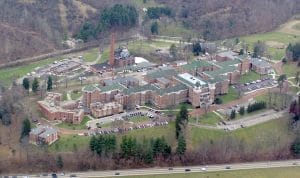
The Athens Lunatic Asylum opened in 1874 and operated for more than a century before closing. Ohio University now owns the complex and calls it The Ridges.
Patients who died at the institution and were not claimed by family were buried on the surrounding hillsides. The burial grounds are usually divided into the older and newer hospital cemeteries.
The markers are small, flat and largely numbered. Names were recorded in institutional ledgers rather than on the stones, a practice driven by cost and by the stigma attached to mental illness.
Work by local volunteers and researchers over recent decades has matched many of those numbers back to names, which is the most meaningful thing anyone has done at this site.
Planning to Investigate This Location?
Make sure you have the right ghost hunting equipment
View Equipment Guide →Paranormal Activity Summary
Reports from the cemeteries are quieter and more consistent than the dramatic accounts attached to the asylum buildings.
The most common experience described is an oppressive heaviness, often arriving suddenly, with visitors saying they felt they should leave.
Others report figures seen at a distance among the markers that are gone when approached, most often in the fading light of late afternoon.
Sound reports include indistinct voices and crying with no located source. Visitors also describe cameras and phones draining unusually quickly on the hillside.
By the way, have you visited this haunted place in Ohio State? Mount Nebo – Haunted Spiritualist Site in Athens County, Ohio
Ghost Stories and Reports
The Ridges as a whole is dominated by one story, and it belongs to the main building rather than the cemeteries.
Margaret Schilling, a patient, went missing in the institution in 1978 and was found dead weeks later in a disused ward. A stain in the shape of a body remained on the floor where she lay, and it is still there.
That is a documented death of a real woman within living memory, and it deserves to be treated as such rather than as a ghost story. Much of what circulates online about it is embellished.
The cemeteries generate no comparable single narrative. What people report instead is diffuse and collective, which is unsurprising for ground holding nearly two thousand largely anonymous burials.
Speaking of haunted places, don’t forget to also check this place in Ohio State? West State Street Cemetery – Haunted Cemetery in Athens, Ohio
The Most Haunted Spot
The oldest of the burial grounds, where the numbered markers stand in the tightest rows.
Visitors consistently describe the atmosphere there as heavier than in the newer sections, and it is where most of the figure sightings are placed.
Whether that reflects anything beyond the effect of standing among hundreds of nameless graves is a fair question to hold onto while you are there.
The paranormal doesn’t stop here—this haunted place might also interest you in Ohio State? Washington Hall – Haunted University Residence in Athens, Ohio
Can You Visit?
Yes. The cemeteries are accessible to the public and there is no charge.
They sit on the hillsides above the main Ridges complex, across the Hocking River from the Ohio University campus, and are reached by marked paths and access roads.
This is important, because the asylum buildings themselves are a different matter. Most are closed, some are in poor condition, and several are in active university use.
The grounds, the walking trails and the burial areas are the parts genuinely open to visitors. Daylight hours only.
Best Time to Visit
Autumn is the strongest season here. The hillsides above the complex have long views across the valley and the tree cover turns well.
Late morning to mid afternoon gives you the best light and leaves margin before dusk, which matters on unlit hillside paths.
Avoid visiting after heavy rain. The slopes are steep in places and the ground around the older markers becomes genuinely slippery.
Paranormal Investigations and Findings
The Ridges is among the most investigated locations in Ohio and appears regularly in paranormal television and regional guides.
Nearly all of that attention has gone to the buildings and to the Schilling stain rather than to the burial grounds.
Nothing produced at the site has withstood scrutiny. The stain itself, the most physically striking feature, has a chemical explanation involving decomposition and sunlight on the floor surface.
The more valuable work at The Ridges has been historical rather than paranormal. Identifying the people behind the numbered stones has done more for this site than any investigation.
Local Legends and Myths
Athens carries a reputation as one of the most haunted towns in America, built partly on The Ridges and partly on the university’s campus stories.
The cemetery pentagram legend, which places a five pointed figure of burial grounds around the town centred on Wilson Hall, does not survive checking. Sources disagree on which cemeteries form it, and the county holds more than a hundred.
The often repeated claim that a British psychical research organisation ranked Athens among the world’s most haunted places has no traceable source.
The asylum needs none of it. Its real history of institutional treatment, anonymous burial and a woman who lay undiscovered for weeks is heavier than any invented legend.
Planning Your Visit
The Ridges works well as a half day, combining the walking trails, the grounds and the burial hillsides.
Ohio University’s art museum occupies part of the restored complex, which is a straightforward way to see the interior of one of the buildings legitimately.
Combine it with the West State Street Cemetery in town and, if you have a car, Mount Nebo out in the county.
For the wider region, browse our directory of haunted places in Ohio or read our roundup of the most haunted places in Ohio.
If you plan to document the visit, our ghost hunting equipment guide covers the EMF meters, recorders, and cameras that actually capture evidence.
Safety and Legal Notes
These are real graves holding real people, many of whom were denied a name on their own marker. Behave as you would in any cemetery.
Do not enter the closed asylum buildings. Several are unsafe, they are university property, and entering them is trespassing.
Do not move, clean or take rubbings from the markers. Many are fragile and numbered stones are still being matched to names.
Daylight only, watch your footing on the slopes, and treat the site as a burial ground for people failed by an institution rather than as a set for a ghost hunt.
Frequently Asked Questions
Why do the gravestones only have numbers?
The institution recorded burials by patient number, with names kept in ledgers rather than carved on stones. Cost and the stigma attached to mental illness both drove the practice. Researchers have since matched many numbers to names.
Can you go inside the asylum buildings?
Not freely. Most are closed and some are unsafe. Part of the restored complex houses Ohio University’s art museum, which is open to the public. The grounds and cemeteries are accessible.
Is the Margaret Schilling stain still there?
The mark remains on the floor of the ward where she was found in 1978, but that area is not open to visitors. She was a real person who died alone, and the site is not a public attraction.
Nearby Haunted Places

Visitor Reports (0)
No experiences shared yet. Be the first!
Community Experiences
Share your paranormal encounters, photos, and rate this location
Login to Share Your Experience
Sign in to upload photos, write comments, and rate this location